Ah Tatua, You've Done It Again!
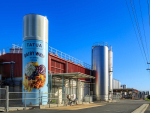
Waikato milk processor Tatua has again declared a record milk payout to farmer shareholders, leaving other processors in the dust.
 increase font size
 NZX head of dairy insights Cristina Alvarado.
Strong global milk production and rebalancing of demand among key buyers has delivered one of the biggest drops in whole milk powder prices in recent years.
The overnight Global Dairy Trade (GDT) auction saw the price index fall 4.3% compared to the previous auction. Flagship whole milk powder price slumped 5.3% to US$3809/metric tonne – a drop of US$227. The last major slump in WMP prices was two years – from US$3100/MT to US$2548/MT over two auctions.
Price drops were also recorded for skim milk powder (SMP) – which fell 5.8% to US$2620/MT.
Butter and anhydrous milkfat (AMF) also weakened, though to a lesser extent with their -2.5% and -2.6% drops respectively. By contrast, Cheddar’s gain helped cushion the broader downturn, though it was not enough to prevent the overall index registering its largest fall since the -4.1% drop seen in July and the -6.9% drop seen in July last year.
NZX head of dairy insights Cristina Alvarado says regional demand dynamics were central to the outcome. North Asia accounted for half of total purchases, lifting its share
from 34% last event and providing the main support to volumes.
Other regions scaled back, with Southeast Asia/Oceania’s share falling to 26% (from 35%) and the Middle East retreating to 10% (from 14%).
“This rebalancing of demand compounded the downward price pressure across key commodities,” says Alvarado.
She says the results also highlight the weight of supply in the market. Record New Zealand collections in the opening months of the 2025/26 season have combined with strong output growth from the United States (+3.4% year on year in July), Argentina (+7.7%), and Uruguay (+3.0%). European Union production also returned to modest growth in May (+0.2%), leaving Australia as the only major exporter in contraction (-4.0% in July).
“Exports of WMP and fats have been plentiful, reinforcing the sense of well-covered supply. Forward signals had pointed to weakness, with futures markets implying WMP down -4.7% and SMP largely steady. Instead, both fell more heavily, underlining that the fundamental backdrop of expanding supply and softer demand is now exerting greater
pressure.
“Overall, the latest GDT event underscores the challenge facing dairy markets: strong production and ample export availability meeting increasingly tested demand,” says Alvarado.
Waikato milk processor Tatua has again declared a record milk payout to farmer shareholders, leaving other processors in the dust.

Synlait has swung to second-half profit as operations stabilise, but the dairy processor still posted a $75.4m annual loss.
A 'tsunami' of milk from key exporting countries is winding down and this may be good news for New Zealand dairy farmers.
Most dairy regions around the country have had a pretty good season so far says Tracy Brown.
Milk powder prices are keeping farmgate prices up, helping processors offset the dip in milk fat prices.


Farmer-owned fertiliser company, Ballance Agri Nutrients is welcoming National’s plan to negotiate security agreements with key supplier countries to protect New Zealand-bound products from export restrictions and greater supply chain certainty.

Carrfields has announced the appointment of Stu Hall to the newly created role of chief operating officer, Carrfields Ltd, reflecting the continued growth of their agribusinesses and the need to ensure the company has the leadership capacity and support in place as it pursues the emerging opportunities ahead.
New Zealand's role is not to compete with Indian growers, according to NZ Apples and Pears.
The potato industry is celebrating the success of two rising stars - James Blair, the 2026 Young Grower of the Year and runner-up and innovation award winner, Amber Davy.
Twenty-eight emerging leaders from across the horticulture sector spent two days last month learning valuable skills and connecting with industry experts.
There are five entrants in this year’s Young Horticulturist of the Year, competing in a series of technical, practical, business and leadership challenges.