FAR Eyes NZ Grain as Dairy Supplementary Feed
Dr Scott Champion, Foundation for Arable Research chief executive, says that everyone in the supply chain had a role to play in driving the sector's long-term success.
 increase font size
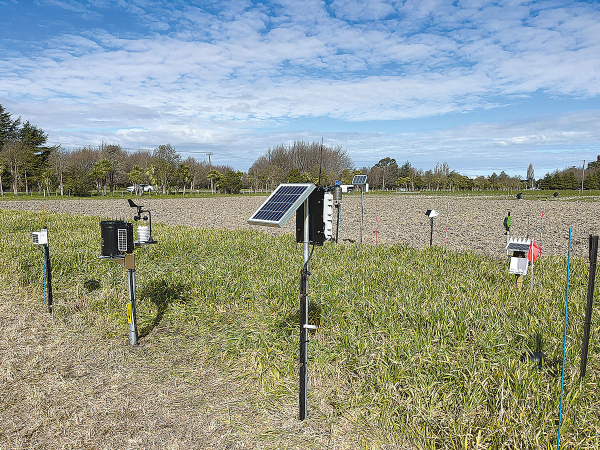 Moisture probes are a valuable tool for managing the timing and application rate of irrigation.
Farmers can follow and compare the readings of different soil moisture probes following the installation of a demonstration site at the Foundation for Arable Research's Kowhai Farm at Lincoln.
FAR technology Chris Smith says that the project aims to look at the various soil moisture monitoring services commercially available to arable growers.
Nine different providers are represented. Growers are invited to log in to any of the providers' portals to check out what moisture probe readings look like on the companies' software platform.
"By familiarising yourself with each one, you will see how easy it is to understand the information that is used to make management decisions."
Moisture probes are a valuable tool for managing the timing and application rate of irrigation, particularly at critical growth stages of a crop's development, Smith says.
Multi-level probes add an additional benefit for monitoring the movement and penetration of moisture in the root zone after a rain or irrigation event.
Growers are encouraged to use moisture probes as part of their best practice for the irrigation audit process.
"This is so they have evidence to justify application rates or timings and prove that they are not creating potential leaching issues from over-applying, as they can illustrate they are keeping the moisture within the root zone."
Most probes also monitor soil temperature, which is useful at the shoulders of the season to make sure any irrigation events don't cool down soils too much. Both temperature and moisture are also critical measurements for fertiliser applications or planting timings.
Probes can be calibrated, but it is important to realise most show a trend in a farm's soil, getting proportionally drier or wetter in the root zone or at different depths within the soil profile, Smith says.
"It is arguably of greater value to have the field capacity and stress point for that specific probe set up correctly, taking into consideration the soil type, crop type and adjuste for growth stage (root zone depth).
"That is why moisture probes should be installed by the providers, adjusting the graphs once the probe has bedded in and had a decent weather event. This is also the reason it is bes to install them in winter, when setting these parameters is much easier, because of the opportunities to reach field capacity."
The season's results will be reviewed in June each year.
Farmers can access the moisture probe providers' portal and logins on the FAR website at https://www.far.org.nz/research/research-resources/moisture-probe-trial-at-kowhai.
The providers are: Agri Water Service, Crop X, Halo Systems, OnFarm Data, Harvest Electronics, PGG Water, Primary Insight, Valley and Vantage NZ.
Dr Scott Champion, Foundation for Arable Research chief executive, says that everyone in the supply chain had a role to play in driving the sector's long-term success.

Flat pricing in the face of significant increases in costs is the greatest problem facing the arable sector, says Foundation for Arable Research (FAR) chief executive Dr Scott Champion.
Four years since it was first detected in New Zealand, researchers and growers now know much more about management of maize pest fall armyworm (FAW).
A warning to dairy farmers not to expect the same good conditions that they experienced last season, has been issued by a leading farm consultant.
Two Canadian spraying experts, Tom Wolf and Jason Deveau, are visiting New Zealand in early August to ensure that arable growers are hitting the target with this key piece of equipment.


Farmer-owned fertiliser company, Ballance Agri Nutrients is welcoming National’s plan to negotiate security agreements with key supplier countries to protect New Zealand-bound products from export restrictions and greater supply chain certainty.

Carrfields has announced the appointment of Stu Hall to the newly created role of chief operating officer, Carrfields Ltd, reflecting the continued growth of their agribusinesses and the need to ensure the company has the leadership capacity and support in place as it pursues the emerging opportunities ahead.
New Zealand's role is not to compete with Indian growers, according to NZ Apples and Pears.
The potato industry is celebrating the success of two rising stars - James Blair, the 2026 Young Grower of the Year and runner-up and innovation award winner, Amber Davy.
Twenty-eight emerging leaders from across the horticulture sector spent two days last month learning valuable skills and connecting with industry experts.
There are five entrants in this year’s Young Horticulturist of the Year, competing in a series of technical, practical, business and leadership challenges.