Fonterra FY26 Results: $9.69 Milk Price, $3.4bn Profit
Fonterra has unveiled its annual results for the 2026 financial year, posting $27 billion in revenue and close to $20 billion returned to New Zealand farmer owners and unit holders.
 increase font size
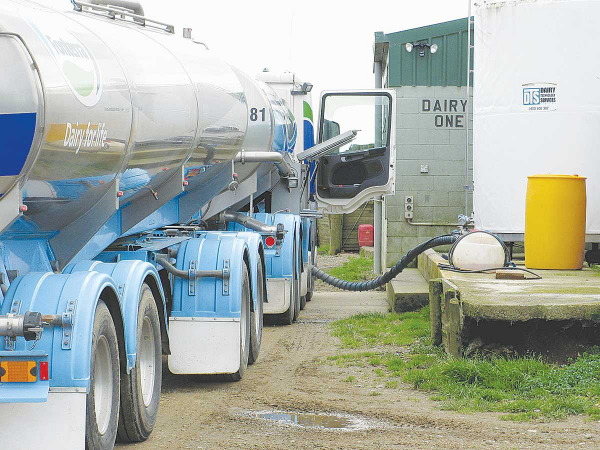 Fonterra says February saw a generally settled end to summer across the country, with cows producing more milk.
Fonterra collected more milk in February thanks to better pasture growth in most parts of the country.
The co-operative collected 136.5 million kgMS, 2.3% higher than the same month last season.
It says February saw a generally settled end to summer across the country, but with some bouts of wet and windy weather.
"Other than the far north of the North Island and Fiordland in the South Island, the whole country was sunnier than average for the time of the year.
"In regions that had rainfall with that warm weather, good pasture growth resulted."
North Island milk collection for the month reached 73.9 million kgMS, 5.9% higher than February last season. Northland experienced well above average rainfall, going some way to alleviating the very dry conditions that region had been experienced throughout summer.
South Island milk collection was 62.6 million kgMS, 1.7% behind February last season.
It says higher than average temperatures with favourable growing conditions across much of the South Island led to better than average conditions.
"While these were down on February last season, South Island collections in February 2020 were among the strongest in recent seasons."
However, in Australia the co-op's milk collection continues to dip.
It collected 7.2 million kgMS, a 5.8% decrease on February last season.
"Lower herd numbers combined with increased consumption of lower quality home-grown fodder instead of supplementary feed are continuing to impact milk production growth across Australia."
Fonterra's season-to-date collections in Australia are down 1.8% on last year.
Fonterra has unveiled its annual results for the 2026 financial year, posting $27 billion in revenue and close to $20 billion returned to New Zealand farmer owners and unit holders.
Fonterra Co-operative Group has confirmed the independently assessed candidates standing for election to its board in 2026.
Fonterra has revised its Farmgate Milk Price forecast for the 2026/27 season, lifting the midpoint and narrowing the range on the back of improving global dairy commodity prices.
Outgoing Fonterra Co-operative Council chair John Stevenson says that it has been a privilege to represent the co-op's farmer shareholders.
OPINION: It seems Canterbury processor Synlait is still in the doldrums.


Farmers across parts of Southland and South Otago are continuing to deal with difficult conditions after a prolonged run of wet weather, with pressure building around feed supply, stock management, pasture damage, farm infrastructure and everyday workloads.

Federated Farmers says it welcomes Labour's commitment to reviewing the Sharemilking Agreements Act, calling on other major parties to do the same.
For Canterbury dairy farmers Sian Meijer and Rick Wobben, wearable technology has become one of their most valuable on-farm tools - helping manage 1850 cows across an expansive, high-performing dairy operation while improving efficiency, mating outcomes and day-to-day decision making.
Fonterra has unveiled its annual results for the 2026 financial year, posting $27 billion in revenue and close to $20 billion returned to New Zealand farmer owners and unit holders.
The first major update to the Dairy Cattle Code of Welfare in more than a decade has been released, marking what DairyNZ describes as an important step in ensuring animal welfare standards continue to evolve alongside scientific evidence and on-farm realities.
Ravensdown shareholders have elected Jane Montgomery and Kate Acland to the Ravensdown Board for three-year terms, following a closely contested director election.