Tighter Calving, More Days in Milk: One Waikato Farmer's SGL Story
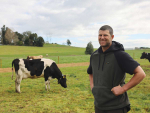
When Fraser Hasnip returned to his family farm in Pirongia, Waikato, he saw an opportunity to do things differently.
 increase font size
 Vet South’s Mark Bryan
As in-calf data accumulates across Southland it appears the winter’s widespread swede problem hasn’t had a major impact on reproduction rates.
“We’re trying to see if there’s a pattern and where we have good data from previous years if there’s been a suppression where cows have been on… swedes,” Vet South’s Mark Bryan told Dairy News.
While it is still early days for scanning results, and results have been mixed, “they always are” and no trend has emerged yet, with some up, and some down, he adds.
“There was nothing obvious in terms of endometritis or anaestrous cows either so I don’t think it’s going to be anything like as bad as we feared it could be.”
Bryan’s comments come after a DairyNZ statement relaying its conclusions from initial blood and liver tests from 15 farms taken when the problem hit the headlines last September.
The tests showed liver damage was present in cows that had been grazing both HT and traditional swede cultivars, and in animals which showed no outward (ie clinical) signs of illness.
However, the detail of the test results has not been released, DairyNZ’s regional team leader Richard Kyte saying it’s because wrong or invalid conclusions may be drawn from what was “just one bit of data” in the ongoing investigation.
It is known which cultivar the animals sampled had been grazing but the differences between them are not significant and no further scientific conclusions can be drawn without further data, he says.
The next step in the investigation is to collate and analyse an in-depth survey of 120 farmers and their graziers.
“We have interviewed farmers across the region, both affected and unaffected by the issue, to help us understand whether farm management practices may have been a contributing factor….
“We have also sought permission to access their relevant veterinary records. These could provide a wider dataset and help us understand the illness better and give us valuable insights into what happened.”
Analysis of the survey data has started with findings expected in March.
Bryan told Dairy News he awaits that with interest.
“The most striking pattern is the geography and associated weather, the number of cold days. For example, there were no cases in the Te Anau basin where they had a lot more frost and cold days than we did in Central Southland.”
Suggestions there could be some link to the herbicides used on the crops or prior to sowing (Rural News, Jan 20) “seem a bit stretched”, says Bryan, but he acknowledges the need to keep an open mind.
DairyNZ says analysis of plant samples taken from crops that caused problems, and those that didn’t, should get underway soon.
Kyte notes the blood and autopsy sample results indicate liver damage similar to that seen in facial eczema, and a review of published scientific data on the topic supports the possibility known substances in the swedes caused the problems (see panel above).
However, he also says the possibility of an unknown toxin “can’t be discounted”.
Kyte says it’s too soon to say whether there’s been an impact on reproductive performance as reproductive data isn’t yet complete. Results could also be skewed by Southland having had “a shocking spring”, but analysis of additional blood samples is underway to assess if and how affected cows have recovered, with results expected by the end of next month.
When Fraser Hasnip returned to his family farm in Pirongia, Waikato, he saw an opportunity to do things differently.

Everyone from experienced veterinarians and young professionals to the Wormwise programme and outstanding clinics have been recognised in this year’s New Zealand Veterinary Association Te Pae Kīrehe (NZVA) awards.
Getting cows in calf well takes a year-round approach. The results achieved in the mating period are impacted by many factors earlier in the season or even in seasons gone by.
One vet clinic says it is doing its bit to help cash-strapped dairy farmers.
The unusual pattern of disease and mortality that affected dairy cows grazing on swedes last winter in Southland and Otago was a topic for discussion at the recent New Zealand Veterinary Association (NZVA) dairying conference held in Queenstown.

Worst election result imaginable for New Zealand and not good for business confidence.

Associate Agriculture Minister, Mike Butterick has lost his Wairarapa seat in the final count released today.
Women across the dairy sector have an opportunity to invest in their leadership, education and professional development, thanks to a scholarship fund.
Three of New Zealand's leading primary sector organisations have joined forces to propose a new Food and Fibre Private Training Establishment (PTE).
OPINION: The World Dairy Summit, held in Auckland last week, delivered a poignant message – when it comes to global trade, the old order has passed away.
Deer Industry New Zealand (DINZ) has welcomed Government co-investment in a new $10 million programme aimed at increasing the value of New Zealand farmed venison, velvet and co-products and improving returns to deer farmers.