Never lose your car
A new entry-level Range Rover Velar is set to be the model Kiwi motorists can better afford.
 increase font size

THE FOURTH generation Range Rover is touted as the most capable and luxurious Land Rover yet. Lighter, stronger and with new levels of refinement, it presents as the world’s finest luxury SUV, says global brand director John Edwards.
It will go on sale in New Zealand in January 2013.
“The new Range Rover preserves the essential, unique character of the vehicle – that blend of luxury, performance and unmatched all-terrain capability. However, its clean-sheet design and revolutionary lightweight construction have enabled us to transform the experience for luxury vehicle customers, with a step change in comfort, refinement and handling.”
Says the company, the all-new model has been developed from the ground up, “capturing the spirit and iconic design of the original model which changed the world of motoring when it was launched 40 years ago.”
This is world’s first SUV with a lightweight all-aluminium body structure – lighter than the steel body in the outgoing model and enabling total vehicle weight savings of 250kg.
The aluminium body improves performance and agility, and transforms fuel economy and CO2 emissions. Also, new aluminium front and rear chassis architecture embodies four-corner air suspension, improving handling and agility – flatter cornering with natural and intuitive steering feel.
The model’s clean, elegant shape derives from “a fresh new interpretation of Range Rover design cues.”
“While instantly recognisable as a Range Rover, [it is also] a bold evolution of the model’s design.”
Land Rover design director and chief creative officer Gerry McGovern says its design team sought to capture the “elegant proportions and pure surfaces which have been a feature of the best Range Rover designs.”
This is the most capable and refined Range Rover ever, he says.
Innovations include a new version of Land Rover’s Terrain Response system, which analyses the current driving conditions and automatically selects the most suitable vehicle settings for the terrain.
Testing of the new model involved 18 months driving in 20 countries in extremes of climate and road surfaces.
A new entry-level Range Rover Velar is set to be the model Kiwi motorists can better afford.
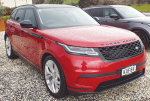
When you tell your golfing buddies that you’ve just come back from the launch of the Range Rover Velar, they ask, “What sort of name is that?”
Back in 1970 we were wearing tank-tops, tie dies and platform shoes, and mirror must have been in short supply, but the year marked the birth of a motoring genre that has just reached its 45th birthday.

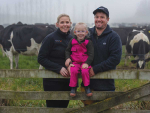
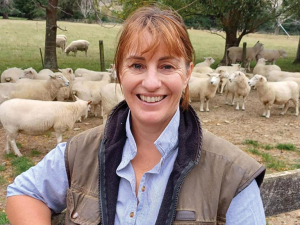
B+LNZ's Wormwise veterinarian Mary Bowron has won the Best Sheep and Beef Vet of the Year Award in recognition of her outstanding contribution to New Zealand’s sheep and beef sector.
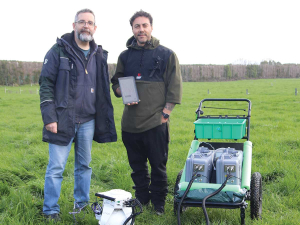
Researchers at Massey University are using a special piece of scientific equipment to improve the measurement of greenhouse gas emissions from pasture soils.
More signs of a booming kiwifruit sector.
OPINION: David Seymour and James Meager's plan to make it easier for farmers and orchardists to operate drones can best be described a 'courageous' move.
New Zealand wool is reaching new heights as air filtration companies move away from synthetic products to biodegradable alternatives.
Opuha Dam's ability to protect South Canterbury communities from major flooding has taken a significant step forward, with Opuha Water Limited (OWL) successfully commissioning a new outlet valve capable of releasing record volumes of water from the dam ahead of a weather event.