Family company delivers wide range of feeders
Family-owned German company BvL was formed in 1860 and takes its name from the second-generation Bernard Van Lengerich.
 increase font size
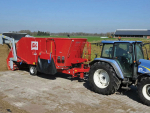
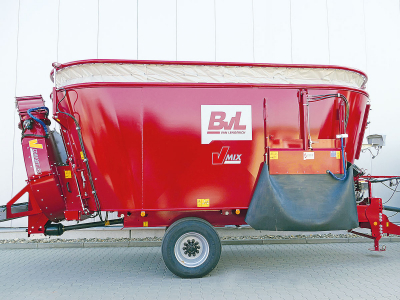 BVL mixer wagon.
Mixer wagon specialist BvL, Germany, has launched the Vario Volume, a clever variable-volume extension as an option for most of its trailed models.
It uses a plastic curtain that can be raised 30cm hydraulically, from the operator’s seat, to effectively increase a twin-auger machine’s capacity by up to 3.5 cu.m.
It’s particularly useful for mixing high dry-matter or fibrous materials like hay or straw bales that can be prone to spilling out over the sides of a mixer wagon when they are first added.
Once feed is mixed and chopped to the required consistency and the volume is reduced, the extension can be lowered to reduce the machine’s overall height -- useful for feeding inside or under structures with limited headroom.
BvL (Bernard van Maschinenfabrik) has been in the business nearly 160 years. It started with root cutters and ploughs but now specialises in mixer wagons. The first was made in 1978.
Family-owned German company BvL was formed in 1860 and takes its name from the second-generation Bernard Van Lengerich.
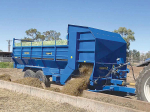
The Beater Wagon, which is new from McIntosh Farm Machinery, is designed for integrating different fodder products together.
A self-propelled, twin vertical auger mixer wagon from KUHN dubbed the SPW Intense has been designed with nutritional considerations in mind.


National’s pledge to introduce 19 new national standards shows the party is serious about getting Wellington out of farming, Federated Farmers says.
The National Party’s policies to make it easier to grow fresh vegetables, secure reliable water and energy and simplify farm planning are practical changes that will give growers the confidence to invest, according to Horticulture New Zealand (HortNZ).
Fonterra Co-operative Group chief financial officer Andrew Murray has resigned to take up a role outside the dairy giant.
A major move is about to get underway to improve the quality and viability of dairy beef and cattle in NZ.
Veterinarians say changes to the code of welfare for dairy cattle provides a positive foundation for improved cattle welfare across the country.
Today, 15 October, is the International Day of Rural Women, which recognises rural women’s contribution to farming, communities and the environment.