Fall Armyworm in NZ Maize: Four Years of Research
Four years since it was first detected in New Zealand, researchers and growers now know much more about management of maize pest fall armyworm (FAW).
 increase font size
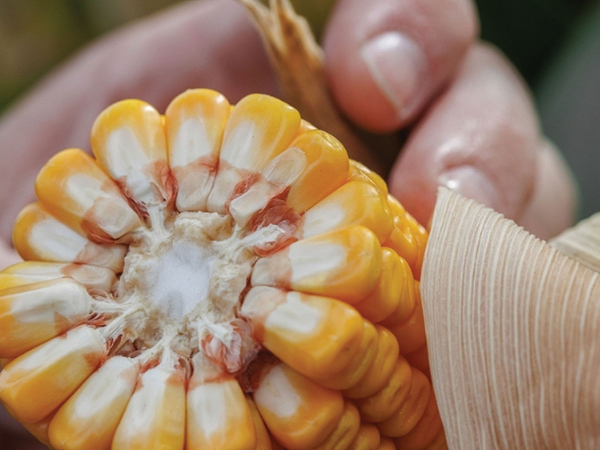 An important maturity indicator is the maize kernel milk line.
With the forage maize harvest started in Northland and the Waikato, the Foundation for Arable Research (FAR) is telling growers of later crops, or those further south, to start checking their maize crop maturity about three weeks prior to when they think they will start silage harvesting.
Good quality maized silage is best made when whole plant dry matter is between 30-40%. If harvested at less than 30% dry matter, the silage stack will be too wet, resulting in stack leachate, which in turn, represents nutrient loss. In contrast, if dry matter is above 40%, stack compaction and air exclusion will be much more difficult, typically leading to aerobic bacterial losses.
An important maturity indicator is the maize kernel milk line, where the milky liquid changes into the harder darker starch line. By snapping a cob in two and examining the upper portion's kernels, the milk line can be easily seen. When the milk line is one third of the way up from the bottom of the kernel, the plant is in the 28-32% DM range.
Milk line is only indicative that harvest time is near and there are other indicators needing consideration. In-field estimation of crop DM requires considerable experience, which most contractors and technical advisors have experience in harvest scheduling and can offer advice on harvest maturity.
As the maize harvest season proceeds, North Island Velvetleaf coordinator Sally Linton reminds farmers, growers and contractors that machinery hygiene is critical in the prevention of the spread of unwanted weed pests including velvetleaf.
Four years since it was first detected in New Zealand, researchers and growers now know much more about management of maize pest fall armyworm (FAW).
Two Canadian spraying experts, Tom Wolf and Jason Deveau, are visiting New Zealand in early August to ensure that arable growers are hitting the target with this key piece of equipment.
Tickets are now available for the 2026 Arable Awards, set to be held in Christchurch on 20th August.
Some of New Zealand’s best-loved food brands have been quick to sign up for a new campaign which reinforces their home-grown status.
With arable farmers heading into the busy planting season, increasing fuel and fertiliser prices, driven by the Iranian conflict, are a daily and ongoing concern.


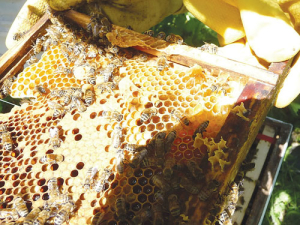
New Plymouth-based Manuka honey exporter Egmont Honey has completed its acquisition of Taihape beekeeping business Tweeddale's Honey, with settlement finalised on Friday, 18 September.

Westpac NZ is calling on farmers and growers to start preparing now for the possibility of a dry summer, as likely El Niño conditions raise the risk of drought across parts of the country.
Fonterra Co-operative Group has confirmed the independently assessed candidates standing for election to its board in 2026.
Fonterra has revised its Farmgate Milk Price forecast for the 2026/27 season, lifting the midpoint and narrowing the range on the back of improving global dairy commodity prices.
New Zealand's citrus growers were challenged to build their future on the value embedded in their fruit rather than the volume they produce, at Citrus New Zealand's annual gathering in Gisborne on 17 September.
Leading John Deere technicians and apprentices from New Zealand and Australians were recognised at the recent sixth annual JD Technician of the Year Awards, held in Brisbane.