DairyBase and MINDA Link Up to Cut Farmer Paperwork
Farmers can spend less time on paperwork, thanks to a new data sharing agreement between DairyNZ’s DairyBase and LIC’s MINDA software.
 increase font size
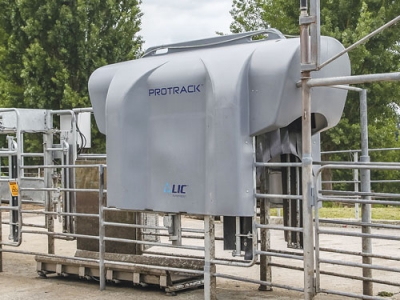 LIC now offers automatic heat detection in herringbone sheds.
Heat detection and getting cows back in calf has the potential for a marked effect on the bottom line of any dairy operation.
Detection patches help, but even experienced campaigners find it labour intensive and time consuming.
LIC now offers automatic heat detection in herringbone milking sheds, using technology that builds on that offered in rotary set-ups (Protrack EZ Heat system).
The herringbone version, shown as a prototype at the 2015 Fieldays, is now available commercially and, like the rotary system, it integrates with LIC Automation's Protrack system to draft cows after heat detection, and with the Minda system to record these events.
The herringbone set-up has an in-race camera booth through which the cows pass after milking. The camera photographs a heat detection patch above the cow's tail and evaluates the image of the patch for signs of activation.
In the rotary set-up this process is carried out while the cow is still on the platform.
In both systems, cows showing no signs of activation are drafted straight back to the paddock; those showing signs of activation, or missing patches, are automatically drafted into a holding area for further investigation and possible insemination
Automation chief executive Paul Whiston says "Protrack EZ heat reduces production losses through missed heats, and removes the stress and labour costs associated with a manual detection regime".
For the 2016-17 season LIC is offering interest-free terms on a range of products.
Farmers can spend less time on paperwork, thanks to a new data sharing agreement between DairyNZ’s DairyBase and LIC’s MINDA software.
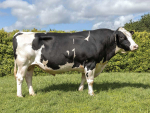
An LIC bull, Tronnoco AR Sadio-ET S3F, bred by Tony and Keri O'Connor of Tronnoco Farming Co Ltd near Timaru, has won the 2026 Mahoe Trophy.
Bovine Viral Diarrhoea (BVD) is estimated to cost New Zealand's dairy and beef industries more than $150 million every year, yet many of the tools needed to control it are already well understood. After more than 25 years in veterinary practice, Andrew Weir, animal health technical specialist at LIC, has seen firsthand the impact BVD can have on herd performance. We asked him about the role of persistently infected (PI) animals and the practical steps farmers can take to reduce their risk.
In the past, a bull could sit comfortably in a breeding team for several years with little change, but today, that’s no longer the case.
Paynes Titus Excelsior ET, an LIC bull bred by Brad Payne and Claire Brodie in the Waikato, has won the JT Thwaites Sire of the Season 2026 Award.



Striking a balance between meeting the needs of industry to speed up approval time for products but on the other hand ensuring that risks are properly assessed.
Surprised, humbled and quite thrilled. That’s the reaction of James Allen, one of the founding partners and now chief executive of AgFirst, on being made a life member of the Institute of Rural Professionals.
It was billed as a chance for all the political parties to woo the rural vote, but question marks hang over just how effective this was.
Minister of Conservation Hon Tama Potaka has appointed Susan O'Regan as Chair of the Queen Elizabeth II National Trust (QEII) for a three-year term.
Red meat farmers are welcoming Labour’s plan to review the Emissions Trading Scheme and not to campaign on pricing agricultural emissions.
Now in its fourth year, the 2026 Fencing Industry Awards, formed part of the proceedings of the FCANZ Conference, held in Nelson during August.