Three New Zealand agritech companies are set to join forces to help unlock the full potential of technology.
AIMER Farming, Bovonic and Herd-i will host a series of On-Farm Tech Showcases designed to give farmers the chance to see multiple Kiwi-developed solutions in action - from AI-powered pasture management to automated mastitis detection and AI-powered lameness detection and body condition scoring.
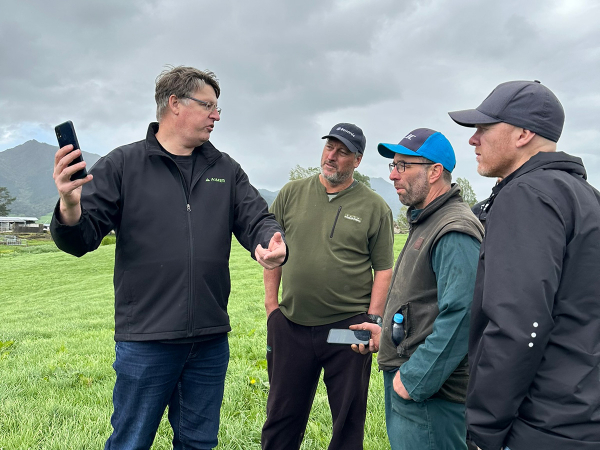
The first showcase, held in Te Aroha earlier this month, attracted more than 60 people and positive feedback from farmers, who valued the chance to see several complementary technologies demonstrated together.
Building on that success, a second event will take place in Taranaki on Tuesday 2 December with more events in the pipeline for 2026.
At the events, farmers can hear directly from the people behind each technology, watch live product demonstrations, and get insights from local farmers already seeing results on their own operations.
Liz Muller, chief executive of Herd-i, says the collaboration between the three companies reflects the co-operative spirit that underpins New Zealand dairying.
“Kiwi farmers are naturally collaborative, and they expect their suppliers and partners to be the same. Working together strengthens our international competitive advantage,” Muller says.
“It’s also about respecting farmers’ time and helping them build confidence in what technology can deliver. Bringing multiple innovations together on one farm makes it an efficient and worthwhile day off the farm.
“Farmers can read about these technologies online, but seeing them in action, and hearing directly from other farmers who are using them, is what really helps them understand the difference they can make.”
Jeremy Bryant, founder and chief technology officer of AIMER Farming, says collaboration is a smarter way to serve farmers’ needs and highlight how complementary technologies can work together to support farm performance.
“We all have the same goal - to help farmers," says Bryant. "A well-fed and well-conditioned cow is more resistant to disease, while early detection tools like QuadSense and Herd-i help identify issues before they become costly. Together, these approaches strengthen animal health, efficiency, and profitability."
“Farmers have similar challenges but in different conditions, from managing pasture supply to minimising health problems like lameness or mastitis. Seeing these technologies side-by-side helps them visualise how the pieces fit together and where they can get the most value for their operation.”
He says working together is also a more efficient use of everyone’s time, farmers and innovators alike.
“By collaborating rather than competing or tripping over each other, we reach that shared goal more efficiently. Bringing multiple solutions together in one place helps farmers see the connections and think holistically about productivity, profit, and animal welfare," Bryant says.
Bovonic national sales manager Tom Fitzgerald says farmers appreciate the collaboration between the three companies.
"I’ve never heard feedback like this before in our industry," Fitzgerald says.
"There are some exceptional technologies emerging for the dairy industry, so why go it alone? The saying ‘a rising tide lifts all boats’ really applies here. When one company succeeds, it benefits everyone. Most importantly, it benefits dairy farmers.”
He says the events also show that technology doesn't need to be complicated.
“Some farmers think tech makes things harder, but all three of these solutions are simple, practical, and easy to implement. Together we’re showing that technology can make farming more efficient and less stressful, not more complicated.
“By joining forces, we’re reaching farmers faster, sharing ideas across our customer bases, and showing that Kiwi innovation is thriving. Collaboration isn’t just good for business, it’s good for the whole industry.”
Event details
10.30am, Tuesday 2 December
Dairy Trust Taranaki, Gibson Farm
67 Whareroa Road, Hawera
Register now https://zohopublic.pulse.ly/ivopkap2ba