
Breeding the Ultimate Robot-Ready Jersey Herd
In the beautiful, scenic expanse of Invercargill, Joanne (Jo) Crack of Southern Star Farms is redefining what it means to run a modern, self-sufficient dairy operation.




 increase font size
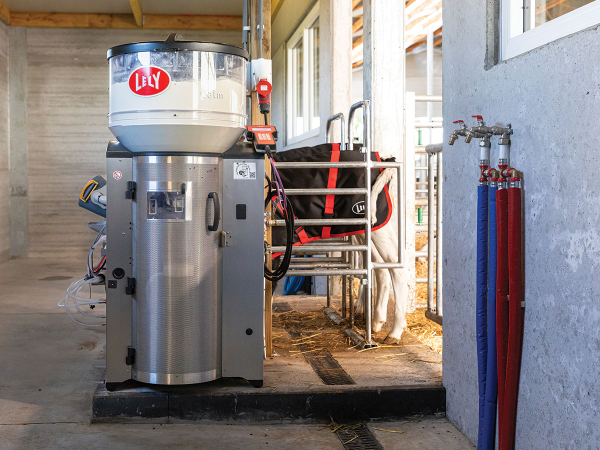 Lely Calm prepares milk at the right temperature and allows calves to drink little and often throughout the day.
The first weeks of a calf's life quietly shape the future of the entire herd.
Growth rates, health, and early nutrition all have a direct line to lifetime performance. Yet on many farms, calf feeding remains one of the most labour-intensive and inconsistent parts of the system.
That's where Lely says it's Lely Calm automatic feeder is changing the conversation.
At its core, Calm is about consistency, says Lely.
It prepares milk at the right temperature and delivers it ad libitum, allowing calves to drink little and often throughout the day.
This feeding approach supports better nutrient uptake and enourages steady daily weight gain, something that's difficult to achieve with traditional twice-a-day bucket feeding.
Calves can drink according to their natural rhythm, reducing stress and supporting stronger development from the first day.
The company says the system is fully adjustable, givikng farmers the flexibility to tailor feeding strategies to different groups.
Replacement heifers can be fed differently from beef calves, with settings adapted to suit each goal.
Replacement calves can recedive unlimited milk for the first five to six weeks of life, while beef calves can be managed with set daily allowances.
From there, a gradual step-down encourages roughage and concentrate intake, supporting rumen development and setting the foundation for improved vitality, fertility, and milk production later in life.
Hygiene, often a challenge in calf rearing, is another area where Lely says Calm stands out.
The system is designed to clean itself automatically multiple times a day using water and specialised detergents.
For farms wanting an extra ledvel of protection, the optional HygieneBox adds a two-step cleaning process, rinsing the teat after every visit and thoroughly cleaning the internal system.
The result is consistently high milk quality and reduced bacterial build-up, both critical for calf health.
Beyond feeding and hygiene, Calm significantly reduces labour, says Lely.
"The repetitive tasks of mixing milk, filling buckets, and feeding calves manualy are largely eliminated. Farmers can gain back valuable time while still knowing their calves are being fed accurately and consistently. It also introduces calves to automated systems early, as they learn to enter a drinking station, an experienced that can ease the transition to robotic milking later in life."
What truly sets it apart, according to the company, is the integration with the Lely Horizon farm management platform, a digital monitoring and decision-support system working behind the scenes.
Calm captures feeding data every time a calf drinks and converts it into practical, easy-to-use insights for the farmer.
This allows farmers to monitor drinking behaviour, pick up changes early, and track each calf's growth and performance over time.
When combined with the Lely Astronaut automated milking robots, it creates a complete digital record from calf to cow, helping farmers make better, more informed decisions at every stage of life.
In a sector increasingly focused on efficiency and animal wellbeing, Lely Calm offers a practical step forward, helping farmers raise healthier calves today, and more productive cows tomorrow.
www.lely.com
Article supplied by Lely
In the beautiful, scenic expanse of Invercargill, Joanne (Jo) Crack of Southern Star Farms is redefining what it means to run a modern, self-sufficient dairy operation.
In Dacre, near Invercargill in New Zealand’s South Island, Bruce Dinnington is running a dairy operation unlike any other.
Body Condition Score (BCS) is a critical element in managing the health and reproduction of the dairy herd.
Giving calves the best possible start to life has been shown to boost growth and resilience.
Getting calves away to a strong start means attention to detail from day one, so the Lely Calm, an automatic drinking system for calves, prepares and feeds rations at the right temperature and is designed to ensure calves receive smaller, more frequent portions throughout the day.



LIC shareholders have elected a new North Island representative to the co-operative's Board, along with five representatives to its Shareholder Reference Group (SRG), following the company's Annual Meeting held in Invercargill.
Farmers across parts of Southland and South Otago are continuing to deal with difficult conditions after a prolonged run of wet weather, with pressure building around feed supply, stock management, pasture damage, farm infrastructure and everyday workloads.
Federated Farmers says it welcomes Labour's commitment to reviewing the Sharemilking Agreements Act, calling on other major parties to do the same.
For Canterbury dairy farmers Sian Meijer and Rick Wobben, wearable technology has become one of their most valuable on-farm tools - helping manage 1850 cows across an expansive, high-performing dairy operation while improving efficiency, mating outcomes and day-to-day decision making.
Fonterra has unveiled its annual results for the 2026 financial year, posting $27 billion in revenue and close to $20 billion returned to New Zealand farmer owners and unit holders.
The first major update to the Dairy Cattle Code of Welfare in more than a decade has been released, marking what DairyNZ describes as an important step in ensuring animal welfare standards continue to evolve alongside scientific evidence and on-farm realities.

OPINION: It seems Canterbury processor Synlait is still in the doldrums.
OPINION: Get offside with New Zealand First leader Winston Peters at your own peril.




