
Major Parties to Debate Farming Policy Ahead of Election
Leading figures from the major political parties will be questioned on their primary sector policies at the Rural Issues Debate at Mystery Creek Events Centre, Hamilton, on 30 September.




 increase font size
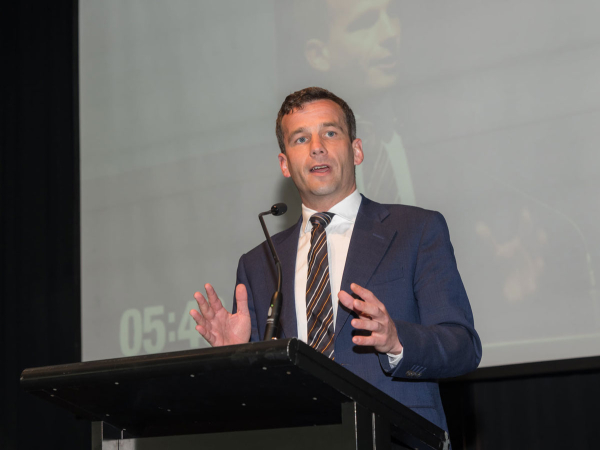 ACT leader David Seymour.
OPINION: At a time when farmers are advocating for less government spending and no new taxes, the dairy sector is rightly concerned by ACT's new immigration policy.
The policy, unveiled by ACT leader David Seymour this month, has one disturbing feature - a $6/day infrastructure surcharge on temporary work visas on top of existing charges.
According to ACT, this ensures migrants contribute to NZ's infrastructure "from day one before they start paying taxes".
ACT hopes this will raise an additional $80 million.
While this money will be welcomed in urban centres like Auckland and Queenstown, where hospitals, roading and schools are facing the pinch of a growing population, it's hard to understand how this will help the rural sector.
Of course, immigrants do pay for infrastructure just like everyone else. If they fill up their care, they pay fuel excise. If they live in a house, they pay rates or water charges. Rural migrants are not adding to pressure on housing because the houses are available on farms or in rural towns.
Rural schools are closing as student numbers dwindle and additions to rolls would help.
NZ dairy farmers face stiff competition from Australia and Canada, where the dairy sector is also facing labour woes.
Dairy farmers want prime candidates to come here, but a $6 daily charge and an annual allocation/re-application process is a significant deterrent as workers weigh up whether to come here or somewhere else.
Dairy farm employers want certainty and permanent staff, with a firm residency pathway for workers with the skill and attitude to add value to the sector and New Zealand.
ACT's policy doesn't seem to be well thought out.
For a migrant on a three-year work visa, this will mean an extra $6,500 up front. And it's likely that farmers, as employers, will need to cough up the extra money to hire or retain the migrant worker.
Leading figures from the major political parties will be questioned on their primary sector policies at the Rural Issues Debate at Mystery Creek Events Centre, Hamilton, on 30 September.

OPINION: A founding principle of Groundswell NZ is that farmers, and people generally, should be provided with full and accurate information about regulations that directly affect them.
OPINION: Well, the silly season is upon us and all us politicians are running around shaking babies and kissing hands, or maybe the other way around.
As the election heats up, Organics Aotearoa New Zealand (OANZ) has launched its election scorecard designed to help voters wanting to support policies that grow organic and New Zealand's organic sector.
It was billed as a chance for all the political parties to woo the rural vote, but question marks hang over just how effective this was.


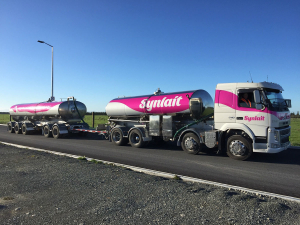
Synlait has swung to second-half profit as operations stabilise, but the dairy processor still posted a $75.4m annual loss.

LIC shareholders have elected a new North Island representative to the co-operative's Board, along with five representatives to its Shareholder Reference Group (SRG), following the company's Annual Meeting held in Invercargill.
Farmers across parts of Southland and South Otago are continuing to deal with difficult conditions after a prolonged run of wet weather, with pressure building around feed supply, stock management, pasture damage, farm infrastructure and everyday workloads.
Federated Farmers says it welcomes Labour's commitment to reviewing the Sharemilking Agreements Act, calling on other major parties to do the same.
For Canterbury dairy farmers Sian Meijer and Rick Wobben, wearable technology has become one of their most valuable on-farm tools - helping manage 1850 cows across an expansive, high-performing dairy operation while improving efficiency, mating outcomes and day-to-day decision making.
Fonterra has unveiled its annual results for the 2026 financial year, posting $27 billion in revenue and close to $20 billion returned to New Zealand farmer owners and unit holders.



OPINION: It seems Canterbury processor Synlait is still in the doldrums.
OPINION: Get offside with New Zealand First leader Winston Peters at your own peril.




