How Trace Minerals Support Dairy Cow Recovery Pre-Mating
By September, pre-mating heat recording is underway on many spring-calving dairy farms.




 increase font size
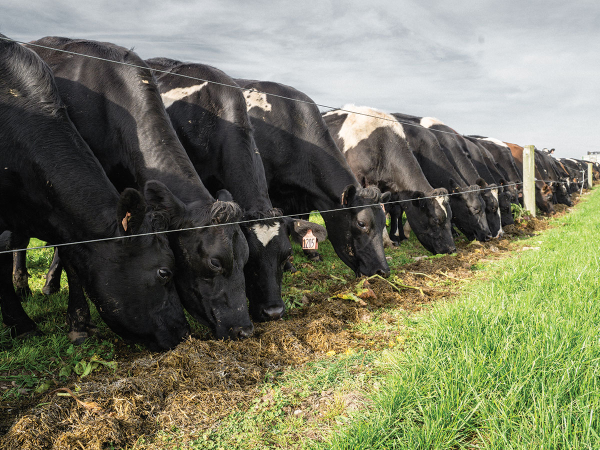 Over-conditioned cows also tend to eat less before and after calving.
When a cow goes down after calving, it is easy to blame the calving itself. Milk fever, calving stress, poor weather, bad luck. Yet many down cows are not caused by one dramatic event. They are the end result of poorly transitioned cows entering calving under nutritional pressure.
That pressure often starts in the three weeks before calving. Intake drops, calcium demand is about to surge, and cows that are over-conditioned or poorly prepared nutritionally are unable to meet needs at this time. Without the correct balance of minerals, they are unable to initiate the hormonal responses required to make stored minerals available. Over-conditioned cows also tend to eat less before and after calving, which puts them under more metabolic strain and slows recovery.
Our goal is to reduce the number of down cows, and the work starts before calving.
A close-up cow is under a lot of strain. Commonly, dry matter intake decreases just as demand for calcium, magnesium and energy is increasing. The risk rises quickly if the ration is too rich, the cow is over-conditioned, or feed management is inconsistent.
Low intake before calving can leave the cow short of fuel and less able to regulate calcium effectively. Deficiency in calcium affects muscle function, appetite, gut motility, and standing ability. At the same time, poor intake drives body fat mobilisation and can lead to ketosis. NEFA and ketones rise, liver workload increases, and the cow is less able to bounce back after calving.
This is where many down cows are set up. The issue is often not calcium alone, but a combination of pressures that have been allowed to build up before calving.
A lot of farms run into the same problems.
Over-conditioned springers can be a particular problem. Ideally, cows should be gradually conditioned in the last months of lactation. The challenge during the dry period is to feed springers at adequate levels in order to maintain their condition, but not to overcondition cows during this period. Cows overconditioned during the dry period tend to gain visceral, as opposed to adipose fat (internal fat around the organs, versus fat under the skin). Visceral fat slows metabolism and is much harder to mobilise when needed, hence it is far more likely to reduce appetite, increasing the risk of metabolic issues at calving.
We recommend feeding cows well during lactation in the autumn, in order to gain healthy condition and avoid overfeeding in the dry and close-up periods. Farmers should aim to have cows calving at a body condition score of about 4.8 to 5.2. Transition length also matters, with around 18 to 21 days of targeted transition feeding required to give cows time to adjust to the feed and also allow sufficient time for hormones to be released in the lead up to calving.
Other common mistakes include poor effective fibre, sudden ration changes, irregular feed delivery, overcrowding, repeated regrouping, and long walking distances during early lactation. Successful transition is not just the three-week pre-calving but also the first six weeks of lactation. Get it wrong and you will increase the number of downer cows.
Down cows often give warning signs before they hit the ground.
Watch for springers that are too fat, cows that are slow to come when fresh feed is offered, sorting, poor rumen fill, and sluggish fresh cows that never seem to get moving properly. Rumination is also a useful guide. It should be climbing back above about 400 minutes by day four after calving (dependent on cow size and monitoring technology). If cows are still sitting well below that, something is off.
A rise in retained membranes, ketosis, displaced abomasum, slow milk lift, or cows losing too much condition in early lactation can also point to transition cows being under pressure.
Blood testing can help pick up subclinical issues before they become clinical ones. Calcium, magnesium, phosphorus, NEFA, BOHB, albumin and cholesterol can all help show where the system is coming unstuck.
If the target is fewer down cows this season, focus on the basics and do them well.
Keep springers in the right condition. Do not push too much energy into close-up cows. Keep feed delivery regular with enough effective fibre. Make sure calcium and magnesium management fit your system. Reduce crowding and avoid needless stress. Monitor appetite, rumination, rumen fill and bloods so problems are picked up early.
The cow on the ground is the last sign, not the first. If you want to eliminate down cows, start with the springer mob.
Chris Balemi is Agvance Nutrition founder and managing director.
By September, pre-mating heat recording is underway on many spring-calving dairy farms.
Body Condition Score (BCS) is a critical element in managing the health and reproduction of the dairy herd.
There's a common assumption that effective transition cow management is only practical for high-input farms, as controlled rations can make delivery simpler.
Giving calves the best possible start to life has been shown to boost growth and resilience.
The first weeks of a calf's life quietly shape the future of the entire herd.



LIC shareholders have elected a new North Island representative to the co-operative's Board, along with five representatives to its Shareholder Reference Group (SRG), following the company's Annual Meeting held in Invercargill.
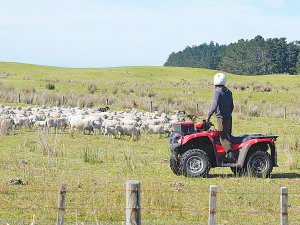
Farmers across parts of Southland and South Otago are continuing to deal with difficult conditions after a prolonged run of wet weather, with pressure building around feed supply, stock management, pasture damage, farm infrastructure and everyday workloads.
Federated Farmers says it welcomes Labour's commitment to reviewing the Sharemilking Agreements Act, calling on other major parties to do the same.
For Canterbury dairy farmers Sian Meijer and Rick Wobben, wearable technology has become one of their most valuable on-farm tools - helping manage 1850 cows across an expansive, high-performing dairy operation while improving efficiency, mating outcomes and day-to-day decision making.
Fonterra has unveiled its annual results for the 2026 financial year, posting $27 billion in revenue and close to $20 billion returned to New Zealand farmer owners and unit holders.
The first major update to the Dairy Cattle Code of Welfare in more than a decade has been released, marking what DairyNZ describes as an important step in ensuring animal welfare standards continue to evolve alongside scientific evidence and on-farm realities.


OPINION: It seems Canterbury processor Synlait is still in the doldrums.
OPINION: Get offside with New Zealand First leader Winston Peters at your own peril.