Installing two GEA DairyRobots R9500s marks a major step in the Coubrough family’s journey towards a more automated, future-ready farming operation.
By converting their 19-a-side herringbone in South Waikato into a fully automated milking system, they’ve gained greater flexibility in their day-to-day lives, while creating a smarter, more efficient system that supports herd performance and the long-term sustainability of the farm.
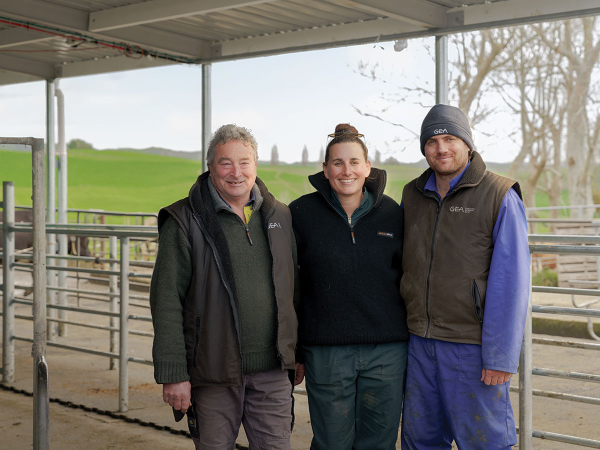
With roots stretching back to 1907, the Coubroughs are continuing a rich farming legacy in Tīrau that has spanned over a century. The fifth-generation family farm is led by Brett (father), Linda (daughter) and Tim (son), where they milk their 150-cow herd voluntarily through New Zealand’s first GEA DairyRobot system.
Dairy farming wasn’t always the career of choice for Brett, Linda and Tim, however. At age 17, Brett left the farm with plans to study farming at Lincoln University but instead pursued electrical engineering, working in the industry until he returned to the farm in his 50s. Likewise, Linda and Tim sought their own paths after school, both earning degrees in science. Linda also spent some time in the police force before eventually trading corporate life for farming.
To make life back on farm work for everyone, some things needed to change. Lifestyle was a key driver behind the decision to install a robotic milking system. However, the decision wasn’t made overnight. It was the result of decades of planning, research and infrastructure upgrades designed to support automated milking. It wasn’t until the GEA DairyRobot was launched in New Zealand in 2025 that they took the leap into robotics.
“The collars, the raceways, the infrastructure, everything we put in the shed to upgrade it as we went along, we knew robot wise, this was going to help us get there,” says Linda.
The goal was to build a farming system that could be comfortably managed by the three of them. Bringing in more staff wasn’t an option.
“We didn’t want to hire anyone in. Robots versus staff was a no-brainer,” says Linda.
Now that the DairyRobots are managing milking, life on farm has become more flexible. Time that was previously spent in the dairy shed can now be directed to other priorities, including farm maintenance, calf rearing, pasture management and further on-farm automation. The new system also allows one person to easily manage the farm when needed, so they can take time off without needing to bring in anyone to cover.
“You have to have enough spare time and the rest of it to still live life. You’re not tied just to the shed. That’s what it comes down to,” says Brett.
The cows have adapted to the new routine well too. With the freedom to choose when they’re milked and how often, they can move to and from the dairy at their own pace.
“Some cows want to be milk three times a day, some only want to be milked once a day, they have that bit more choice,” says Linda.