New Rural Recycling Scheme to Replace Voluntary Farm Plastics Programmes by 2027
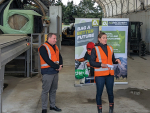
Environment Minister Nicola Grigg has announced details of a new rural plastics recycling scheme.
 increase font size
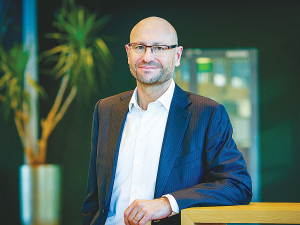
 Dr Alan Renwick.
Lincoln University have appointed Dr Alan Renwick as Professor of Agricultural Economics, to further strengthen their teaching and research in this area.
Renwick is currently domiciled in Dublin, Ireland, where he is Professor of Agricultural and Food Economics at University College Dublin (UCD). He will join the Lincoln University team later this year.
“Dr Renwick has exactly the background we need to further strengthen Lincoln’s teaching and research in agricultural economics, and I am personally delighted with the appointment,” says Deputy Vice-Chancellor, Scholarship and Research, Stefanie Rixecker.
“Alan spent many years at the University of Cambridge in the Department of Land Economy, before heading the Scottish Agricultural College’s Land Economy and Environmental Research team.”
“We have managed to secure his skills from his current role in agricultural and food economics at UCD, where he is teaching into their BSc in Food and Agribusiness Management, and their Master’s in Food Business Strategy, as well as supervising research students and undertaking his own research in this field. His background will complement the team within Lincoln in an area that is key to this University, and to New Zealand as a whole.”
The role of Professor of Agricultural Economics sits within Lincoln University’s Faculty of Agribusiness and Commerce. This year the faculty has announced the appointment of Crawford Falconer of the OECD to the Sir Graeme Harrison Professorial Chair in Global Value Chains and Trade, and will see the appointment of another two professors over the coming months.
“Lincoln University has been through a period of remarkable change in the last couple of years,” says Dean of the Faculty of Agribusiness and Commerce, Professor Hugh Bigsby.
“The appointment of Dr Renwick to this senior academic role signals another step-change in the development of our core areas of expertise. The role is one of four senior positions to be appointed this year.”
The Professor of Agricultural Economics will support Lincoln’s new Bachelor of Commerce (Food and Resource Economics) and research Masters’ and PhD supervision in the field of agricultural economics, as well as supporting the faculty’s agribusiness research and teaching more generally.
“I am looking forward to joining what is already a world-renowned university with a well-established reputation with the agricultural sector in New Zealand, and helping to build this reputation in the area of agricultural and food economics through my own research, presentations, publications and commentary. It is a very exciting time to be heading to New Zealand and joining the Lincoln University team,” says Renwick.
Renwick will also play a role in OneFarm - Centre of Excellence in Farm Business Management, a joint research centre with Massey University and will work closely with the University’s Agribusiness & Economics Research Unit (AERU).
Environment Minister Nicola Grigg has announced details of a new rural plastics recycling scheme.
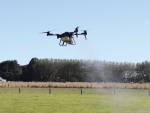
OPINION: David Seymour and James Meager's plan to make it easier for farmers and orchardists to operate drones can best be described a 'courageous' move.
There's been widespread support from the primary sector for the Government's announcement on changes to freshwater farm plans that come under the Natural Environment Bill, which is now set to replace the existing RMA.
The chair of the country's environmental regulator, the Environmental Protection Authority (EPA), says changes are already under way to improve the performance of the agency to better meet the needs of those who interface with them.
Are you ready for El Nino? That’s the question asked by Beef+Lamb NZ’s Ian Tarbotton who leads B+LNZ’s farm extension service.

Farmer-owned fertiliser company, Ballance Agri Nutrients is welcoming National’s plan to negotiate security agreements with key supplier countries to protect New Zealand-bound products from export restrictions and greater supply chain certainty.
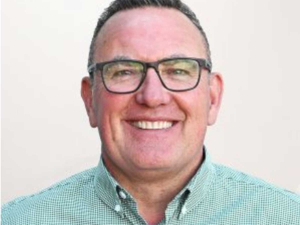
Carrfields has announced the appointment of Stu Hall to the newly created role of chief operating officer, Carrfields Ltd, reflecting the continued growth of their agribusinesses and the need to ensure the company has the leadership capacity and support in place as it pursues the emerging opportunities ahead.
New Zealand's role is not to compete with Indian growers, according to NZ Apples and Pears.
The potato industry is celebrating the success of two rising stars - James Blair, the 2026 Young Grower of the Year and runner-up and innovation award winner, Amber Davy.
Twenty-eight emerging leaders from across the horticulture sector spent two days last month learning valuable skills and connecting with industry experts.
There are five entrants in this year’s Young Horticulturist of the Year, competing in a series of technical, practical, business and leadership challenges.