Lambs good for training pups
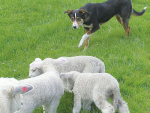
Lambing is looming closer and if you have a young dog that isn’t showing much enthusiasm for sheep take advantage of the window of opportunity this season offers.
 increase font size
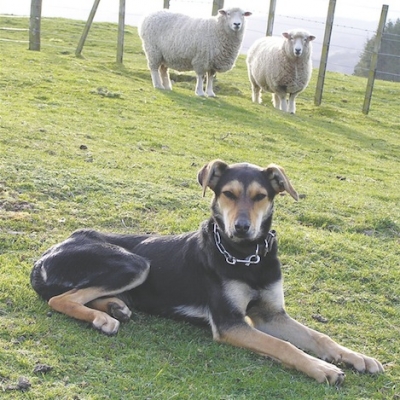
I had a phone call recently from a chap who had a problem with his young dog. He bought the 9-month-old pup from someone who had reared it well; it was a relaxed happy confident youngster and keen to work.
Everything was going well and he was very happy with how the dog was shaping up – it showed a lot of promise. That is, until recently, when its character changed in a matter of weeks – for no apparent reason.
Sometimes it will work, sometimes it won’t.
It was originally a friendly dog, but now it has become standoffish with him and also his other dogs. He is adamant that he hasn’t mistreated it in any way and I could hear the concern in his voice. He is at a loss as to why it has happened and what he can do.
The first thing I asked was had someone looked after his dogs lately while he was away? Maybe something had happened that he was unaware of that caused the behavioural change. The answer was no.
Because the dog had become somewhat reclusive from his other dogs I asked about the kennelling arrangement, because I have seen personality clashes between dogs develop when they are housed next to each other. It was kept in motels, with a young pup on one side and a dog of the same age on the other.
I advised him to separate the two dogs of the same age, putting the ‘problem’ dog at one end so its only neighbour would be the pup. Dogs of similar ages, reared together and supposedly good mates, often end up vying for pack position between the ages of 1 to 2 years old.
Maybe the more dominant dog was intimidating the submissive one when they were housed side by side. This may explain why his dog was now reluctant to be in close proximity of his other dogs. Anything is worth trying in order to solve a problem.
So why would the dog also be inconsistent with his work – there had to be a reason. If it hadn’t been mentally or physically abused, if it was in good health and without pain, what had caused a once enthusiastic dog to be become reluctant to work?
I then asked if it had recently come to grief with an electric fence – as they can pack quite a punch. I feel so sorry for the innocent dog’s that are doing nothing wrong and, out of nowhere, comes several thousand volts.
And yes, the dog had recently come into contact with electric fences – 3 or 4 times. That would explain a lot, particularly if he was being given a command at the same time. He may associate the working command with shooting pain and therefore he naturally becomes too terrified to do so. It isn’t the dog’s fault – humans created electric fences.
Some of you will disagree with my next sentence. If one of my young dogs gets a nasty shock from a fence I call it to me and sooth the pain; if it happens again I’d rather it made a beeline to me than bolt off into the distance.
If you are having a problem with a dog, dig deep – there will be a good reason for it. And remember, if a dog is acting out of character, a trip to the vet could reveal the answer; there maybe something that you are oblivious to that is causing physical discomfort, hindering your dog’s working ability.
• Anna Holland is teaching people dog training. For more information www.annaholland.co.nz or Ph 06) 212 4848 or This email address is being protected from spambots. You need JavaScript enabled to view it.
Lambing is looming closer and if you have a young dog that isn’t showing much enthusiasm for sheep take advantage of the window of opportunity this season offers.
If someone is wondering whether to train or buy a trained dog, and asks for my advice, I would ask the following questions to help their decision.
Decades ago I went to a few dog training days and every man and his dog turned up; it was a great day out, usually ending with a barbeque and a few drinks.
Dog training is often a bone of contention. Is it better to train a dog on the job, or train it before ever taking it to work?



Healthy snacking company Rockit has announced Wang Yibo, one of China's most influential celebrities, as its new brand ambassador.
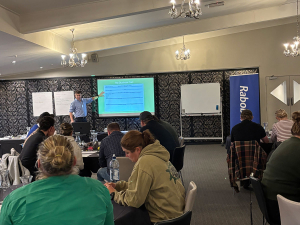
Rabobank has celebrated the tenth anniversary of its AgPathways Programme, with 23 farmers from Otago and Southland gathering for two-and-a-half days to learn new business management and planning skills.
Adopting strategies to reduce worm burden on farm goes hand-in--hand with best practice farm management practices to optimise stock production and performance, veterinarian Andrew Roe says.
Last night saw the winners of the 2026 Beef + Lamb New Zealand (B+LNZ) Awards named at a gala dinner at Te Pae Christchurch Convention Centre.
A 12-month pathway programme has helped kickstart a career in dairy for an 18-year-old student-turned-farmer.
Zespri says its global fruit sales revenue has reached a record NZ$5.9 billion from sales of 248.1 million trays.