Beef + Lamb NZ's Lambing Kit Checklist for a Tough Season
With lambing underway in many regions, Beef + Lamb New Zealand is encouraging farmers to put together a wellequipped lambing kit to help minimise lamb losses, particularly in bad weather.
 increase font size
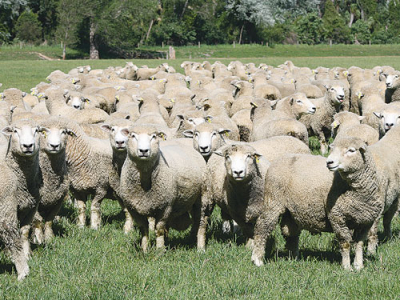 Genetic tolerance offers the best protection against FE.
Facial eczema (FE) is a seasonal scourge, but genetic selection can help minimise the impact of this production-limiting disease in sheep.
Caused by the spores of the fungus Pithomyces chartarum (which grows on litter at the base of pasture) FE affects more than just an animal’s face. The spores release a toxin which can damage the liver and bile ducts. In some cases, the bile ducts may become partly or completely blocked. The liver damage results in photosensitivity and sunburn which are the clinical signs of the disease.
The fungus is everywhere, but when temperature and moisture levels are high the fungus grows rapidly, releasing huge numbers of toxic spores.
For every animal with clinical signs of FE – which are obvious skin lesions – there will be many more with sub-clinical disease. This includes the invisible ongoing liver damage that can cause major productivity losses, especially at mating, lambing and calving.
Genetic tolerance offers the best protection against the disease and many breeders have been testing rams for many years now.
When selecting rams, commercial farmers (who want to include FE tolerance in their trait selection) should ask their breeder how long he or she has been testing rams, the level they are testing at, the number of rams they test every year and ask to see the Ramguard certificates.
Ramguard is the AgResearch-managed organisation that carries out the FE tolerance testing.
Breeders serious about breeding for FE tolerance should be testing at least 10% of their sale rams every year and only using tested rams in their stud.
King Country farmer Russell Proffit is a Perendale breeder and chair of FE Gold. This represents ram breeders who have been tolerance testing for FE for many years. The group is now testing at the highest possible dose rate of 0.6mg/kg (this is where the animal is dosed with the toxin and blood tests assessing liver damage measure how tolerant the ram is to the FE causing toxin).
Proffit says that it can take 20 years to breed to a high degree of FE tolerance. Breeders start at zero and gradually build up to an optimum dose rate of 0.6 – which is where the leading FE tolerant Romney and Coopworth breeders are.
While it takes decades for stud breeders to breed FE tolerance into their flocks, commercial farmers can get there a lot faster by selecting rams from these breeders.
Proffit believes it is important to ask the correct questions when buying genetics. He says commercial farmers should be cautious about buying rams from clearing sales where the claim has been made that they are FE tolerant.
To find a list of breeders that are selecting for FE tolerance, look up the Sheep Improvement Ltd (SIL) website to see the up-to-date Ramguard list: https://www.sil.co.nz/tools/flocks-focussed-on-health-traits#drop4
With lambing underway in many regions, Beef + Lamb New Zealand is encouraging farmers to put together a wellequipped lambing kit to help minimise lamb losses, particularly in bad weather.
Will a stronger, more coordinated voice help rebuild confidence and improve returns in the wool sector?
Scanning is a great time to start identifying and managing groups of ewes based on feeding priorities. Wormwise's Mary Bowron discusses some of the possible reasons ewes lose condition in early winter - and it's not necessarily internal parasites.
The Eliminating Facial Eczema Impacts programme recently hosted a webinar about the progress the sheep poo study has made in helping understand facial eczema (FE).
Recent rainfall has made for a fantastic growing season in many regions, but farmers are also reporting a proliferation in pests and diseases such as facial eczema, flystrike, porina and internal parasites.

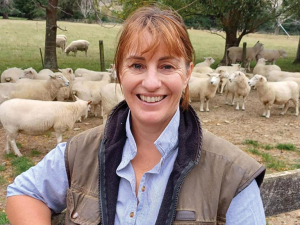
B+LNZ's Wormwise veterinarian Mary Bowron has won the Best Sheep and Beef Vet of the Year Award in recognition of her outstanding contribution to New Zealand’s sheep and beef sector.
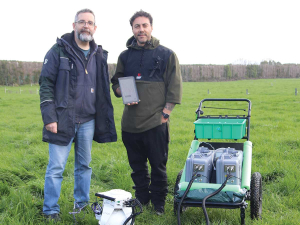
Researchers at Massey University are using a special piece of scientific equipment to improve the measurement of greenhouse gas emissions from pasture soils.
More signs of a booming kiwifruit sector.
OPINION: David Seymour and James Meager's plan to make it easier for farmers and orchardists to operate drones can best be described a 'courageous' move.
New Zealand wool is reaching new heights as air filtration companies move away from synthetic products to biodegradable alternatives.
Opuha Dam's ability to protect South Canterbury communities from major flooding has taken a significant step forward, with Opuha Water Limited (OWL) successfully commissioning a new outlet valve capable of releasing record volumes of water from the dam ahead of a weather event.