DairyBase and MINDA Link Up to Cut Farmer Paperwork
Farmers can spend less time on paperwork, thanks to a new data sharing agreement between DairyNZ’s DairyBase and LIC’s MINDA software.
 increase font size
 LIC chief executive David Chin.
New season data from LIC shows a strong reproductive performance for the 2025-26 season, with a lift in key metrics compared to last season.
The six-week in-calf rate (6wkICR) has edged up to a new record of 70.4%, from 70.2% last season, while the not-in-calf rate (NICR) remains relatively stable at 14.7%.
LIC chief executive David Chin says maintaining performance at this level is a positive result for the industry and reflects the consistency farmers are achieving on farm.
"After the gains we've seen over recent seasons, seeing another lift is a fantastic result for New Zealand dairy farmers. Achieving a record six-week in-calf rate of 70.4% reflects the continued focus farmers are placing on reproduction performance and making good decisions on farm."
The industry’s top-performing 25% of herds achieved a six-week in-calf rate of 78.2%.
“Those top-performing herds are getting more cows submitted, achieving higher conception rates and ending the season with fewer empty cows.
“The difference isn’t one thing done exceptionally well - it’s consistently getting the basics right, from nutrition and cow recovery through to heat detection and mating management,” says Chin.
Reproductive performance varied across the country, with softer results in the North Island offset by stronger performance in the South Island.
Standout gains were seen in Otago, South Canterbury and Canterbury, where six-week in-calf rates lifted by between 1.4 and 2.5 percentage points compared to last season.
Otago saw the biggest gain, increasing from 68.9% to 71.4%, while South Canterbury lifted from 70.6% to 72.6%, and Canterbury increased from 70.5% to 71.9%.
In the North Island, results eased slightly, with Waikato shifting from 71.2% to 69.6% and Northland from 71.0% to 69.2%.
Chin says reproduction outcomes are influenced by a range of factors, including seasonal and weather conditions, which can affect pasture quality and how cows recover heading into mating.
“Given some of the conditions parts of the North Island experienced this season, maintaining overall national performance and seeing a slight lift is a good outcome.”
He says stronger South Island performance was likely supported by favourable pasture conditions and farmers investing in quality feed through mating.
“Whether farmers are using conventional dairy, sexed semen, beef or SGL products, preparation before mating remains one of the biggest influences on getting cows back in calf.
“At the end of the day, good reproductive performance comes back to healthy, well-managed cows, and this year’s results show farmers are continuing to do that well.”
The results are based on data from 4776 herds and more than 2.6 million cows, continuing to provide a strong representation of national performance.
Farmers can spend less time on paperwork, thanks to a new data sharing agreement between DairyNZ’s DairyBase and LIC’s MINDA software.
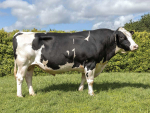
An LIC bull, Tronnoco AR Sadio-ET S3F, bred by Tony and Keri O'Connor of Tronnoco Farming Co Ltd near Timaru, has won the 2026 Mahoe Trophy.
Bovine Viral Diarrhoea (BVD) is estimated to cost New Zealand's dairy and beef industries more than $150 million every year, yet many of the tools needed to control it are already well understood. After more than 25 years in veterinary practice, Andrew Weir, animal health technical specialist at LIC, has seen firsthand the impact BVD can have on herd performance. We asked him about the role of persistently infected (PI) animals and the practical steps farmers can take to reduce their risk.
In the past, a bull could sit comfortably in a breeding team for several years with little change, but today, that’s no longer the case.
Paynes Titus Excelsior ET, an LIC bull bred by Brad Payne and Claire Brodie in the Waikato, has won the JT Thwaites Sire of the Season 2026 Award.


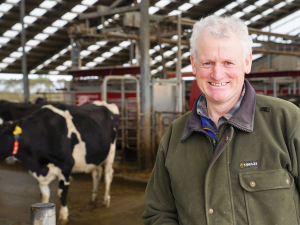
In Dacre, near Invercargill in New Zealand’s South Island, Bruce Dinnington is running a dairy operation unlike any other.

A free online platform aggregating governance vacancies across rural and regional New Zealand has been launched.
Environment Minister Nicola Grigg has announced details of a new rural plastics recycling scheme.
Agricultural drone operators say that a government decision to allow lower-risk drone work without certification won’t lower standards but drive innovation and efficiency.
OPINION: Warning bells are ringing in the arable sector.
Farmgate lamb prices are down by 8%, beef cattle by 4.5% and farm expenditure up by 4.2%.