The overall incidence of mastitis in cows this year is down, a field day at the Westpac Taranaki Agricultural Research Station at Hawera last week heard.
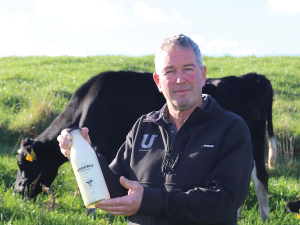
DairyNZ's Chief Scientist, Dr Eric Hillerton, says he believes that one of the reasons for this is that dairy farmers are learning from past mistakes and have taken on board good advice.
"Some people are saying 'I'm not so tight on my expenditure therefore I can invest in mastitis control and get returns on that investment.'
"The other issue we are starting to face is that as mastitis is measured as a cell count it's about the number of cells and the volume of milk, so there's a dilution effect. If a farmers' milk volume moves up 9% then there's a likelihood that the cell counts will be down by a similar proportion."
However Hillerton, who is an internationally recognised expert on mastitis, acknowledges that not all parts of the country have had it easy this year.
"We've got lots of grass, depending where you are of course. In Southland they would deny that they have lots of feed, and in the Manawatu they tell us it's been very wet."
Well over 100 farmers turned up for the field day and DairyNZ says it is delighted at the response.
Hillerton believes the turn out shows there is a lot of interest in dealing with mastitis.
As the dairy season starts to draw to a close he suggests dairy farmers need to look at what issues they need to manage and consider animal health as a priority.
"In terms of animal health one of a farmer's biggest costs is drying cows off, which can cost about $20 per animal. That could be a quarter to a third of their animal health costs so it's worth giving it some thought," he stresses.
His key message to farmers is this: "Plan what you are going to do because what you do now is how you will set your cows up for next season. Understand what your problems are, and then look at the strategies that you can adopt to deal with these problems, and that means information and using the right information.
"As it's an animal health issue, the advice only comes from your vet," he adds.
On the day, local vet Aaron Chambers presented two case studies on how he's been able to help farmers deal with major mastitis problems.
• More from the field day in Rural News' sister paper Dairy News next week.