While its best known as a manufacturer of construction and agricultural machinery, JCB holds a significant place in the record books, with a surprising mix of land speed records, including the fastest diesel car in 2006, the fastest backhoe loader in 2014 and the fastest tractor in 2019.
Alongside creating those records, the company has been instrumental in keeping things in-house by building its own diesel engine, the JCB 444, in 2004, followed more recently by the launch of a hydrogen combustion engine in 2020. Of course, given its appetite for breaking records, it was only a matter of time before the UK manufacturer wanted to add to the list with the world’s fastest hydrogen-fuelled car.
The Federation Internationale de l’Automobile (FIA), the global governing body for motorsport, last month introduced a hydrogenfuelled category for land speed racing, with JCB acting as the first entrant in this year’s Bonneville Speed Week in Utah, USA. Hosting land speed record attempts since 1914, the 30,000-acre dried lake has been the site of several famous records, including JCB’s 350.092mph Dieselmax run in 2006.
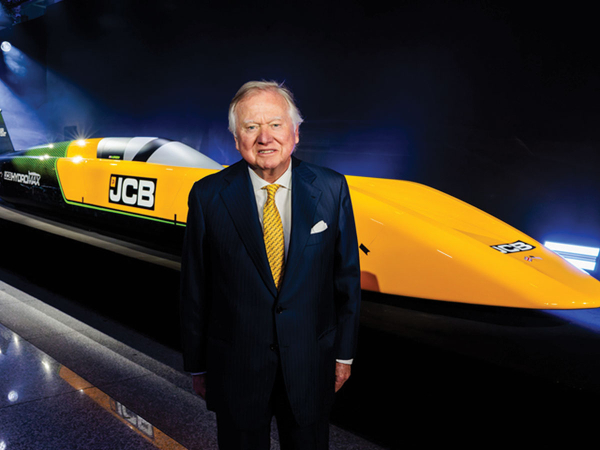
With that Dieselmax car providing a starting point for the new Hydromax, factory sources suggest the car is more powerful, 10% lighter and 10% more aerodynamic, so delivers a great recipe for performance.
Power for the car is delivered from two fourcylinder engines, with one driving the front wheels and the other driving the rear. Physically, the only connection between the two drivetrains is the salt surface of the lakebed, so removing the complexity and weight of a connected driveline, but adding the challenges of a complex engine management system to operate the two engines in tandem.
The major change from the ‘conventional’ JCB hydrogen engine used widely in its constructionorientated products is power output. Production versions of the engine typically deliver 80hp, but Hydromax will see a tenfold increase to 800hp, giving a combined total of 1600hp.
Layout is also a technical jigsaw, meaning to provide sufficient space for the fuel tanks and cooling infrastructure, each engine is mounted at 82 degrees and operates with a dry sump, with separate oil reservoir and air separator.
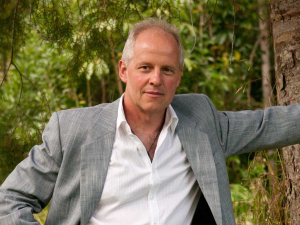
Tight-lipped about the speed it wants to achieve, one can assume that the number required is more than 350mph, so it’s no surprise to hear that driving the car will be the current fastest man on earth, retired RAF Wing Commander Andy Green. Green holds the current land speed record from Thrust SSC in 1997 with a top speed of 763.035mph and piloted the Dieselmax vehicle in 2006.
Besides wanting to head into the record books, the project’s other aim is to demonstrate the capability and performance of hydrogen as a diesel replacement, particularly as fuel cell research is heading forward at a rate of knots with several conventional car manufacturers. Following engineering testing in the UK in June, the car will take part in Bonneville Speed Week in August.
The project is a personal endeavour of JCB chairman Anthony Bamford, who speaking during Hydromax’s reveal said, “Britain has a proud heritage of setting speed records and, as a British company, I am excited to challenge for a new one using hydrogen. This is not just about speed; it’s about showcasing the world-class engineering talent we have here in the UK and the robustness of our new hydrogen engines. As for the speed we are aiming for with JCB Hydromax? We certainly intend to beat 350mph.”
www.jcb.co.nz