Pichon Adds SV10R and SV14 to SV Slurry Tanker Range
French manufacturer Pichon has expanded its SV slurry tanker range with the launch of two new models.




 increase font size
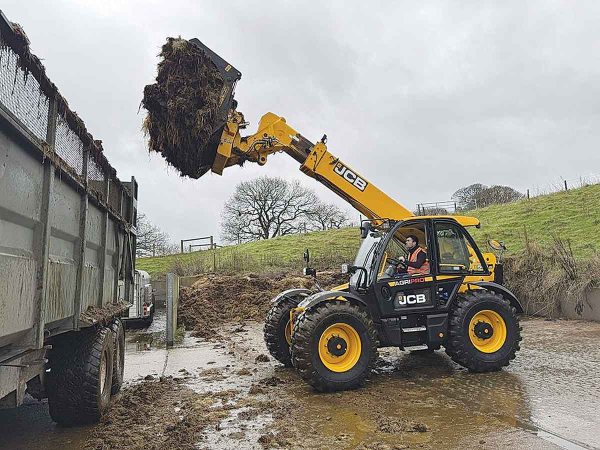 JCB says it will increase the size of its new factory currently being built in Texas.
Since Donald Trump’s import tariff announcement, the world has been on a wild economic ride.
Indeed, by April 8, US companies alone had reportedly lost around US$2.5 trillion in value, only ever seen before in the Great Depression, the Global Financial Crisis and the Covid Crisis – none of which were intentionally manufactured.
Of course, farm machinery manufacturers will be affected, particularly those with production sites in Europe who ship to the United States.
In response to the increased tariffs announced on April 2, JCB says it will increase the size of its new factory that is currently being built in Texas.
“In the short term, the imposition of tariffs will have a significant impact on our business,” said JCB CEO, Graeme Macdonald, for the UK-based construction and agricultural equipment manufacturer.
“In the medium term, our planned factory in San Antonio will help to mitigate the impact, but we are thankful that the tariff is only 10%, but we hope that the UK government will conclude negotiations on a trade deal in the coming days and weeks.”
Trump used “emergency powers” to issue a 10% baseline tariff across the board on all imports to the US, that took effect on April 5th. Higher tariffs are set for countries with larger trade surpluses with the US, like China at 54% higher and the European Union at 20% higher. Interestingly, the UK left the European Union in 2020.
JCB’s has announced that its “original plan” to build a 46,500-squaremetre plant in San Antonio has now been doubled to 93,000 square metres or 22 acres, easily making it the company’s second-largest factory.
The $500 million plant is set to begin production in 2026 and employ 1500 people, complementing the company’s North America headquarters in Savannah, Georgia, where it has been for 25 years and employs about 1000 people. That 46,500-square-metre facility manufactures skid steer loaders, compact track loaders and Teleskids. It also produces the High Mobility Engineer Excavator and Light Capability Rough Terrain Forklift for the US military and other NATO-aligned forces.
“JCB has been in business for 80 years this year, so we are well accustomed to change,” said JCB chairman, Sir Anthony Bamford. “The United States is the largest market for construction equipment in the world, and President Trump has galvanized us into evaluating how we can make even more products in the USA, which has been an important market for JCB since we sold our first machine there in 1964.”
Elsewhere, global ag equipment company CNH Industrial says it has temporarily paused shipments due to uncertainty stemming from the ongoing tariff situation. In a statement, the company is stopping shipments from North America plants and European imports effective immediately. Officials say the move is temporary until they assess the full impact of tariffs on pricing. The company stated there are no impacts to production and shipment of parts will continue as planned.
French manufacturer Pichon has expanded its SV slurry tanker range with the launch of two new models.
Recently revealed, Krone’s new Series Six, BiG Pack Plus and Pro balers are designed to use standardised components, interfaces, and control concepts, including pick-up, knotter systems and user interfaces.
Consuming around six years and more than 35,000 hours of physical and digital testing, the new sixth-generation Valtra T Series is being described as the most significant new release in the company’s history.
Strautmann has introduced a new Hay Edition auger for its Verti-Mix feed mixer wagons, aimed at operators using rations with larger proportions of hay or other long-fibre materials.
JCB has set a new world land speed record of 406.320mph with its hydrogen-powered Hydromax.



Mark Hooper has been appointed the new chair of NZPork, the industry organisation representing New Zealand pig farmers.
As the India-New Zealand free trade agreement enters into force, New Zealand’s apple industry has reaffirmed its commitment to the long-term development of India’s apple sector.
Fonterra shareholders can begin voting on Tuesday 20 October in the 2026 Board of Directors’ election, a Co-operative Council election in one Ward, and seven Annual Meeting resolutions.
National’s pledge to introduce 19 new national standards shows the party is serious about getting Wellington out of farming, Federated Farmers says.
The National Party’s policies to make it easier to grow fresh vegetables, secure reliable water and energy and simplify farm planning are practical changes that will give growers the confidence to invest, according to Horticulture New Zealand (HortNZ).


OPINION: It seems Canterbury processor Synlait is still in the doldrums.
OPINION: Get offside with New Zealand First leader Winston Peters at your own peril.