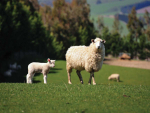
Early Weaning Lambs: What the Massey Trials Found
Farmers with high-quality feed available in late spring could consider weaning at least a proportion of their lamb crop early to benefit both lambs and ewes.
 increase font size
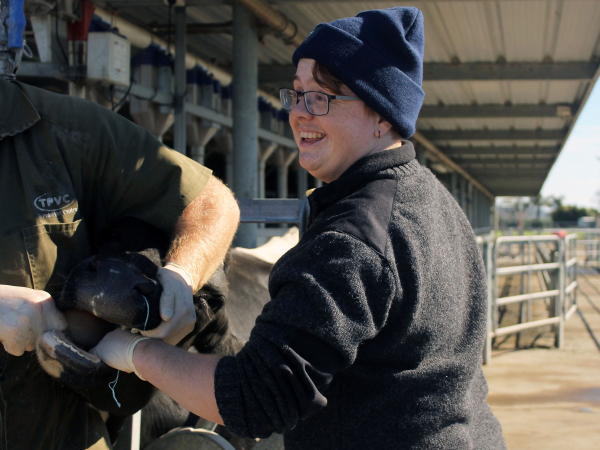 Frey Livingston
MPI’s Sustainable Food and Fibre Futures fund will invest over $35,000 in a project with Tokaora Diagnostics to develop a prototype facial eczema (FE) rapid antigen test (RAT) and undertake field testing.
While the test has the potential to be use on sheep, cattle, and deer, initial trials are focusing on dairy cattle.
Steve Penno, MPI director of investment programmes, says FE is a disease that often doesn’t show physical symptoms until it’s too late to save the animal.
“Currently, there’s no cheap, on-farm diagnostic on the market, so we’re supporting Tokaora Diagnostics to take their proof-of-concept test to the next stage,” he says.
“FE is a long-standing issue for our agricultural sector, and with climate change it’s expected to get worse as the toxic spores that cause the disease are more likely to grow in warm and humid conditions.
“MPI has invested in a range of projects aimed at combating FE, including breeding spore-resistant grass, and working with vets, dairy farmers, and rural professionals to raise awareness about how to take preventative action,” says Penno.
“This project is another step towards better managing this disease.”
Tokaora Diagnostics is a family-owned research company headed by chief researcher Frey Livingston and his mother Pam, who is the managing director.
The company conducted initial research and development through start-up grants from Callaghan Innovation.
It also won the Venture Taranaki Power Up Awards in 2022 and received mentoring through the Sprout Agritech Accelerator programme.
“We’re grateful to have received so much support to make an ‘invisible’ problem visible,” says Livingston.
“Right now, farmers can test for the disease through blood samples taken by vets but it is expensive and time consuming. With our solution, farmers will be able to do the testing themselves quickly and easily via nasal mucus or saliva,” says Frey.
Financial losses from FE in New Zealand have been estimated as high as $274 million per year from lost production, and the cost of labour, treatment, and deceased animals.
“By detecting facial eczema accurately we’d expect to see significant cost savings on farms in affected areas,” says Pam Livingston.
“It will enable farmers to surveillance test, which will facilitate timely treatment. It will also allow more informed purchasing, breeding, and culling decisions,” she says.
“For vets, it will be a quick diagnostic tool when called to a poorly animal, and for researchers it will give a timely answer to the ‘who has it and how badly’ question. And, of course, improved animal welfare is a high priority.”
Farmers with high-quality feed available in late spring could consider weaning at least a proportion of their lamb crop early to benefit both lambs and ewes.
The first major update to the Dairy Cattle Code of Welfare in more than a decade has been released, marking what DairyNZ describes as an important step in ensuring animal welfare standards continue to evolve alongside scientific evidence and on-farm realities.
Bovine Viral Diarrhoea (BVD) is sometimes viewed as a dairy industry issue, but the reality is that the disease can have serious consequences for beef breeding herds as well.
Animal health company Bovonic is gearing up for its next stage of growth after increasing New Zealand sales of QuadSense by more than 50% in the last 12 months, including a record quarter for the business this year.
With lambing underway in many regions, Beef + Lamb New Zealand is encouraging farmers to put together a wellequipped lambing kit to help minimise lamb losses, particularly in bad weather.



Federated Farmers has welcomed new rural policies released by ACT, saying they align closely with its own election priorities.

Rural Contractors NZ says proposed changes to land transport rules for agricultural vehicles are a welcome response by the Government to out of date regulations which have seen members hit with huge fines.
Alliance is calling for final applications for its 2027 Graduate Programme, with applications closing on Sunday 25 October.
Decades piloting planes has ensured vet and farmer David Hayes is focused on safety. So, after a serious accident while welding on farm, he is sharing his experience so others can learn from it.
Canterbury milk processor, Synlait Milk has confirmed Leon Fung as its chief executive officer.
OPINION: Making it easier to collect rainwater and use it to grow crops and livestock is a no brainer.