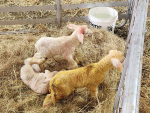
Beef + Lamb NZ's Lambing Kit Checklist for a Tough Season
With lambing underway in many regions, Beef + Lamb New Zealand is encouraging farmers to put together a wellequipped lambing kit to help minimise lamb losses, particularly in bad weather.
 increase font size
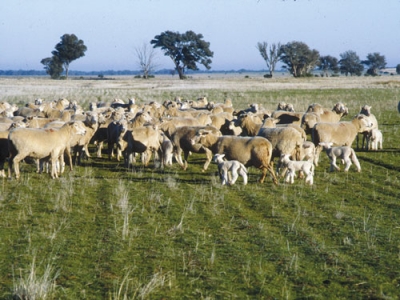 Gender imbalance in the lamb crop may be up to the ewes’ diet. photo: CSIRO
Australian researchers say the reason ewes produce many more lambs of one sex in one year than in others is traceable back to their diet in the leadup to joining.
Charles Sturt University PhD researcher Catherine Gulliver investigated how short-term feeding of diets high in omega-3 and omega-6 fatty acids can affect reproduction in sheep.
Her research saw nearly 300 first-cross ewes split into two groups and fed a special diet for six weeks before and three weeks after mating.
“The first group was fed a diet based on oat grain and some cottonseed meal that was high in omega-6,” Gulliver says. “The second group’s diet was based on pea silage, similar to a diet expected when ewes graze pasture, and it was high in omega-3.”
At lambing time, Gulliver found a 15% increase in the number of female lambs from sheep fed the high omega-6 grain diet compared with those fed the high omega-3 silage diet. “Of the lambs from the sheep fed a high omega-6 diet, 58% were female and 42% were male,” she says.
That compares with 44% female and 56% male lambs from the sheep fed the high omega-3 diet. Despite differences in the sex ratio between the two groups, there were no differences in the total number of lambs born.
Gulliver believes the research shows there is potential to alter the sex ratio of offspring by manipulating maternal nutrition around the time of conception – and thereby increase profits.
“If you can skew the sex ratio to your preferred gender to target specific production systems you could increase profit for a small input,” she says.
“For example, prime lamb producers typically prefer male off-spring due to their faster growth rates and muscle accumulation, while flocks using maternal sires may prefer female offspring to be kept as replacements for the breeding flock.”
Ewes fed the high omega-6 oats diet had higher omega-6 concentrations in their plasma and red blood cells, shorter time to oestrus and lambing and a higher proportion of female lambs than ewes fed the high omega-3 silage diet.
“More research is needed to determine whether the effect on sex ratio was pre-conception or post-conception and the exact duration of feeding required,” Gulliver says.
NSW Department of Primary Industries livestock researcher Edward Clayton says there is a lot of anecdotal evidence that in times of drought sheep get more females. “It could be that in drought [the ewes] are being fed more grain and it just so happens it coincides with that joining period,” he says.
Meantime, Clayton is working on a project to lift the amount of omega-3 in red meat. He says most people get their omega-3 from fish oil, but the research will also look into whether grass-fed sheep, lamb or beef has high enough omega-3 levels to make a claim
as a “good source” of omega-3.
With lambing underway in many regions, Beef + Lamb New Zealand is encouraging farmers to put together a wellequipped lambing kit to help minimise lamb losses, particularly in bad weather.
Will a stronger, more coordinated voice help rebuild confidence and improve returns in the wool sector?
Four years since it was first detected in New Zealand, researchers and growers now know much more about management of maize pest fall armyworm (FAW).
Generative AI in the workplace, trials in the field, and industry-relevant research took centre stage at this year’s Grape Days events in Central Otago, Hawke’s Bay and Marlborough.
For Taupiri dairy farmers Logan and Sian Dawson, their involvement in the NZ Dairy Industry Awards has been a key catalyst in the growth of their business - the experience helping shape how they approach the farm ownership pathway they are pursuing today.


Now in its fourth year, the 2026 Fencing Industry Awards, formed part of the proceedings of the FCANZ Conference, held in Nelson during August.
DairyNZ deputy chair Cameron Henderson has been re-appointed unopposed for another term.
OPINION: The stats speak for themselves.
Farms across the upper North Island are trialling different pasture mixes as part of a research programme that aims to build greater resilience into farming systems.
Election years are always a concerning time for farmers, according to DairyNZ chair Tracy Brown.
The Ballance Farm Environment Awards are coming to the West Coast of the South Island.