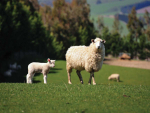
Early Weaning Lambs: What the Massey Trials Found
Farmers with high-quality feed available in late spring could consider weaning at least a proportion of their lamb crop early to benefit both lambs and ewes.
 increase font size
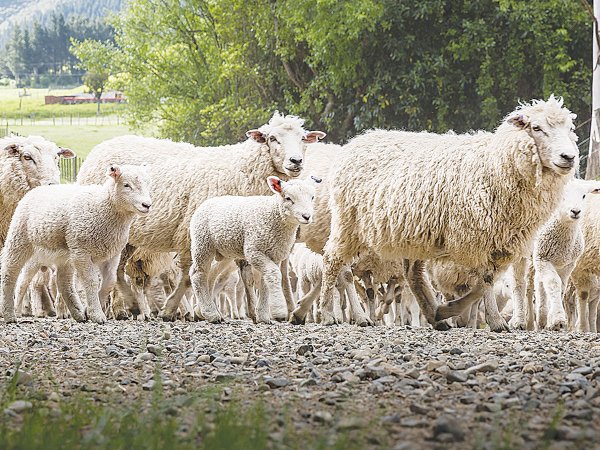 Stockmanship means the ability to read stock and anticipate their next move.
I wrote an article in the May 6th issue of Rural News about how when set-stocking ewes for lambing, they need spreading lightly - and topped up with cattle after the lambs have dropped.
People have responded that this suggestion is all very well, if you have cattle available.
I'd like to point out I had made reference to this, but unfortunately, it was edited out before printing, in order for the article to fit the available space.
What I had said was: "The cattle side of the equation gives security by way of flexibility. Meaning, numbers can be adjusted to suit. Because stock-carrying capacity is not an exact science, as there are so many variables, including the weather. But if you don't have cattle to utilise, then that makes it a trickier ball game altogether."
Anyway, I'm now doing a follow-up on stock handling. Firstly, the thing to understand about sheep is they're silly at the best of times, but if you put too much pressure on them, they can be stubbornly difficult; even to the point of spiting themselves. Mind you, people can be like this too!
Stockmanship (stock sense) means the ability to read stock, i.e. anticipate their next move and be positioned correctly. Just like a top rugby player. But if you have to be taught this, you'll never really get the hang of it.
Another point it, there's an ethical code in the sense that, when mustering, stock shouldn't be crushed through gateways. You should stand well off, or else position yourself near the gateway, to slow the flow. And the dogs should be told to shut the hell up.
The best move I made was to fence a lane through the farm. I can't describe how much easier it made the moving of stock. A kid on a push bike with a fox terrier could do it.
Since phasing out horses, we've had to draft cattle on foot in the actual yards. So I found that a thin 2.4 metre length of Manuka is best for that job, because you can stand off the cattle to avoid being kicked.
And you can use the stick to reach into a corner of the yard where cattle have bunched up, in order to get the one you want, by tapping it on the nose, which makes it back out of there.
Also, the person at the gate through which cattle are being drafted can use a long stick to keep the main mob at bay. Otherwise, the odd one will make a break through the gate.
A long stick is also essential when loading cattle up the race onto a truck. Meaning you can, through the rails from the outside, give the one at the front a little poke under the tail from well back, so as not to disrupt the flow by getting too close and cause the following beast to balk.
I've mentioned using a long stick because it can be so much better than a short length of alkathene.
I must add as a final sentiment that it should be acknowledged there is more than just yourself involved in farming. By that, I mean what needs emphasising to men is that dogs, horses and wives will work their hearts out - so instead of being taken for granted, they deserve to be treated nicely in return. In fact, they should be lavished with kindness and affection.
Kerry Butler farms in Waipawa, Central Hawke's Bay.
Farmers with high-quality feed available in late spring could consider weaning at least a proportion of their lamb crop early to benefit both lambs and ewes.
The first major update to the Dairy Cattle Code of Welfare in more than a decade has been released, marking what DairyNZ describes as an important step in ensuring animal welfare standards continue to evolve alongside scientific evidence and on-farm realities.
Bovine Viral Diarrhoea (BVD) is sometimes viewed as a dairy industry issue, but the reality is that the disease can have serious consequences for beef breeding herds as well.
Animal health company Bovonic is gearing up for its next stage of growth after increasing New Zealand sales of QuadSense by more than 50% in the last 12 months, including a record quarter for the business this year.
With lambing underway in many regions, Beef + Lamb New Zealand is encouraging farmers to put together a wellequipped lambing kit to help minimise lamb losses, particularly in bad weather.

Alliance is calling for final applications for its 2027 Graduate Programme, with applications closing on Sunday 25 October.
Decades piloting planes has ensured vet and farmer David Hayes is focused on safety. So, after a serious accident while welding on farm, he is sharing his experience so others can learn from it.
Canterbury milk processor, Synlait Milk has confirmed Leon Fung as its chief executive officer.
OPINION: Making it easier to collect rainwater and use it to grow crops and livestock is a no brainer.
As part of its Election 2026 coverage, Rural News asked political parties how they would help pull the arable sector out of the doldrums. Here's what they said:
Farmers are being encouraged to rethink how they manage waste on farm with the launch of ruralwastesorted.co.nz, a new website bringing together practical tips, real farmer experiences and resources.