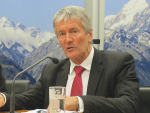
Damien O’Connor Criticises Budget 2026 as ‘Miserable’ for Rural New Zealand
A miserable budget that didn’t deliver much for anyone.
 increase font size
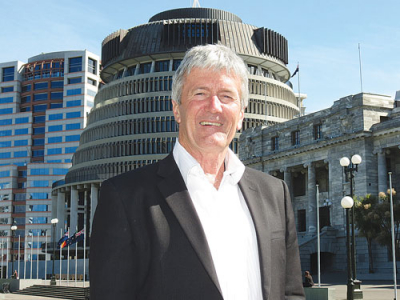 The PSC was set up in April 2018 by the Agriculture Minister Damien O’Connor..
Taxpayers forked out at least $31,000 sending Primary Sector Council (PSC) members to an agribusiness bootcamp at Stanford University in California, USA, in July.
This disclosure follows an official information (OIA) request by Rural News to the Ministry for Primary Industries (MPI) on August 1, 2019 enquiring about PSC spending and costs.
The answers were at last provided on September 20 (a day after the September 24 issue of Rural News had gone to print), following MPI requesting an extension of the official OIA 20-working day limit on August 27.
MPI confirmed that a total of $31,270 was spent sending three PSC members – chair Lain Jager, Steve Smith and John Rodwell – to the Te Hono Stanford Bootcamp. It also confirmed that fellow PSC members Nadine Tunley, John Brakenridge and Steve Saunders also attended … “but not in their capacities as PSC members”.
The PSC was set up in April 2018 by the Agriculture Minister Damien O’Connor. At the time, O’Connor claimed… “This group of agribusiness leaders aims to help the primary sector get more value from its work by providing strategic advice on issues, opportunities and challenges facing the primary industries and developing a sector-wide vision guiding strategies....”
But 18 months since its formation the PSC has yet to deliver anything tangible.
Rural News’s OIA request also enquired after “the reasoning, rationale and cost analysis behind the decision to send members of the PSC to attend Te Hono Stanford Bootcamp”.
“The Te Hone Stanford Bootcamp is an annual week-long intensive programme held at Stanford University for people in chief executive and other senior governance positions in the primary sector,” MPI replied.
“The Te Hone (sic) Stanford Bootcamp presented an opportunity for the PSC to engage around 70 senior leaders representing around 25 of the largest food and fibre companies in New Zealand,” the ministry added.
“They discussed the forward vision and action plan for New Zealand’s primary sectors, given the changing environment. This collaborative discussion among sector leaders was recommended as a way of building on prior sector engagement and gaining commitment to the vision.”
MPI claims the cost of attendance by the members was included within the annual PSC budget.
Meanwhile, MPI has also confirmed that the total expenditure on the PSC from April 2018 to August 2019 was “approximately” NZ$363,000 (GST inclusive).
“This represents costs invoiced to MPI and excludes MPI secretariat salary costs as these are funded from MPI’s baseline budget,” the ministry said.
Who makes up the PSC?
The 15 member PSC is chaired by former Zespri chief executive Lain Jager.
It’s 14 other members are Nadine Tunley, Puawai Wereta, Tony Egan, Julia Jones, John Brakenridge, Stephanie Howard, Mark Paine, Julian Raine, Neil Richardson, Mirana Stephens, John Rodwell, Steve Saunders and Steve Smith.
According to MPI, council members are paid a daily rate of $800 for the chair, $500 for members and $650 for members acting as chair or leading a sub-group.
A miserable budget that didn’t deliver much for anyone.
National's decision to ‘dribble’ information about the NZ/India to Labour contributed to the delay in it deciding to supported the FTA.
When it comes to international trade, politicians from all sides of the aisle are united, says Labour's trade spokesman Damien O'Connor.
Federated Farmers have reiterated their support for the coalition Government to abolish the present ban on the live export of animals.
As the coalition Government mulls new regulations to reinstate the export of live animals, debate is heating up between supporters and opponents.


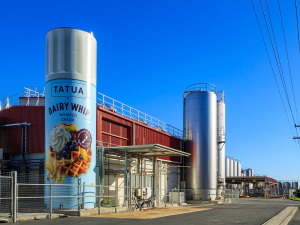
Waikato milk processor Tatua has again declared a record milk payout to farmer shareholders, leaving other processors in the dust.

A Labour-led Government won’t be bringing back the controversial freshwater rules of 2020.
National’s much-touted free trade deal with India featured in the Rural Issues Debate at Mystery Creek, Hamilton on Wednesday night.
New Zealand's 2026-27 freshwater fishing season has opened, with anglers encouraged to head to rivers and lakes over the coming days as conditions look favourable across much of the country.
Central Otago District Council (CODC) has voted against a plan to spread treated sewage sludge from Cromwell and Alexandra on farmland near Lauder, a decision Federated Farmers says reflects strong opposition from rural residents.
Pāmu has released its FY26 Integrated Annual Report, reporting a Net Operating Profit of $113 million, more than double the $49 million recorded in FY25.