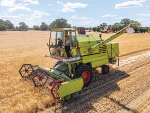
Case IH Unveils Next Generation Puma Series Tractors
Case IH has unveiled its redesigned next generation Puma Series tractors, said to offer improvements in connectivity, operator comfort, fuel efficiency and drivability.
 increase font size
 Matt Dilly
According to the latest ANZ Agri Focus report, energy-intensive and domestically-focused sectors currently bear the brunt of rising fuel, fertiliser and freight costs.
Matt Dilly, ANZ agri economist, says fuel has emerged as the most immediate pressure point following the escalation of conflict in the Middle East.
“The main impact of the Middle East conflict has been a stark shift from a stable input cost environment to a volatile one,” Dilly says.
Diesel prices have surged rapidly, with overseas benchmarks and local pump prices both rising sharply.
Fuel surcharges are already being applied across land, sea, and air transport, and those costs are flowing through quickly to farm budgets.
Forestry has been hit particularly hard - log harvesting, internal transport, and shipping are all fuel intensive, leaving the sector highly exposed to higher diesel prices.
Shipping costs to China have jumped sharply in recent weeks, the report said, eroding margins for an industry that has already endured several difficult years.
Dilly says higher fuel and cartage costs were expected to slow forestry activity if prices remained elevated, especially for smaller woodlot operators who have less ability to absorb cost shocks.
“Anecdotal reports suggest a decline in forestry activity is expected if fuel prices remain elevated,” he says.
Arable farming is also under pressure - several seasons of poor returns had already dented confidence before diesel and fertiliser costs surged again.
In some cases, higher diesel prices hit while crops were still being harvested, compounding the financial impact.
“There’s never a good time to face prices doubling on key inputs, but for New Zealand arable farmers it’s come at a particularly difficult time,” Dilly says.
The fertiliser outlook was adding to that concern - the Middle East is a major source of oil, gas and petrochemical feedstocks, and global urea prices have already roughly doubled.
“So far, local fertiliser prices have only risen slightly, but that is likely to change come spring,” he says.
The report states that fuel and fertiliser account for approximately 12% of total farm expenditure.
For sheep and beef farmers, fertiliser often became the first thing to cut back on when cashflow tightened - a decision that could reduce productivity over time rather than immediately.
While the jump in input costs is a clear challenge, the report noted that parts of the rural economy are starting from a position of genuine resilience.
Dairy and red meat prices remain elevated, providing a stronger income buffer than many farmers have had in recent years, even as costs rise.
ANZ has also recently revised up its forecast for the 2025/26 farmgate milk price to $9.85/kgMS, reflecting the lift in global dairy prices over the past few months.
Beef and lamb prices have also held steady at high levels, and optimism is building for this year’s apple and kiwifruit crops.
The report states confidence across the rural sector had softened as farmers reassessed spending plans, with some cashflow that might have gone into farm development or expansion instead being held back to buffer against rising costs and interest rate risk.
Freight disruption was adding another layer of uncertainty - cargo destined for the Middle East is being rerouted at extra cost, and fuel surcharges are becoming more common across shipping routes.
Container supply had not yet tightened, but Dilly warns that disruption could not be ruled out.
“Even in the unlikely event that the Strait fully reopens next week, it will take months or years for supply chains and markets to fully return to normal,” he says.
Case IH has unveiled its redesigned next generation Puma Series tractors, said to offer improvements in connectivity, operator comfort, fuel efficiency and drivability.
A milk glut around the world shows no sign of easing, putting downward pressure on farmgate milk prices for the next few months.
Farmers and growers are powering the economy with export revenue at record highs.
The new dairy season is kicking off with plenty of risks to the forecast farmgate price, both upside and downside, says ANZ agricultural economist Matt Dilly.


Bigger, bolder salads packed with colour, crunch and flavour are making headlines overseas — and the arrival of fresh spring vegetables means New Zealanders can now get chopping too, creating their own Great Kiwi Spring Salad.

Chinese beef trade quotas and a looming suspension of Brazilian beef imports into the European Union are expected to reshape global beef trade flows over the remainder of 2026, with implications for New Zealand exporters, according to Rabobank's Q3 Global Beef Quarterly report.
James Blair, an agronomist for AS Wilcox and the Pukekohe regional champion, has won the 2026 Young Grower national title.
An Auckland gelato shop and an established New Zealand ice cream maker have both been named Supreme Champions at the NZ Ice Cream & Gelato Awards 2026.
As the cost-of-living crisis continues to put pressure on household grocery budgets, new figures show pork remains one of the most affordable fresh meat options for New Zealand families.
OPINION: In politics, credibility is and should be big. It must surely rank higher than charisma, which is quite trite and superficial. Yet, voters nowadays are often wooed and influenced by how someone looks or talks at a superficial level. TV plays a huge role in this.