What Would Synlait Be Worth to Fonterra or a2 Milk?
Speculation of a possible joint move by Fonterra and a2 Milk to buy Synlait raises a much bigger strategic question, says agribusiness expert Dr Nic Lees.
 increase font size
 ASB general manager rural banking, Aidan Gent.
A new report from ASB and Lincoln University shows how smarter, more diverse land use could unlock billions in value for farmers and the wider economy.
The Future Use of Land and How to Fund It, a collaboration between ASB and Lincoln University's Centre of Excellence in Transformative Agribusiness, outlines how land use optimisation across the food and fibre sector could significantly boost the country's GDP, while also delivering social and environmental benefits.
Developed with input from leaders across the primary sector, including dairy, horticulture, sheep and beef, agritech, finance and government, the reoport explores four possible futures for New Zealand.
Each scenario focusses on a single factor that will impact the food and fibre sector, for example greenhouse gas (GHG) emissions targets, or the Government's goal to double export values, and pushes them to the extreme, demonstrating the pressing need for change.
The research sets out seven transformational pathways, such as diversifying farm systems to introduce mixed revenue streams, increasing horticultural production, and unlocking underutilised Māori land. It demonstrates how better land use, paired with innovative funding, can unlock sustainable value across rural New Zealand.
Researchers have also developed a land transition model, providing land-use insights on a regional level. Agri-consultants can use the model to help inform potential paths forward for farmers.
“The food and fibre sector has always been a key driver of our economy, yet many producers operate on slim margins. We speak with farmers every week who are deeply committed to their land and legacy but grapple with viability, as they’re not getting the returns to operate sustainably into the future,” says ASB’s general manager rural banking, Aidan Gent.
“This research brings together the insights and tools to help landowners make informed decisions for future prosperity.”
Alan Renwick of Lincoln University says optimising land use by just 10% could add $10 billion in value to the economy if it’s done in the right way, and this or more could be achieved in the next 5-7 years.
Speculation of a possible joint move by Fonterra and a2 Milk to buy Synlait raises a much bigger strategic question, says agribusiness expert Dr Nic Lees.

Lynnette Hudson's 30-year obsession with Pinot Noir was sparked working vintage in Burgundy, seeing how subtle changes in terroir were expressed in the glass. It was, she says, "an elightening moment in every way".
A four year trial has reaffirmed that mixing plantain into dairy pastures can help reduce nitrogen losses to freshwater while maintaining milk production and profitability, say researchers.
Twenty five secondary school students from around New Zealand recently completed a three day residential programme designed to explore career opportunities across the food and fibre production supply chain.
A Lincoln University student is set to become the first person to contest both the Young Viticulturist and the Young Winemaker national titles in one year.


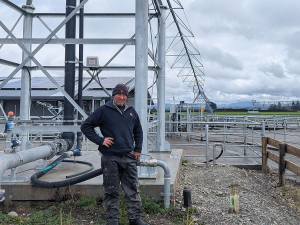
Converting a longstanding cropping farm to dairy was the only way to ensure the land stayed in the family long term, says new dairy farmer Rod May.
As the election heats up, Organics Aotearoa New Zealand (OANZ) has launched its election scorecard designed to help voters wanting to support policies that grow organic and New Zealand's organic sector.
A 'tsunami' of milk from key exporting countries is winding down and this may be good news for New Zealand dairy farmers.
Will the good times last? That's one of the key issues to come out of the latest Federated Farmers confidence survey.
Outgoing Fonterra Co-operative Council chair John Stevenson says that it has been a privilege to represent the co-op's farmer shareholders.
Have a plan in place for your cows and staff.