It's The Margins That Matter
OPINION: It appears to be difficult for people who haven’t tried to run a business to understand the difference between assets and cash.
 increase font size
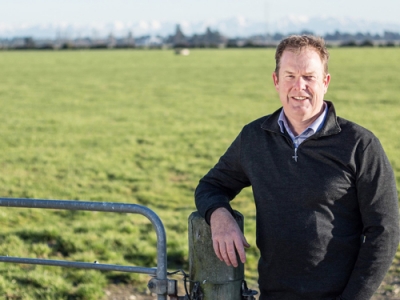 Greg Campbell.
Fertiliser cooperative Ravensdown continues to bounce back from the abyss, after its latest annual result and rebate announcement.
It was just two years ago the company was on the financial brink, following a disastrous foray into Australia and other non-core investments, led to it paying out a nil rebate to shareholders and clocking up more than $346 million in bank debt.
However, in 2015, that debt has been cut to $6 million and farmer shareholders around the country will receive a record rebate of $50 per tonne. Ravensdown says a fully paid-up shareholder – who applied 150 tonnes of fertiliser – will receive $7,500 in cash rebate in August; instead of the traditional September payment.
Chief executive Greg Campbell told Rural News this year’s effort was no one-off result, but part of a planned strategy developed back in 2013.
“We have deleveraged the balance sheet and concentrated only on parts of the business that add value to our shareholders. These (parts of the business) have to wash their own face, if you like.”
Campbell says Ravensdown remains a totally focused integrated business that makes financial and social returns to its shareholders.
“We are not only selling fertilisers to our shareholders, but also providing scientific and agronomic advice to help our farmers meet the ever-increasing environmental compliance demands that ate being imposed on them,” Campbell adds. “We have invested heavily in this side of the business and we have the highest number of nutrient advisors in the country.
“During the past year, Ravensdown also built a team of local animal health and agronomy specialists and more certified nutrient management advisers now work for the co-operative than any other company. The environmental consultancy is also expanding due to increased demand.”
Campbell says the cooperative achieved its fertiliser tonnages target, which he claims have held steady compared to the previous year and passed on price reductions throughout the year.
“Many products are at historically low prices such as urea which is the lowest it has been for eight years.”
Ravensdown earned an operating profit of $51.9 million, despite one-off costs associated with the closure of Waikeratu’s lime quarry due to safety concerns. Exiting the Ruralco joint venture with ATS and the cost of two unsold Australian buildings also impacted on the bottom line result. After exiting of all its loss-making Australian ventures, revenue for the year declined to $716 million.
Campbell remains cautious about trading conditions that may affect fertiliser tonnages in the current year, but is confident that the business and farming fundamentals are strong.
“There is no doubt dairy is down, but other parts of the sector – which we have interest in – including sheep and beef, arable, horticulture and viticulture are doing well,” he adds. “It is vital in tougher times that farmers engage with the team around nutrient budgeting, soil testing and animal or plant productivity.”
Campbell says pastoral feed systems are still the most cost efficient model for livestock farming
Ravensdown will hold its AGM on September 14 in Dunedin.
OPINION: It appears to be difficult for people who haven’t tried to run a business to understand the difference between assets and cash.
OPINION: In the 1980s, concern was expressed in West Germany about the falling birth rate. Some simple analysis was performed by Professor Helmut Sies, physician and biochemist at Dusseldorf University. His letter ‘A new parameter for sex education’ was published in Nature in 1988:
Plan ahead and be patient. That’s the message to farmers and horticulturalists from the chairman of the NZ Agricultural Aviation Association, Kent Weir.
Amazone's ZG-TX combi spreader has been updated with several new features, centred around improved accuracy and easier operation.
When it comes to annual rebates, it's been a long time between drinks for Ravensdown shareholders.


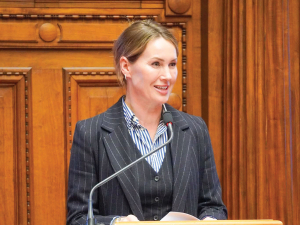
The Government is introducing a new nationwide rural recycling scheme that will significantly increase the recovery of farm plastics from March next year, Minister for the Environment Nicola Grigg announced today.
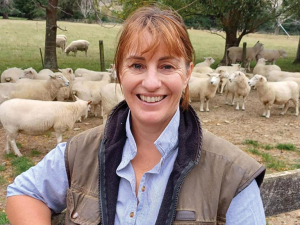
B+LNZ's Wormwise veterinarian Mary Bowron has won the Best Sheep and Beef Vet of the Year Award in recognition of her outstanding contribution to New Zealand’s sheep and beef sector.
Researchers at Massey University are using a special piece of scientific equipment to improve the measurement of greenhouse gas emissions from pasture soils.
More signs of a booming kiwifruit sector.
OPINION: David Seymour and James Meager's plan to make it easier for farmers and orchardists to operate drones can best be described a 'courageous' move.
New Zealand wool is reaching new heights as air filtration companies move away from synthetic products to biodegradable alternatives.