Rural Mobile Coverage Worse After 3G Shutdown, Survey Finds
Mobile phone coverage and reliability are deteriorating in rural areas, and farming families are bearing the cost, according to a Federated Farmers survey.
 increase font size
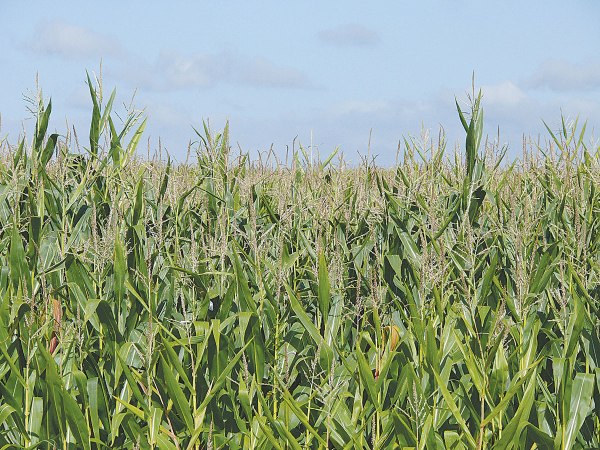 The latest Arable Industry Marketing Initiative (AIMI) report estimates a 2023 maize grain harvest of 164,400 tonnes.
For many North Island maize growers, the 2022/23 season has been one to forget and for some, it has been a financial disaster.
The latest Arable Industry Marketing Initiative (AIMI) report estimates a 2023 maize grain harvest of 164,400 tonnes, down 13% in 2022.
Despite a 4% increase in harvest hectares, yield was down 16%.
The situation could be even more grim, says Federated Farmers Arable Vice-President Jamie Blennerhassett.
This is because as of the June 1 survey date, 37% of the crop was still unharvested, he says.
"The very wet growing season means across the wider country it has been a bad season,” says Blennerhassett. “Maize grain crops in Northland, Bay of Plenty, the East Coast and right down to the Wairarapa are only at about 50% of long-term averages.”
He says that due to persistent rainfall and then Cyclone Gabrielle in February, some crops have been wiped out, especially in the eastern region between Napier and Gisborne.
“Despite replanting two or three times, at the end, some had nothing – and much higher costs than usual as well.
“It’s pretty devastating financially for those people.”
Maize silage crops fared better. The harvest, at an estimated 1,051,600 tonnes, was down 7% compared to 2022, with a lower yield (down 9%) from an increased harvest area (up 3%). Almost all the harvest was in by June 1.
Most maize grain is sold for poultry and pig feed, with some going to dairy.
Blennerhassett says prices here are strongly linked to the cost of imported grain, and with the recent spike in world grain prices sparked by Russia’s attacks on shipments from Ukraine, "if we get dragged into those impacts the poultry guys’ costs could rise".
It’s unknown how much of the 37% of unharvested maize grain at the time of the June 1 AIMI survey has since been successfully brought in. The crop needs to be dried down for use and to keep the costs down of gas-fired drying plant.
A very poor season like this dents confidence. The AIMI report said maize grain spring sowing intentions (hectares) were 12% down on 2022 and for maize silage 3% down.
"The seed reps are saying there appears to be lower intentions to plant. A lot of the hectares in maize is land leased on year-to-year rollover and in some cases, the banks will draw a line on finance given the disastrous season some have suffered," Blennerhassett says.
"We traditionally have a south-westerly wind flow in New Zealand but with the La Niña phase we’ve been under it’s been the exact opposite, hence the heavy rainfall.
"We’re due to go back to an El Niño pattern but weather patterns have been so skew-whiff. It makes it so difficult for growers to plan."
Mobile phone coverage and reliability are deteriorating in rural areas, and farming families are bearing the cost, according to a Federated Farmers survey.
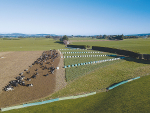
Central Otago District Council (CODC) has voted against a plan to spread treated sewage sludge from Cromwell and Alexandra on farmland near Lauder, a decision Federated Farmers says reflects strong opposition from rural residents.
Federated Farmers has called on Central Otago District Council (CODC) to drop or vote down a plan to truck sludge from Alexandra and Cromwell to farmland near Lauder, warning it would compound an "outrageous" situation created by a separate council's decision weeks earlier.
Federated Farmers says new legislation replacing the Resource Management Act will cut red tape, unlock investment and help grow New Zealand's export-led economy, after the Planning Bill and Natural Environment Bill passed their third reading in Parliament yesterday.
Leading figures from the major political parties will be questioned on their primary sector policies at the Rural Issues Debate at Mystery Creek Events Centre, Hamilton, on 30 September.



Fonterra Co-operative Group chief financial officer Andrew Murray has resigned to take up a role outside the dairy giant.
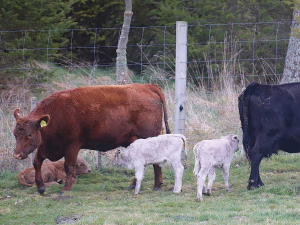
A major move is about to get underway to improve the quality and viability of dairy beef and cattle in NZ.
Veterinarians say changes to the code of welfare for dairy cattle provides a positive foundation for improved cattle welfare across the country.
Today, 15 October, is the International Day of Rural Women, which recognises rural women’s contribution to farming, communities and the environment.
Global dairy giant Lactalis has integrated its Australian operations with the Mainland Dairy consumer business it acquired from Fonterra earlier this year.
High country stations, mixed sheep and beef farms, Māori-owned farms, corporates and family operations are among the nine commercial farms taking part in the Livestock Innovation Farming Transformation programme, known as LIFT.