
Federated Farmers Welcomes ACT’s New Farming Policies
Federated Farmers has welcomed new rural policies released by ACT, saying they align closely with its own election priorities.
 increase font size
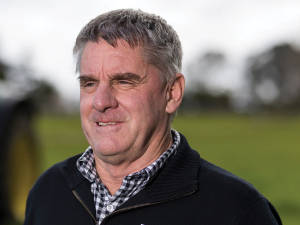
 Federated Farmers banking spokesperson Richard McIntyre.
Farmers are still having reservations about the service provided by their banks, according to Federated Farmers’ latest banking survey.
The survey of more than 600 farmers conducted in November shows only 53% of respondents are currently satisfied with their banking relationship.
"That’s a huge drop from 80% in 2017 and raises some serious questions about their behaviour," Federated Farmers banking spokesperson Richard McIntyre says.
"We’re incredibly concerned by the rapid deterioration in farmers’ relationships with their banks and hope this will face some real scrutiny during the banking inquiry."
The Federated Farmers report shows that one in four farmers continue to feel undue pressure from their bank, with dissatisfaction highest among sharemilkers at 35%.
Only 55% rated communication from their bank as good or very good, continuing a downward trend from a high of 80% just a decade ago.
Alarmingly, almost a quarter of farmers feel their bank doesn’t allow them to structure their debt efficiently. 11% report being asked to use overdrafts for capital projects.
"That’s really concerning and will be adding a lot of unnecessary financial stress for farming families across the country," McIntyre says.
"Forcing farmers to use their overdrafts for capital spending doesn’t just drive up interest costs for the farmer; it also unjustifiably drives up the profit for the bank.
"That kind of behaviour is totally unacceptable. Overdraft facilities are designed for short-term cashflow management, not longer-term investments."
According to the survey both ASB and Westpac were the most likely to make such unreasonable requests of their farming clients.
"This kind of poor and indefensible behaviour from banks has a real impact on farmers’ wellbeing," McIntyre says.
"Of those we surveyed, 33% said their mental health and wellbeing has been negatively affected through their interaction with the banks."
While the report shows continued poor performance and behaviour from many of the banks, there are still some strong performers.
Rabobank, with 23% of market share in rural banking, outstrips all the other banks in terms of satisfaction rates among farmers, at 70.1%.
Rabobank and ANZ also rate much better than others in terms of their flexibility for farmers to structure their debt.
"Those strong results from Rabobank and ANZ may be a silver lining, but there are clearly still some systemic issues in rural banking," McIntyre says.
"There is a real squeeze on agricultural lending at the moment and it’s getting harder every year for farmers to access the capital they need to run their businesses."
Reserve Bank figures show that lending to the farming sector is currently at $62.9 billion, up slightly from $59 billion in 2016.
"It might look like an increase on paper, but when you adjust that 2016 figure for inflation, it would be over $76.3 billion in today’s dollars," McIntyre says.
"What that means is that in real terms agricultural lending has decreased by $13.4 billion, or nearly 25%, since 2016.
"With constantly increasing costs and compliance, and a decrease in capital available from banks, it should be no surprise farmers are feeling squeezed."
Federated Farmers has welcomed new rural policies released by ACT, saying they align closely with its own election priorities.

Federated Farmers is backing Feilding High School’s call to keep Agriculture and Horticultural Science as a standalone subject in Year 11.
National’s pledge to introduce 19 new national standards shows the party is serious about getting Wellington out of farming, Federated Farmers says.
Mobile phone coverage and reliability are deteriorating in rural areas, and farming families are bearing the cost, according to a Federated Farmers survey.
Central Otago District Council (CODC) has voted against a plan to spread treated sewage sludge from Cromwell and Alexandra on farmland near Lauder, a decision Federated Farmers says reflects strong opposition from rural residents.


Federated Farmers has welcomed new rural policies released by ACT, saying they align closely with its own election priorities.

Rural Contractors NZ says proposed changes to land transport rules for agricultural vehicles are a welcome response by the Government to out of date regulations which have seen members hit with huge fines.
Alliance is calling for final applications for its 2027 Graduate Programme, with applications closing on Sunday 25 October.
Decades piloting planes has ensured vet and farmer David Hayes is focused on safety. So, after a serious accident while welding on farm, he is sharing his experience so others can learn from it.
Canterbury milk processor, Synlait Milk has confirmed Leon Fung as its chief executive officer.
OPINION: Making it easier to collect rainwater and use it to grow crops and livestock is a no brainer.