Editorial: Common Sense Prevails
OPINION: The Government's decision to reinstate agriculture and horticultural science as a standalone subject from Year 11 is the right one.
 increase font size
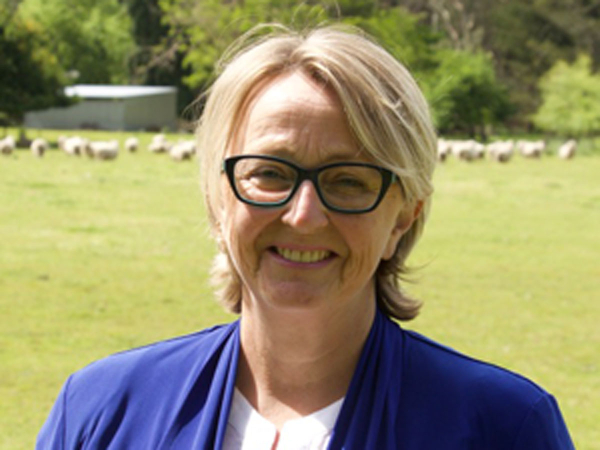 New RWNZ president Sandra Matthews
Rural Women New Zealand’s (RWNZ) new president, Sandra Matthews, says the cancellation of rural school bus services could have devastating consequences.
This year, the Ministry of Education has reviewed 290 of its 1,990 school bus routes. Of those, 38 have been or will be cancelled.
Matthews says these decisions are proving to have widespread consequences for rural families and communities.
“We are aware of families that will now have to drive more than an hour each way to take their tamariki [children] to school, which is unsustainable for working parents and their employers alike,” Matthews told Rural News.
She says this is leading some families to contemplate moving away from rural areas altogether to ensure their children can access education.
“This threatens the very viability of our rural communities,” Matthews says.
Matthews says the issue is the Ministry of Education’s guidelines for rural school bus services, which she labels as “outdated”.
Currently, there are three criteria for a student to be applicable for transport assistance from the Ministry of Education:
Additionally, a minimum of eight children must catch the bus on the route for it to continue running.
Matthews says this number needs to be lowered to account for the realities of smaller, modern rural communities which have fewer people but “are no less important than larger communities”.
She says RWNZ has requested a meeting with Minister for Rural Communities Mark Patterson and Minister for Education Erica Stanford to discuss the organisation’s three requests on the issue.
They want to see Stanford commission a full review of the policies governing the Ministry’s rural school bus guidelines, a halt on further bus route cancellations until that review is completed, and that the review is undertaken urgently in consultation with rural community representatives.
“These services are critically important to ensure rural tamariki have equitable access to education,” Matthews says.
“We must do everything to remove barriers to education so every child can access education. This is critical if the Government is serious about growing New Zealand into a well-educated society for the future and getting truancy levels down,” she adds.
RWNZ is not alone in its opposition to the cancellation of rural bus services.
Labour Party education spokesperson Jan Tinetti says that for working parents in rural areas, school buses are essential.
“They’re now facing hours out of their day to get their young people to and from school – or even longer if they have children in both primary and high school,” Tinetti says.
“Rural school bus cancellations and changes are leaving families scrambling to find alternatives. These cuts are hitting rural communities hard and making access to education even more difficult, while the Government claims to be focused on attendance,” she says.
OPINION: The Government's decision to reinstate agriculture and horticultural science as a standalone subject from Year 11 is the right one.

Teachers are welcoming the outgoing Government’s U-turn allowing agriculture and horticultural science to remain a standalone Year 11 subject.
Students will be able to study Agriculture and Horticultural Science from Year 11, creating a clear pathway into Years 12 and 13 and future careers in New Zealand’s primary industries, Education Minister Erica Stanford says.
Alliance is calling for final applications for its 2027 Graduate Programme, with applications closing on Sunday 25 October.
Federated Farmers is backing Feilding High School’s call to keep Agriculture and Horticultural Science as a standalone subject in Year 11.



During the nesting season, from September to December, industrious starlings can quickly build nests in the darker areas behind tractor and vehicle, usually close to hot engines, typically resulting in localised damage or in some cases complete write-offs.
The meat processing industry is much more collegial than it was in the past and is now more focused on common goals.
With the last couple of months having seen some potential tractor purchases put on hold with the impending election and continued input cost rises, year-to-date figures, ending September, has seen deliveries up around 5% over the same period in 2025, with a total of 2026 units.
Beef+Lamb New Zealand is calling for nominations for director roles in the Northern South Island and Northern North Island electoral districts.
Fonterra chief executive, Richard Allen says being resilient has helped the dairy industry overcome extreme volatility in recent years.
The head of the Ministry for Primary Industries (MPI) trade and international relations group says New Zealand is well-positioned to secure trade access and compete internationally as the world becomes more complicated, demanding and uncertain.