Susan O'Regan Appointed New Chair of QEII National Trust
Minister of Conservation Hon Tama Potaka has appointed Susan O'Regan as Chair of the Queen Elizabeth II National Trust (QEII) for a three-year term.




 increase font size
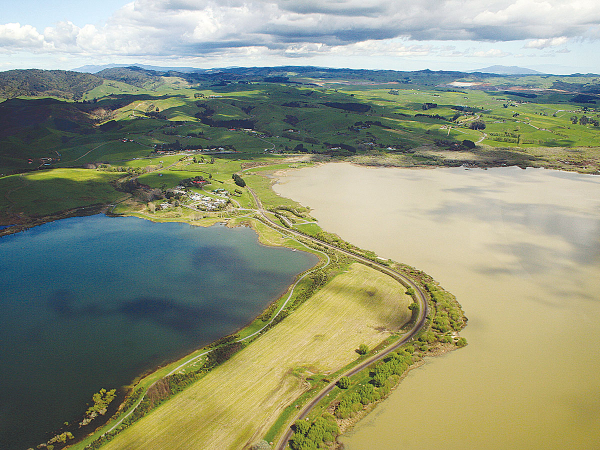 University of Waikato freshwater scientist Dr Deniz Ozkundakci says many waterways in Waikato are in urgent need of protection.
Waikato is home to a diverse range of lakes, and experts say they urgently need better management and restoration.
University of Waikato freshwater scientist Dr Deniz Özkundakci says "a lot, if not most" of the hundreds of lakes in the region are significantly degraded and in urgent need of action to protest and restore their health.
"At the same time, we have some truly hidden gems - lakes that rank among the best in the country. The region includes the full spectrum of lake condition, from outstanding lakes to some of the most degraded," he says.
The findings are part of a newly released book, a joint venture by the University of Waikato and the Waikato Regional Council.
Lakes often hold strong emotional value for people, whether it be childhood memories of learning to swim, fishing or water skiing to summer holidays with family, Özkundakci says.
However, farming and urban development has resulted in several lakes being much smaller and shallower than they were in the early 1900s.
Water quality remains one of the biggest concerns.
"Most of the lakes are all enriched in nutrients, particularly phosphorus and nitrogen from farmland runoff, causing algae bloom and turning the water a bright greeen and making it smell bad," he says.
"In some lakes, aquatic plants have disappeared entirely. Where plants remain, they're often overrun by invasive species. We've also lost many lake birds that relied on native plants and the food they provided."
But it's not all doom and gloom, says Özkundakci, who noted that many community groups have started to get involved in restoration efforts.
However, he says that "while promising efforts are underway, scaling them up will be essential to deliver the widespread impact that is urgently needed".
Özkundakci also notes that many of Waikato's hidden lake treasures are tucked away on private land and far from major roads or access points, making them largely unknown and inaccessible to the wider public.
"People often don't even know these lakes exist, and many of the really beautiful ones are located on private property," he says.
"This makes it very difficult to access them and work on protecting these valuable ecosystems."
Özkundakci says there are examples where lake health has improved when the right work has been done.
"Improvements are always possible if enough resources are put in. But often the limiting factor is the lack of resources like people, power and money. At some point though, we need to have honest conversations about priorities.
"Every time we come to a lake, and we talk to the local community, they say that giving up is not an option for us - I know that," he says. "At the same time, several contributors to this book have made it clear just how difficult it will be to restore all of the lakes."
He emphasises the importance of ongoing dialogue and collaboration, while also acknowledging the challenges.
"There is recognition that restoring ecosystems requires both scientific insight and inclusive governance," he says.
Minister of Conservation Hon Tama Potaka has appointed Susan O'Regan as Chair of the Queen Elizabeth II National Trust (QEII) for a three-year term.
Farms across the upper North Island are trialling different pasture mixes as part of a research programme that aims to build greater resilience into farming systems.
The Government has announced it will pause key parts of Waikato Plan Change 1 (PC1) in a decision that is set to give Waikato farmers a reprieve from new consenting and farm-planning requirements while the wider resource management system is overhauled.
When Fraser Hasnip returned to his family farm in Pirongia, Waikato, he saw an opportunity to do things differently.


Farmer-owned fertiliser company, Ballance Agri Nutrients is welcoming National’s plan to negotiate security agreements with key supplier countries to protect New Zealand-bound products from export restrictions and greater supply chain certainty.
Carrfields has announced the appointment of Stu Hall to the newly created role of chief operating officer, Carrfields Ltd, reflecting the continued growth of their agribusinesses and the need to ensure the company has the leadership capacity and support in place as it pursues the emerging opportunities ahead.
New Zealand's role is not to compete with Indian growers, according to NZ Apples and Pears.
The potato industry is celebrating the success of two rising stars - James Blair, the 2026 Young Grower of the Year and runner-up and innovation award winner, Amber Davy.
Twenty-eight emerging leaders from across the horticulture sector spent two days last month learning valuable skills and connecting with industry experts.
There are five entrants in this year’s Young Horticulturist of the Year, competing in a series of technical, practical, business and leadership challenges.



OPINION: It seems Canterbury processor Synlait is still in the doldrums.
OPINION: Get offside with New Zealand First leader Winston Peters at your own peril.