Future for ag is bright
OPINION: It is a privilege to welcome you all to this year's Central Districts Field Days, the country's largest regional field days.
 increase font size
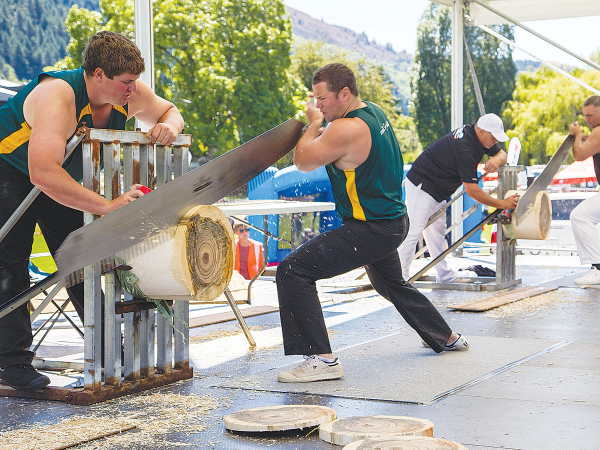 Timber sports is always a popular attraction at the Rural Games.
In the build-up to the CD Field Days, another popular event is taking place in Palmerston North the week before – the Ford Ranger Rural Games.
These are being held from March 10 to 12.
About 50,000 people are expected to attend the games, which are held in the city’s spacious square and admission is free. A feature of the three days is NZ Rural Sports Awards, which will be held on the Friday evening and already the dinner is a sell-out with 400 people booked to attend. Awards are meted out for excellence in a range of sporting categories.
The games started back in 2011 – the year the rugby world cup was played in NZ. They were initially held in Queenstown, but after two years was relocated to Palmerston North where it’s been held ever since.
Founder of the Rural Games Steve Hollander says the idea came out of the view that generally rural sports, which are part of NZ’s history and heritage, were not getting the profile they deserved. While sheep dog trials and sheep shearing competitions did appear sometimes on television these were not easily accessed by the general public.
Hollander says the idea was to ensure that the existing competitions such as fencings silver pliers, the Golden Shears and the dog trials were retained, but that a new format was created to make these activities more appealing. He says it was a case of getting these sports on board and them feeling comfortable with the change.
“So, we tried to model it along the lines of T 20 cricket,” Hollander told Rural News. “For example, we called wood chopping timber sports and that means we can get the whole competition over in 2 ½ hours. The same with sheep dog trialling and tree climbing. Essentially if it can’t be done in two hours we don’t do it.”
Hollander says another example is speed shearing, which used to happen in rural pubs for many years. He says they now have the speed shearing championships where the top ten speed shearers compete.
This year will see the inaugural Golden Loader Forestry Championship included in the programme. This will see two competitors racing against each other and the clock to load and unload a truck and trailer unit. Entries are limited to 24 and only those who currently work in the sector and have their loader ticket can participate.
Hollander says it has been a long-term ambition of the Rural Games to host a forestry championship, alongside traditional sports that helped to build our nation.
“Forestry is a huge part of rural New Zealand and it’s only fitting that we celebrate its role by creating a championship highlighting the skills required to drive forestry machinery,” he says.
Another crowd pleaser is ‘clash of the colleges’ where pupils from secondary schools in the lower North Island who dabble in agriculture, compete in a variety of events. There is also a careers hub at the Rural Games aimed at attracting young people to make their future in the agri sector.
Hollander says it will be great to be staging the games again after they were cancelled last year because of Covid.
OPINION: It is a privilege to welcome you all to this year's Central Districts Field Days, the country's largest regional field days.

Don't be surprised if there is a bit more spending at the Central Districts Field Days this year.
A good crowd is expected for New Zealand's largest regional field days at Feilding in the Manawatu.
Usually a task given to higher horsepower tractors, stone picking looks like its moved down the horsepower charts, to anyone with an ATV or UTV, with the Stoneless trailed stone collector.
Handypiece is a fully portable shearing handpiece being used by thousands of farmers and ag workers, in diverse roles across the globe.

Federated Farmers has welcomed new rural policies released by ACT, saying they align closely with its own election priorities.

Rural Contractors NZ says proposed changes to land transport rules for agricultural vehicles are a welcome response by the Government to out of date regulations which have seen members hit with huge fines.
Alliance is calling for final applications for its 2027 Graduate Programme, with applications closing on Sunday 25 October.
Decades piloting planes has ensured vet and farmer David Hayes is focused on safety. So, after a serious accident while welding on farm, he is sharing his experience so others can learn from it.
Canterbury milk processor, Synlait Milk has confirmed Leon Fung as its chief executive officer.
OPINION: Making it easier to collect rainwater and use it to grow crops and livestock is a no brainer.