What Would Synlait Be Worth to Fonterra or a2 Milk?
Speculation of a possible joint move by Fonterra and a2 Milk to buy Synlait raises a much bigger strategic question, says agribusiness expert Dr Nic Lees.
 increase font size
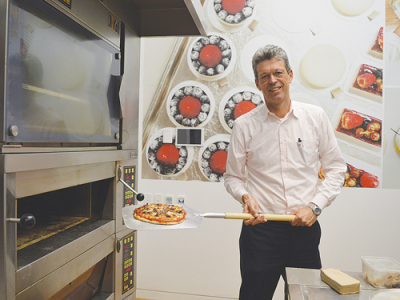 Lukas Paravacini.
China's digital world is second to none, but Fonterra isn’t putting all its eggs in one basket in selling fresh and packaged food.
Fonterra chief operating officer global consumer and foodservice Lukas Paravacini says the co-op is embracing e-commerce and traditional brick-and-mortar as its sales strategy.
Speaking at a recent New Zealand China Business Council conference in Auckland, Paravacini outlined lessons Fonterra has learned over the last five years while building a $3.4 billion business in China.
“We have a strategy for our consumer business in China that gives us opportunities online and offline,” he says.
About 55% of the co-op’s consumer business in China is online; Fonterra has arrangements with two big digital players, Alibaba and Tencent.
Fonterra’s Anchor UHT milk is also available in 13,500 stores throughout China.
“Our strategy is online and offline; we don’t have our eggs all in one basket -- and it is working,” says Paravacini.
Anchor milk is the top imported UHT brand offline and online.
Paravacini says it’s “an incredible success story: we are in the top five beverage of Alibaba’s Tmall flagship store,” he says.
“This is putting Anchor among the top consumer brands in China next to the big players who have been operating in China for years.”
Internet use in China is booming: 770 million Chinese use the internet and last year 300 million people ordered meal deliveries online worth US$32b.
Interestingly, only 2% of total fresh food, by value, is sold online and 4% is packaged food.
Fonterra’s dairy products fall in these two categories.
Paravacini says food safety is very important to Chinese consumers. “They still want to touch and feel their food before they buy it.”
Fresh food sales in China topped $25b and remain a fast-growing category; large digital players are seeking growth opportunities.
Paravacini says e-commerce is driving the co-op’s growth in China and is an opportunity all NZ businesses must seize.
He says the co-op is using digital technology sales, branding and direct consumer engagement. But digital is more than just sales; Fonterra uses online consumer data to drive sales and digitalise its business.
Paravacini says Chinese consumers love NZ products and will pay a premium for products they can trust.
Speculation of a possible joint move by Fonterra and a2 Milk to buy Synlait raises a much bigger strategic question, says agribusiness expert Dr Nic Lees.

In the past, much has been made of the concept of farm to fork, but an Australian expert in food science and marketing with experience in the dairy industry, Dr Angeline Achariya, says the reverse of this slogan is critical to win modern day consumers.
A four year trial has reaffirmed that mixing plantain into dairy pastures can help reduce nitrogen losses to freshwater while maintaining milk production and profitability, say researchers.
Fonterra has opened its upgraded Chengdu Application Centre, bringing New Zealand dairy expertise closer to customers in one of China's fastest-growing regions.
Tatua chair Stephen Allen says he leaves the co-op with a deep sense of gratitude for the people who have contributed to its success.



An Auckland gelato shop and an established New Zealand ice cream maker have both been named Supreme Champions at the NZ Ice Cream & Gelato Awards 2026.

As the cost-of-living crisis continues to put pressure on household grocery budgets, new figures show pork remains one of the most affordable fresh meat options for New Zealand families.
OPINION: In politics, credibility is and should be big. It must surely rank higher than charisma, which is quite trite and superficial. Yet, voters nowadays are often wooed and influenced by how someone looks or talks at a superficial level. TV plays a huge role in this.
Farmers can spend less time on paperwork, thanks to a new data sharing agreement between DairyNZ’s DairyBase and LIC’s MINDA software.
Kaikōura families affected by July's severe storm have found a practical solution to a problem that's kept some children away from regular schooling for weeks: a washed-out section of Inland Kaikōura Road, which has stopped the local school bus from running its usual route.
Rural New Zealand is welcoming the Government’s recent package of rural healthcare initiatives.