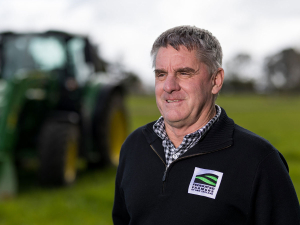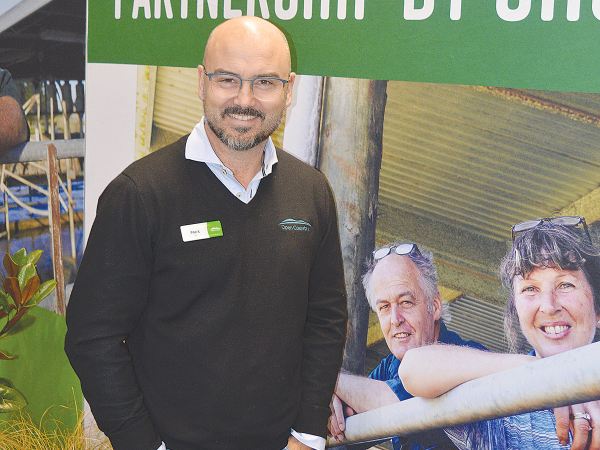
With global demand and record prices, Open Country Dairy chief executive Mark de Lautour says entering the butter market is an exciting time for the company.
The company's new butter plant is located at its Waharoa site in the Waikato beside its existing cheese production facility - part of a multi-million dollar investment programme that includes upgrades of its whey processing plant and main dryer.
De Lautour believes demand for butter is strong because the world now understands that natural fats are good for you. "Natural protein and fats are good, and they are in demand in almost every market in the world," he told Dairy News.
The hype around manufactured dairy alternatives and plant-based proteins is also waning rapidly, he adds.
De Lautour says the Waharoa site has had quite a bit of work done to it in the last 12 months.
"The whey processing plant upgrade will allow it to make higher grade whey proteins and capture more value from the existing cheese manufacturing. Waharoa is where our cheese plant is already: the butter plant's there to deal with the fat, so you've got a good protein-fat mix. And then, obviously, from the cheese, you get the whey."
More stainless steel means the need for more milk, and Open Country is actively recruiting farmers in all its three regions: Waikato/Bay of Plenty, Manawatu/Taranaki, and Southland/Otago.
De Lautour says a milk processor cannot wait until it has got all the milk to make the investment.
"You've got to have the capacity. So, it's a leap of faith to some extent each time, and you must back yourself and farmers in the region to support the investment."
Open Country is also investing in plants at Whanganui and Awarua.
At the Whanganui site, the company is putting in separators and a reverse osmosis facility and is also looking at boosting milk processing capacity. Plans for the Awarua site in Southland include continued planning for a new cheese plant.
Suppliers Grow
The country's second largest milk processor now has around 1,100 suppliers, with 70 farmers signing new contracts for the season.
Open Country Dairy chief executive Mark de Lautour says the new suppliers come from all three regions: Waikato/Bay of Plenty, Manawatu/Taranaki and Southland/Otago.
Competition among processors remains fierce but de Lautour says it helps to have 20 years of experience under their belt.
"We're in a good position from a brand position with farmers," he told Dairy News.
"We're not new, we're not small and we're therefore very secure.
"There are always some nerves when farmers move to a new processor; during our early years, it was the same for us. The industry was saying, 'oh, they're not going to make it'. But we're well past that now."
Open Country, which pays it farmer suppliers in full four times during the year, is confident it will exceed $10/kgMS for milk supplied last season.
The company's fourth and final period payout has a forecast mid-point of $10.70/kgMS, highlighting the strength of the markets at the end of last season.
Same As Us
Asked to comment on Fonterra's divestment plan - which includes either selling or floating its consumer brands - de Lautour says the co-operative is turning its focus on core nutrition and bulk ingredients.
"That's what we've always done," de Lautour says.
"So, getting rid of the consumer brands division is probably the right thing for them to do.
"I'd be a hypocrite if I didn't agree with the decision given that's our business strategy."