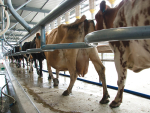
Why Now Is the Time to Plan Farm Succession, Findex Says
OPINION: Succession and long-term planning are perennial topics because it is perpetually sidelined on busy farms.
 increase font size

A SOFTENING in dairy farmer sentiment and rising interest rates have led overall New Zealand rural confidence to a significant slide in the past quarter.
But beef and sheep farmers have bucked the trend, with their confidence levels rising to three-year highs.
The latest Rabobank Rural Confidence Survey – completed in June – has shown a sizeable dampening in overall farmer confidence, with just 25% of the country's primary producers now having a positive outlook on the performance of the agricultural economy in the next 12 months. This was down from 42% with that expectation in the previous survey.
A total of 24% expected conditions to worsen (climbing from 13% with that view previously), while 50% expected the agricultural economy to remain the same in the coming year.
Much of the softening in confidence was driven by dairy farmers, who reported a significant decline in sentiment, primarily because of falling commodity prices – a reason given by 63% of dairy farmers who had a pessimistic outlook.
Dairy is now the least confident of all the New Zealand agricultural sectors in terms of future outlook, reflecting the reduction in milk payout expectations for the 2014-15 season compared with the record high prices from 2013-14.
Sheep and beef farmer sentiment, on the other hand, recorded a healthy surge, with 57% of farmers in this sector reporting a positive outlook (up for 37% in the previous quarter). Just 7% expected conditions to worsen in the next 12 months, down from 10% previously.
Rabobank New Zealand CEO Ben Russell says the results reflected the strengthening being seen in sheep and beef prices, on the back of lower supply due to high slaughter levels in the past 12 to 18 months.
Russell says the slump in dairy farmer sentiment had been driven by lower dairy commodity prices, as well as the strengthening New Zealand/US dollar exchange rate.
Overall, New Zealand farmers were also concerned about rising interest rates – 22% who had a negative outlook on the 12 months ahead nominated interest rates as reason for their pessimism.
Russell says sheep and beef farmers have the highest expectations of their own businesses since July 2011. "And it is the first time they have been ahead of dairy farmers on this measure since December 2011," he said.
Interestingly, New Zealand farmers' investment intentions remain unchanged since last quarter with 93% of farmers intending to increase or maintain the level of investment in their farm business.
Russell says while the measure was stable, the sector composition was different. "Sheep and beef farmers have increased their investment intentions, while dairy farmers have lowered their expectations in this regard," he says.
OPINION: Succession and long-term planning are perennial topics because it is perpetually sidelined on busy farms.
Farms across the upper North Island are trialling different pasture mixes as part of a research programme that aims to build greater resilience into farming systems.
Election years are always a concerning time for farmers, according to DairyNZ chair Tracy Brown.
It's only just hit the market, but a new forage rape bred for dryland farms has already won the approval of lambs and young cattle both north and south.


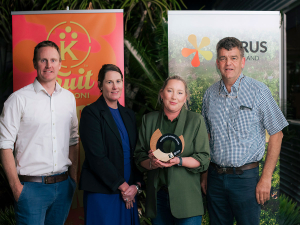
New Zealand's citrus growers were challenged to build their future on the value embedded in their fruit rather than the volume they produce, at Citrus New Zealand's annual gathering in Gisborne on 17 September.
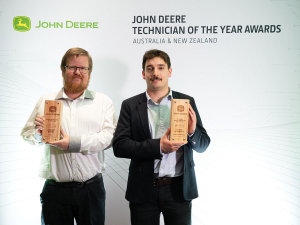
Leading John Deere technicians and apprentices from New Zealand and Australians were recognised at the recent sixth annual JD Technician of the Year Awards, held in Brisbane.
In Dacre, near Invercargill in New Zealand’s South Island, Bruce Dinnington is running a dairy operation unlike any other.
A free online platform aggregating governance vacancies across rural and regional New Zealand has been launched.
Environment Minister Nicola Grigg has announced details of a new rural plastics recycling scheme.
Agricultural drone operators say that a government decision to allow lower-risk drone work without certification won’t lower standards but drive innovation and efficiency.