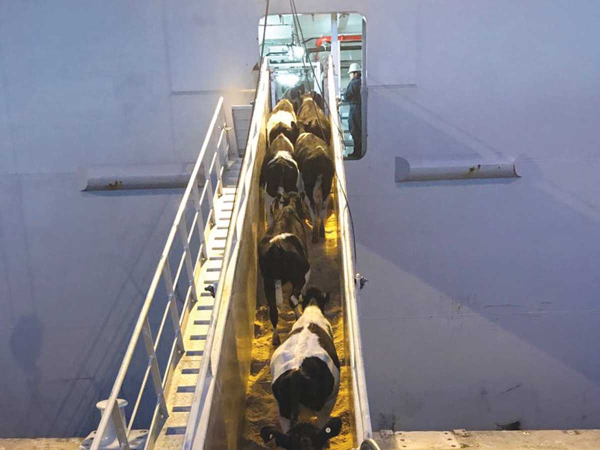
Federated Farmers want to see the return of cattle exports but insists that animal welfare and New Zealand’s international reputation must be protected first.
In a Federated Farmers Podcast, alongside guest Brian Pearson, general manager at livestock export business BeefGen, Feds animal welfare spokesman Richard McIntyre revealed that there are some concerns about animal welfare that need to be addressed first.
“There need to be assurances that any animal being exported will be safe and comfortable not just on their journey, but at their destination too,’ he says.
In April 2023, following intense pressure from animal welfare organisations, the former Labour government banned live animal exports. The Coalition Government is likely to make an announcement on resuming livestock exports at the National Fieldays next month.
McIntyre says Federated Farmers is hoping to see legislation introduced by the Government later this year to get cattle exports going again.
Acknowledging many people, including farmers, have concerns about the export of animals, McIntyre says in the podcast that scrutiny of the industry is a positive thing.
“I actually think it's a really good thing that there’s been a lot of discussion about cattle exports because it shows just how concerned New Zealanders are about animal welfare.”
He says Federated Farmers share those views and are 100% supportive of the sector-initiated ‘Gold Standard’ animal welfare precautions put forward as a caveat on any shipments from our shores.
McIntyre explains that, prior to the previous Government’s ban, live exports were a significant earner for farmers, particularly when domestic market and environmental conditions were unfavourable.
He goes on to say it’s important for people to understand that no cattle are exported live from New Zealand for slaughter.
“The cattle we export are all for breeding purposes. Some countries do live export for religious slaughter trade, but that hasn’t happened in New Zealand since the 1990s.”
Pearson, who’s been involved in the cattle export industry for decades, says animal welfare and safety standards have been steadily improving.
“It's a heavily regulated industry. For example, with stocking densities in the pens, every animal must be able to lie down and have room to move and stretch out.
“They've got to have access to water 24/7, and the cattle are usually fed twice a day.
“Sometimes they’re fed three times a day if we think the voyage is running smooth and we know we won’t be using our feed contingency.
“When there are rough seas, they sit down. There's space in these pens for them to sit down and rest and the cattle adjust and travel very well.”
Pearson talks about how the cattle are looked after excellently by qualified stockmen, and vets, who care deeply about the animals’ welfare.
At the end of the day, it’s in everyone’s best interests to see the animals arrive at their destination healthy and happy, Pearson says.
“It's simple because our clients want their cattle delivered in top-notch condition. They demand excellence.
“They want the animals to come and transition into the systems over there easily, so if we’re not doing this right, we’ll lose our clients.”