Synlait’s Longest-Serving Employee Joins Executive Team
Synlait's longest serving employee – a man who joined the Canterbury-based milk processor even before it began processing milk – is now its newest executive.




 increase font size
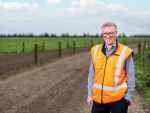
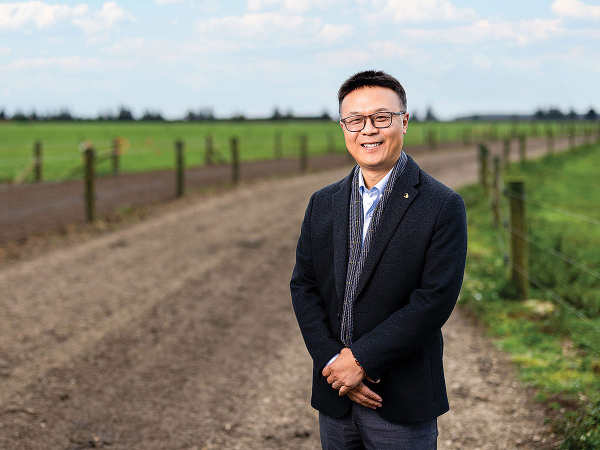 Synlait’s new chief executive, Leon Fung, is relocating to Christchurch.
Canterbury milk processor Synlait has come through tough times and is now ready to scale up from a stable base, says its newly confirmed CEO Leon Fung.
Fung joined the Synlait board as a director in 2024, chaired its People, Environment and Governance Committee from November 2025 and was appointed acting CEO following the resignation of Richard Wyeth in May this year.
Confirmed as CEO on October 21, the Auckland-domiciled Fung says he will now relocate.
“I am committing myself to Synlait. Relocating to Christchurch, close to the factory, close to the team, is definitely one of those commitments I make,” he told Rural News.
Fung holds an executive MBA from Fudan University in China and a master’s degree in dairy technology from Massey University. With his first job out of Massey being a plant operator at a dairy factory in Whangarei, Fung now has 30 years of experience in the dairy and nutrition industries, spanning technical manufacturing, marketing, startups for various owners, and a number of executive roles.
“Dairy is part of my life,” he says.
Fung has taken over after the company reported a $75 million loss for the last financial year, albeit with a return to a modest profit in the second half.
He said Synlait would not publish any forecast for the current year because it was transitioning from an August to July financial reporting year to a January to December calendar year, starting in 2027.
But he said the company was on the right track.
“The August and September months were all performing well, and in fact we beat our budget in those two months.”
Speaking with 10 days still to go, October also looked to be another good month, he said.
“So, it does give me a lot of confidence, and gives the team confidence, that we’re going to be good.”
Synlait’s net loss of $75.4 million for the last financial year was its fourth loss in five years due to debt and operational and manufacturing setbacks. An ill-fated expansion into the North Island has ended with the sale of its North Island assets including a processing factory at Pokeno.
Fung said that even before he started as acting CEO, it was very clear that Synlait wanted to stabilise and simplify, then scale back up from a stable base.
“We’re following the roadmap very clearly and nicely. For example, we are stabilising the operation and product quality.
“We see very good progress on that and the improvement on the financial figures in the last few months demonstrate that.”
Fung said he built several factories in his previous jobs.
“Synlait’s factory is good. It’s advanced and well maintained. It’s relatively new technology so I think there’s no reason that we cannot do better again.
“What’s also important, the people here in Synlait are very committed as well.”
Fung said that Synlait had always been profitable before the North Island investment, and successfully divesting the Pokeno plant allowed the company to refocus on its Canterbury roots.
It was now looking to diversify around the nutritional products which were among its greatest strengths.
That would include a move into adult nutrition, with “healthy ageing” products now identified as a growth area.
Fung said that supplying infant formula to China was much more restrictive now than it was 10 years ago in terms of safety and quality standards.
“If we are successfully supplying the infant formula product for China market it means that we are more competitive in other markets, and in other product categories.”
Synlait was moving into the Middle East with a significant customer for infant formula signed up in Saudi Arabia, and new customers also interested in Southeast Asia.
There was also strong interest in Southeast Asia for whipping cream, which was enjoying a lot of success in China.
Synlait's longest serving employee – a man who joined the Canterbury-based milk processor even before it began processing milk – is now its newest executive.
Canterbury milk processor, Synlait Milk has confirmed Leon Fung as its chief executive officer.
Waikato milk processor Tatua has again declared a record milk payout to farmer shareholders, leaving other processors in the dust.
Synlait has swung to second-half profit as operations stabilise, but the dairy processor still posted a $75.4m annual loss.
OPINION: It seems Canterbury processor Synlait is still in the doldrums.

Canterbury milk processor Synlait has come through tough times and is now ready to scale up from a stable base, says its newly confirmed CEO Leon Fung.
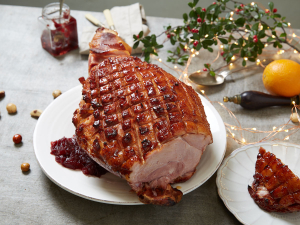
NZPork says a ham made in New Zealand is not necessarily made from New Zealand pork.
Rural Contractors NZ says proposed changes to land transport rules for agricultural vehicles are a welcome response by the Government to out-of-date regulations which have seen members hit with huge fines.
With New Zealand’s greenhouse gas emissions in the spotlight, Auckland scientist Nathan Balasingham says there’s a better way to tackle the problem than shrinking cow numbers or fertiliser usage.
Massey University vice chancellor Pierre Venter says his institute is moving from a period of austerity into a growth phase, based on their new strategy.
With the red meat sector going through a boom time with high prices, the time is right for the industry to step up its investment into developing new food products.



OPINION: The same mainstream media muppets that brought you Jacindamania in 2017 have been flat out pimping for the Opportunities…
OPINION: Your old mate reckons the atrocious way farmers in the UK are treated by their lords and masters in…