Election 2026: How Parties Would Lift the Arable Sector
As part of its Election 2026 coverage, Rural News asked political parties how they would help pull the arable sector out of the doldrums. Here's what they said:




 increase font size
 Cherries undergoing Hectre's detection process.
A new fruit quality research laboratory has been opened in Auckland by agritech company Hectre to develop pioneering hyperspectral technology.
Agriculture Minister Todd McClay opened the facility, which houses a near-$5 million programme co-funded by the Government. The lab will be used to develop Hectre’s next-generation Arc camera, designed to identify the internal defects of a piece of fruit by using light to read maturity, starch content and firmness through the skin.
Hectre’s technology will solve one of the biggest issues in the world’s billion-dollar fruit industry and will allow packhouses to decide earlier what to store, what to pack and what to ship. Fruit will therefore reach the market in better condition, with less waste.
“Hectre is the world leader in fruit colour and grade detection, but reading for internal defects is a much trickier problem,” says CEO Matty Blomfield.
“But solving it is vital. Understanding the internal structures of fruit being shipped allows packhouses to make smart decisions around how to store, pack and ship their product. It reduces avoidable waste and brings value back to the growers and packhouses.”
The research programme is a three-year project led by Hectre, with co-investment by the Government through the Primary Sector Growth Fund. Hectre is funding the balance.
The programme targets a proof-of-concept algorithm with at least 80% detection accuracy by June 2027, and a packhouse prototype validated under commercial conditions by June 2028.
Hectre’s existing Arc camera scans fruit as trucks arrive at packhouse intake, returning sizing, colour and external quality data in near real time.
Packhouses in 22 countries use it, and the data covers billions of pieces of fruit each year, with accuracy approaching 99% from samples some 200 times larger than manual methods allow.
The laboratory opening caps a year in which Hectre closed an oversubscribed $12m Series A, led by Punakaiki Fund, alongside Cultivate Ventures, Nuance and private investors.
Hectre won two categories at the 2026 Hi-Tech Awards, taking Most Innovative Hi-Tech Agritech Solution, sponsored by New Zealand Trade and Enterprise, and Hi-Tech Kamupene Māori o te Tau, Māori Company of the Year. The company was a finalist in three categories.
As part of its Election 2026 coverage, Rural News asked political parties how they would help pull the arable sector out of the doldrums. Here's what they said:
Food and fibre exports have returned a billion- dollar bonus to the country.
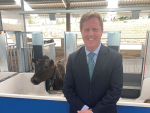
The Government is backing work on a community-led water storage scheme that could irrigate up to 11,000 more hectares of the Poverty Bay flats, Agriculture Minister Todd McClay says.
A Labour-led Government won’t be bringing back the controversial freshwater rules of 2020.
It was billed as a chance for all the political parties to woo the rural vote, but question marks hang over just how effective this was.

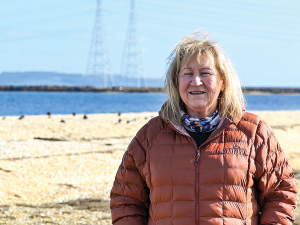
For 15 years, Glenda Rees has travelled from Gore to Awarua, often several times a week, to keep watch over one of the country’s rarest birds.
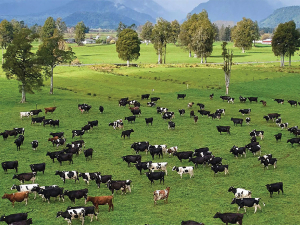
With some farmers opposing a government-industry partnership set up to develop methane reducing products, one NZ company claims that it already has a product on the market.
During the nesting season, from September to December, industrious starlings can quickly build nests in the darker areas behind tractor and vehicle, usually close to hot engines, typically resulting in localised damage or in some cases complete write-offs.
The meat processing industry is much more collegial than it was in the past and is now more focused on common goals.
With the last couple of months having seen some potential tractor purchases put on hold with the impending election and continued input cost rises, year-to-date figures, ending September, has seen deliveries up around 5% over the same period in 2025, with a total of 2026 units.
Beef+Lamb New Zealand is calling for nominations for director roles in the Northern South Island and Northern North Island electoral districts.



OPINION: The same mainstream media muppets that brought you Jacindamania in 2017 have been flat out pimping for the Opportunities…
OPINION: Your old mate reckons the atrocious way farmers in the UK are treated by their lords and masters in…