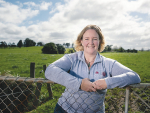
Ravensdown Elects Montgomery, Acland to Board
Ravensdown shareholders have elected Jane Montgomery and Kate Acland to the Ravensdown Board for three-year terms, following a closely contested director election.
 increase font size
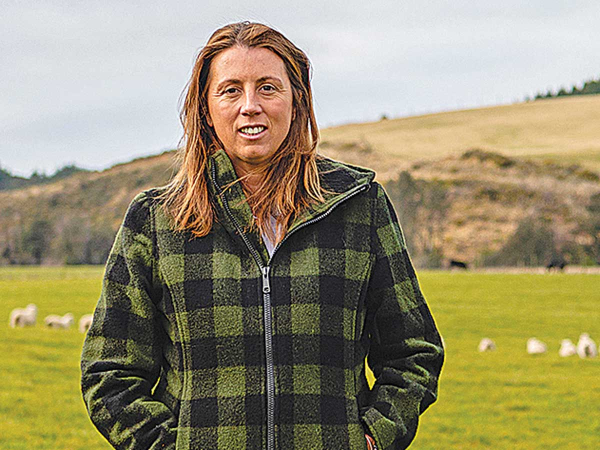 Beef + Lamb NZ chair Kate Acland.
Red meat farmers have hailed the Government for passing the Resource Management Act Amendment Bill.
The legislation pauses regional councils’ work on freshwater plans and identifying Significant Natural Areas (SNAs) until a new national policy framework is developed.
B+LNZ chair Kate Acland thanked the Government for its pragmatic and sensible approach and noted many of the rules introduced by the previous Government were unworkable and went too far.
“This isn’t about doing nothing – it’s about farmers wanting to be supported and enabled to achieve good environmental outcomes within workable and enduring frameworks. There’s a huge amount of incredible work happening on farms across New Zealand, protecting and enhancing catchments and native biodiversity, and farmers are committed to continuing this work.
“Pausing regional councils’ work on freshwater plans and identifying Significant Natural Areas means we can work together to get the new national policy frameworks right.”
The Bill also means identification processes around SNAs have been pushed out for three years (to 2030) while the National Policy Statement for Indigenous Biodiversity is reviewed.
Associate Environment Minister Andrew Hoggard says the change was made because they had heard concerns from some stakeholders that the approach to identifying new SNAs was too broad, capturing areas with less significant native biodiversity and overly restricting land use.
Councils had to identify new SNAs and include them in district plans as part of the National Policy Statement for Indigenous Biodiversity.
“The suspension of this requirement allows time for a review of SNAs that will consider how they should be identified, assessed and managed,” says Hoggard.
Acland points out that B+LNZ’s recently released independent review shows some of the national bottom lines (NBLs) relating to suspended fine sediment and E. coli are fundamentally flawed and unachievable.
A review of published literature showed that around 205 of waterways coming out of catchments in their natural state – for example National Parks – do not currently meet the suspended fine sediment NBLs. Even if agriculture was stopped and all catchments returned to their natural state throughout the country, up to 38% of all rivers would not meet the suspended fine sediment NBLs.
“This provided a solid evidence base for us to say ‘we need to stop before regional freshwater plans become operative on the basis of these flawed bottom lines’. “
“The Government has listened, and we welcome the Bill’s amendments as a vital circuit-breaker. We now have time to get this right.”
She noted that a commonsense approach has been used and that where regional councils need to progress water plans for flood protection, natural hazards, Treaty obligations and the like, exemptions can be granted by the Minister.
“We’ve been saying for a long time that the existing criteria in the NPS-IB are far too broad and will tie up vast swathes of land. Many farms in areas such as Northland and the West Coast will have more than half their farms identified as an SNA and will be unable to make sensible decisions about the management of their land.
“We need to take time to reassess these criteria and get the overall way we manage biodiversity right.
“We are committed to this. Sheep and beef farmers manage around 24% of New Zealand’s native vegetation habitat. We take our role as guardians of their land very seriously and see it as a legacy to pass on to future generations. We don’t want our hard work turned into a liability.”
Ravensdown shareholders have elected Jane Montgomery and Kate Acland to the Ravensdown Board for three-year terms, following a closely contested director election.

Beef + Lamb New Zealand (B+LNZ) says it welcomes the passage of the Natural Environment Bill and Planning Bill, calling the bills a positive step for sheep and beef farmers.
Farmgate lamb prices are down by 8%, beef cattle by 4.5% and farm expenditure up by 4.2%.
Red meat farmers are welcoming Labour’s plan to review the Emissions Trading Scheme and not to campaign on pricing agricultural emissions.
New Zealand's Emissions Trading Scheme (NZ ETS) encourages afforestation while not achieving climate goals, says a new report released by the Parliamentary Commissioner for the Environment, Simon Upton.


Federated Farmers has welcomed new rural policies released by ACT, saying they align closely with its own election priorities.

Rural Contractors NZ says proposed changes to land transport rules for agricultural vehicles are a welcome response by the Government to out of date regulations which have seen members hit with huge fines.
Alliance is calling for final applications for its 2027 Graduate Programme, with applications closing on Sunday 25 October.
Decades piloting planes has ensured vet and farmer David Hayes is focused on safety. So, after a serious accident while welding on farm, he is sharing his experience so others can learn from it.
Canterbury milk processor, Synlait Milk has confirmed Leon Fung as its chief executive officer.
OPINION: Making it easier to collect rainwater and use it to grow crops and livestock is a no brainer.