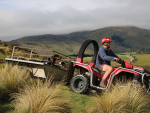
WorkSafe Safety Push Reveals Major Farm Safety Gaps Across New Zealand
A safety push across New Zealand has revealed significant gaps in hazardous substances management, farm vehicles, tractors, quad bikes and side-by-sides.
 increase font size
 WorkSafe chief executive Nicole Rosie.
Agriculture is the industry with the highest number of workplace fatalities – about 124 deaths since 2011, says WorkSafe chief executive Nicole Rosie.
In contrast, construction had 35 deaths in the same period and forestry 33, based on provisional figures for 2017; final numbers will be out soon.
“Agriculture is not as dangerous per exposure as forestry but it has a lot more people working in it. It is much, much higher than other sectors comparatively,” Rosie told Rural News.
Nine people were killed in agriculture last year including three quad deaths.
Rosie notes that three further quad deaths over the holiday were not work related: two people who died on a farm were on a weekend possum hunting trip and one person was killed on a beach.
WorkSafe will this year retain its focus on vehicle related safety and onfarm injuries, but with more emphasis on health related issues.
“There are not hundreds of things that kill farmers – only a few things,” she says. “80% of the acute deaths result from vehicle/people interactions. Quad bikes make up about half of that 80%.
“The other half are tractors and interactions such as loading and unloading and baling. So when people are involved with machinery on their farms they account for 80% of acute deaths.”
The next-highest cause of death is falling from heights; and a much smaller number of fatalities are caused by drowning, interactions with animals, etc.
In injuries the biggest cause of harm is in the shed, Rosie says. The dairy sector has the most injuries, followed by beef and sheep. The biggest causes of acute injuries in the dairy sector are arm injuries in milking sheds and ankle injuries, in the sheds and around farms.
Back injuries from shearing are significant in the sheep and beef sector.
WorkSafe and ag leaders have talked a lot about footwear, says Rosie. Farmers’ usual footwear – gumboots – offers little or no ankle protection. Very good boots are available that properly protect wearers’ ankles, but people go for big brands.
“One of the biggest causes of serious breaks is ankle injuries. That is a key focus of our agricultural programme.”
WorkSafe has a work stream looking at vehicles – quads and tractors -- and farmers’ use of vehicles; a design project looking at arm injuries in milking sheds; and another looking at ankle injuries -- mostly focused on improving footwear.
Farmers make up a good proportion of the 50-60 acute workplace deaths WorkSafe deals with each year.
But the bigger cause of death – in the range 600-900 – is health exposures, of which cancer is a standout, says Rosie.
“The major causes of cancer are asbestosis, silicosis (from cutting of concrete) and the third highest is... exposure to agricultural chemicals.
“It is very hard to quantify because people get breast or lung or prostate cancer; they might have worked in the agricultural sector for a long time, but it is not common for GPs to think of that as a potential cause of a cancer.”
She says much of WorkSafe’s hazardous substance work is focused on farms.
“We are looking at what chemicals are being used; it is often dealt with under hazardous substances legislation because some sprayed chemicals are hazardous substances and are carcinogenic.”
WorkSafe will look closer at that because it is a key cause of harm in the agricultural sector.
A safety push across New Zealand has revealed significant gaps in hazardous substances management, farm vehicles, tractors, quad bikes and side-by-sides.
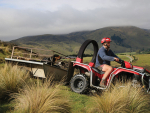
Decisions you make in an instant on the farm can be the difference between life and death.
WorkSafe New Zealand is calling on farmers to consider how vehicles move inside their barns and sheds, following a sentencing for a death at one of South Canterbury’s biggest agribusinesses.
Following a sentencing for a death at a South Canterbury agribusiness, WorkSafe New Zealand is calling on farmers to consider how vehicles move inside their barns and sheds.
WorkSafe is recommending the dairy industry reassess its use of slide pulsators, following a recent death in a Waikato milking shed.


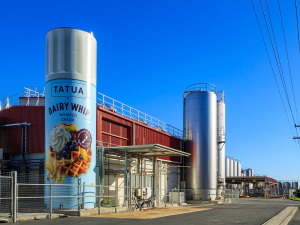
Waikato milk processor Tatua has again declared a record milk payout to farmer shareholders, leaving other processors in the dust.

A Labour-led Government won’t be bringing back the controversial freshwater rules of 2020.
National’s much-touted free trade deal with India featured in the Rural Issues Debate at Mystery Creek, Hamilton on Wednesday night.
New Zealand's 2026-27 freshwater fishing season has opened, with anglers encouraged to head to rivers and lakes over the coming days as conditions look favourable across much of the country.
Central Otago District Council (CODC) has voted against a plan to spread treated sewage sludge from Cromwell and Alexandra on farmland near Lauder, a decision Federated Farmers says reflects strong opposition from rural residents.
Pāmu has released its FY26 Integrated Annual Report, reporting a Net Operating Profit of $113 million, more than double the $49 million recorded in FY25.