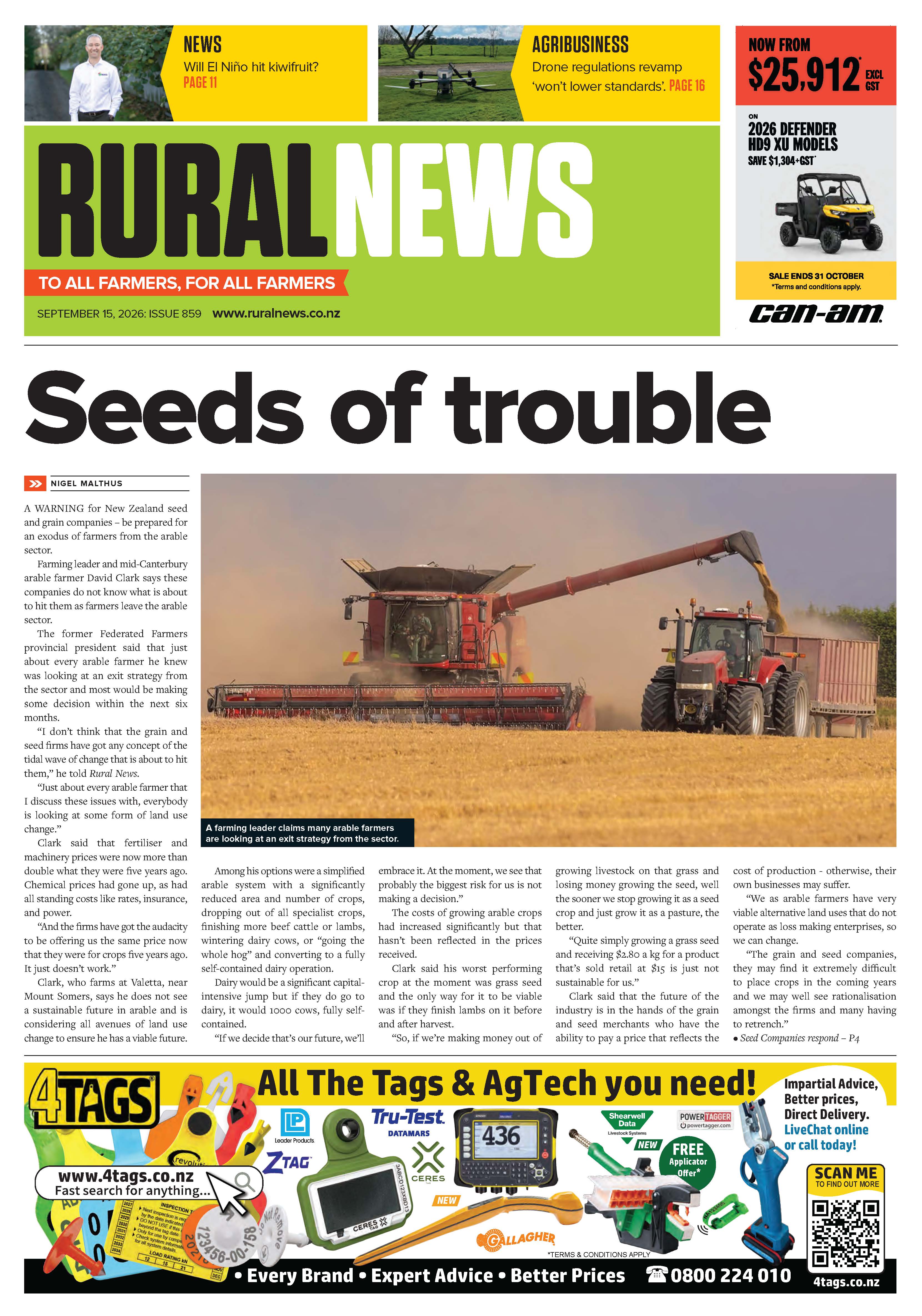
Southerly Winds Hit Taranaki Dairy Pasture Growth
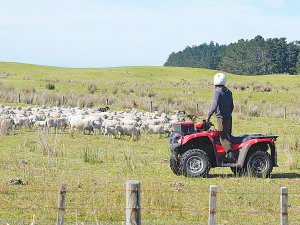
A spate of southerly winds bringing cold temperatures has presented challenges for Taranaki dairy farmers.




 increase font size
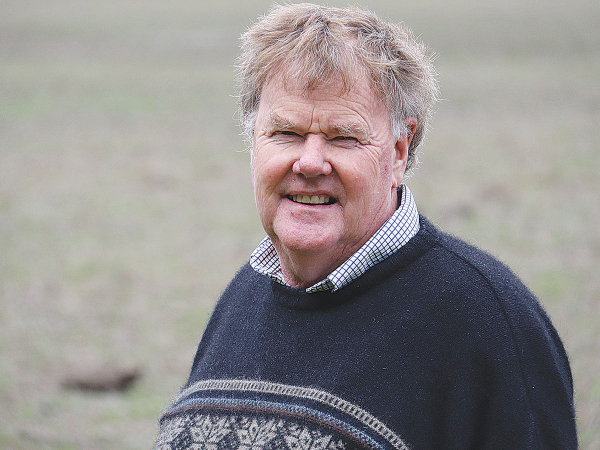 Lochie MacGillivray
Fears of a serious early drought in Hawke’s Bay have been allayed – for the moment at least.
AgFirst consultant Lochie MacGillivray says there’s been up to 50mm of rain in the hills that had earlier started to go brown and says the situation is not as dire as it was about a month ago.
He says farmers have continued to sell store lambs, but in the last week or so the market had a glitch.
“We were hoping that with a bit of rain there might have been some optimism, but the price at the Fielding sale slipped and farmers are now going to hold off selling any more store lambs,” he says.
MacGillivray says those farmers who sold store stock early probably did the right thing. He says the rain that has fallen has kicked crops along and farmers appear to be optimistic and can see a way forward. But he says temperatures have been high and the rain gained may be quickly lost through transpiration.
“So, we need to have the rain coming and if it doesn’t, we slip back to where we were quite quickly,” he says.
Meanwhile, the Hawke’s Bay Regional Council says summer came early with scorching temperatures in November and below average rainfall, plus temperatures reaching a staggering 3.4 degrees above average.
They say the hot dry conditions have meant that with few exceptions, river flows, groundwater levels and soil moisture were all below average.
A spate of southerly winds bringing cold temperatures has presented challenges for Taranaki dairy farmers.
Surprised, humbled and quite thrilled. That’s the reaction of James Allen, one of the founding partners and now chief executive of AgFirst, on being made a life member of the Institute of Rural Professionals.
A warning to dairy farmers not to expect the same good conditions that they experienced last season, has been issued by a leading farm consultant.
OPINION: New economic modelling confirms what many of us in Hawke's Bay have long understood - getting water security right for this region is one of the most important decisions we face as a community. Not just for farmers, but for everyone who lives, works and builds a future here.
As fuel and fertiliser prices rise and with uncertainty in the future, farmers are being urged to go over their budgets with a fine-tooth comb.



LIC shareholders have elected a new North Island representative to the co-operative's Board, along with five representatives to its Shareholder Reference Group (SRG), following the company's Annual Meeting held in Invercargill.
Farmers across parts of Southland and South Otago are continuing to deal with difficult conditions after a prolonged run of wet weather, with pressure building around feed supply, stock management, pasture damage, farm infrastructure and everyday workloads.
Federated Farmers says it welcomes Labour's commitment to reviewing the Sharemilking Agreements Act, calling on other major parties to do the same.
For Canterbury dairy farmers Sian Meijer and Rick Wobben, wearable technology has become one of their most valuable on-farm tools - helping manage 1850 cows across an expansive, high-performing dairy operation while improving efficiency, mating outcomes and day-to-day decision making.
Fonterra has unveiled its annual results for the 2026 financial year, posting $27 billion in revenue and close to $20 billion returned to New Zealand farmer owners and unit holders.
The first major update to the Dairy Cattle Code of Welfare in more than a decade has been released, marking what DairyNZ describes as an important step in ensuring animal welfare standards continue to evolve alongside scientific evidence and on-farm realities.




OPINION: The same mainstream media muppets that brought you Jacindamania in 2017 have been flat out pimping for the Opportunities…
OPINION: Your old mate reckons the atrocious way farmers in the UK are treated by their lords and masters in…