Castle Ridge Station has been named the Regional Supreme Winner at the Canterbury Ballance Farm Environment Awards.
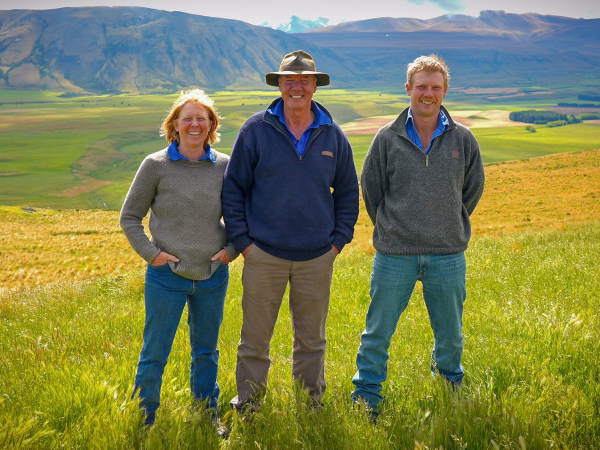
The award recognises Paul and Kerry Harmer's commitment to environmental stewardship in the sensitive Ashburton Lakes catchment.
At their 5,930ha (5,700ha effective) high-country property, the Harmers run just over 14,000 sheep, almost 800 cattle and about 230 deer.
Their breeding operation produces high-quality Merino wool, sheep, cattle and deer, underpinned by a clear focus on reducing environmental footprint while maintaining a resilient and profitable business for future generations.
Judges say the Harmers demonstrate "an absolute commitment to long-term environmental stewardship while operating a viable high country business in a climatically difficult and sensitive catchment.”
Central to Castle Ridge Station’s approach is an extensive water monitoring and protection programme.
Working alongside their local catchment group and Canterbury University, the Harmers undertake regular surface and groundwater monitoring, generating robust data that informs farm management decisions and shows measurable improvements in water leaving the property.
Seventeen kilometres of waterways have been fenced to exclude stock and reduce erosion, while more than 3,000 native plants have been established in riparian areas to enhance biodiversity and protect sensitive zones.
The Harmers say stewardship is central to everything they do.
“Not only is it our home and business, but it supports a vibrant local community - from our family and staff, to all those who interact with us and those who come to enjoy the landscape, flora, fauna and recreation opportunities.
"We see that we have a huge responsibility to look after all parts of the business and property as we are stewards for only a short period of time. We wish to leave the property in better heart than when we arrived and to look after the land and people in our care along the way.”
Judges also acknowledged their long-term commitment to innovation, noting their willingness to trial, evaluate and adopt new systems over time, and their openness in sharing knowledge with the wider community.
Their strong team culture and multi-generational involvement are also central to the business.
“We now have five generations of the family who have worked on this property in some capacity. Being able to work alongside different generations has been rewarding and refreshing.”
By strategically reducing overall stock numbers to lift per-head performance, maintaining careful winter grazing practices, and focusing on producing strong, healthy, well-bred stock in a low-stress system, the Harmers are demonstrating how environmental stewardship and productivity can go hand in hand.