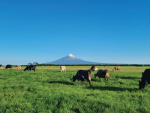
Southerly Winds Hit Taranaki Dairy Pasture Growth
A spate of southerly winds bringing cold temperatures has presented challenges for Taranaki dairy farmers.




 increase font size
 James Allen, AgFirst, says the use of supplements is driving the high milk production.
Many farmers around the country are taking advantage of the high dairy payout to get maximum production out of their cows.
James Allen of AgFirst says production overall is slightly ahead of last year, but the use of supplements is driving the high production.
He says the Waikato is in good shape with the grass really starting to move and paddocks are being closed off for silage, while others are being sprayed out for the planting of maize.
He says for farmers who are now in the phase of transitioning to an all-grass system, there is a problem.
“In the Waikato, while the grass is lush, the dry matter in it has tended to be quite low. It’s down to around 15% whereas we would expect it to be at least 20%. As a result of this, farmers are having to continue to feed out supplements,” he says.
Allen says while it is not unusual for what could be termed ‘waterery grass’ at this time of the year, it seems that it is slightly worse than in the past.
However, the good news is that prices for supplements are reasonable.
Elsewhere around the country, the season so far is reasonable.
Allen says the colder weather has had an impact in many areas such as south Waikato, the Manawatu and the Wairarapa, but pasture growth is now picking up and production, fueled by supplements, is up. But he says he’s heard reports that Hawke’s Bay is drying out and that may be a potential problem.
Allen says the other issue that has surfaced this season is an increase in the number of calves getting sick.
He says there is no definite reason for this and ponders whether the increase in the number of sick calves is due to an increase in calves being raised.
“The good season, reasonable supplement prices and production slightly up; it seems most people ae in pretty good spirits,” he says.
A spate of southerly winds bringing cold temperatures has presented challenges for Taranaki dairy farmers.
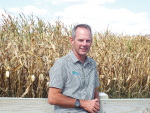
Surprised, humbled and quite thrilled. That’s the reaction of James Allen, one of the founding partners and now chief executive of AgFirst, on being made a life member of the Institute of Rural Professionals.
A warning to dairy farmers not to expect the same good conditions that they experienced last season, has been issued by a leading farm consultant.
As fuel and fertiliser prices rise and with uncertainty in the future, farmers are being urged to go over their budgets with a fine-tooth comb.
For the most part, dairy farmers in the Waikato, Bay of Plenty, Tairawhiti and the Manawatu appear to have not been too badly affected by recent storms across the upper North Island.



Nominations are open for the 2027 Fonterra Dairy Woman of the Year Award.
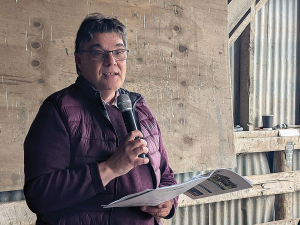
Keeping up with pasture moisture demands is likely to be the key challenge for dairy farmers during this season’s El Niño weather pattern, says Blue Skies Weather & Climate Services meteorologist Tony Trewinnard.
Farmers have until the end of this week to help shape DairyNZ’s future focus.
Wayne McNee, chief executive of AgriZeroNZ, has resigned and will leave the organisation on 15 January 2027.
The New Zealand dairy sector set a record in the 2025/26 season, producing more than two billion kilograms of milksolids for the first time.
Milk powder prices are continuing their merry run, firming up a potential $10/kgMS farmgate price this season.


OPINION: It seems Canterbury processor Synlait is still in the doldrums.
OPINION: Get offside with New Zealand First leader Winston Peters at your own peril.