
Four Candidates Confirmed for Fonterra Board Election
Four candidates have been confirmed for two director positions on Fonterra’s board.




 increase font size
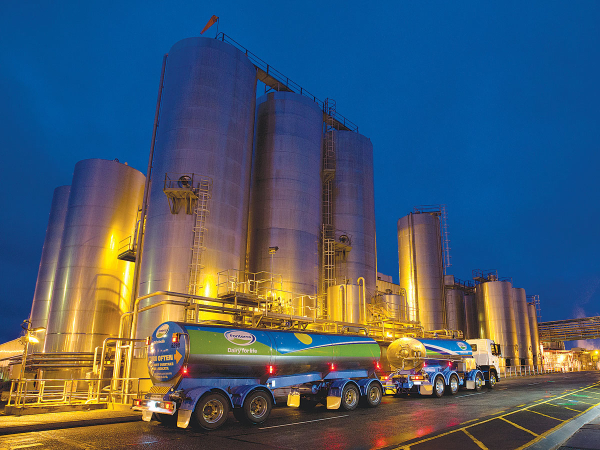 Another great production year in New Zealand will help supply catch up to demand and push prices down.
All eyes are on milk production in New Zealand and its impact on global dairy prices in the coming months.
However, ANZ agri economist Matt Dilly says regardless of where precisely the 2025-26 price lands, it will likely be well above DairyNZ's breakeven milk price of $8.68/kgMS.
On top of that, for Fonterra supplier/shareholders at least, is the prospect of further capital returns.
Milk price futures for the 2025/26 season are currently at $10.10/kgMS, 5 cents below the 2024/25 season's likely payout.
The ANZ forecast for 2025/26 is unchanged at $10/kgMS. Fonterra's forecast has a mid-point of $10/kgMS.
But Dilly notes that while milk price futures are slightly higher at present, the risks are weighted toward the downside.
"Globally, dairy prices are high and the cost of feed is low - a very clear expansion signal.
"If New Zealand has another great production year at the same time as other major exporters do, especially those in the Western Hemisphere, supply could finally catch up to demand and push prices lower."
In August, Fonterra announced the sale of its consumer and associated businesses to Lactalis for $4.22 billion, pending shareholder and regulatory approval. The co-operative is targeting a tax-free capital return of $2/share once the sale is completed in the first half of 2026.
Dilly notes that this would be on top of the usual annual dividend, which is expected to be healthy this season.
At the same time demand for dairy products seems robust despite high prices.
"There is some indication that buyers have been trying to be patient, buying just enough to cover short-term needs," he says.
"They will be hoping that new supply will drive prices down before they are forced to refill inventories."
In 2024/25, major exporters other than New Zealand found it difficult to keep up with demand, he adds.
Poor weather in South America, bird flu in the US, and blue tongue disease in the EU kept a lid on production.
But for 2025/26, supply is starting to expand in most major exporting countries, says Dilly.
"Low grain and feed prices and high milk prices are incentivising output growth. While demand remains strong, the additional supply in the coming months could pressure prices."
Rabobank senior agriculture analyst, Emma Higgins says milk production is clearly expanding across major exporters.
Higgins says US collections rose 3.4% year-on-year - the strongest growth since May 2021, driven by larger herds, better yields, solid margins and a rebound from last year's avian influenza impact.
She says in New Zealand milk flows have posted two consecutive months of strong growth.
"Looking ahead milk supply growth is expected to continue across most exporting regions.
"Supportive farmgate margins, recovery from last year's disease disruptions and favourable weather conditions are key.
"Farmgate prices in Europe and Oceania remain near record highs, while feed costs are expected to stay manageable through 2026 due to ample supply," says Higgins.
Four candidates have been confirmed for two director positions on Fonterra’s board.
A record farmgate milk price and strong global demand is laying the foundation for continued growth of organic dairy farming in New Zealand.
Waikato milk processor Tatua has again declared a record milk payout to farmer shareholders, leaving other processors in the dust.
Fonterra has unveiled its annual results for the 2026 financial year, posting $27 billion in revenue and close to $20 billion returned to New Zealand farmer owners and unit holders.
Fonterra Co-operative Group has confirmed the independently assessed candidates standing for election to its board in 2026.


Safer Farms is urging farmers to make sure everyone working on farm has safe, suitable footwear for the job.

The Government is backing work on a community-led water storage scheme that could irrigate up to 11,000 more hectares of the Poverty Bay flats, Agriculture Minister Todd McClay says.
Agri-tech company Herd-i has become a new all-region sponsor of the New Zealand Dairy Industry Awards (NZDIA), the largest nationwide celebration of excellence in the dairy sector.
Four candidates have been confirmed for two director positions on Fonterra’s board.
Returning to the family dairy farm after playing 20 years of professional rugby around the world is no easy task.
After delivering another record farmgate milk price to 100 supplying farms, independent milk processor Tatua is entering thee new financial year with a positive outlook.



OPINION: It seems Canterbury processor Synlait is still in the doldrums.
OPINION: Get offside with New Zealand First leader Winston Peters at your own peril.




