Fonterra FY26 Results: $9.69 Milk Price, $3.4bn Profit
Fonterra has unveiled its annual results for the 2026 financial year, posting $27 billion in revenue and close to $20 billion returned to New Zealand farmer owners and unit holders.
 increase font size
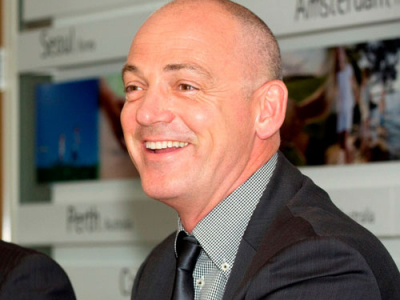 Theo Spierings.
Fonterra is defending chief executive Theo Spierings’ hefty $8 million pay packet, saying he hit “far-reaching and demanding targets” set by the board.
Fonterra chairman John Wilson agrees that Spierings’ pay, revealed in the co-op’s 2016-17 annual report, is “big numbers”.
“We benchmark this remuneration using independent advisors,” Wilson says.
“Clearly these numbers are high from a New Zealand perspective and we absolutely respect and understand that; but from an Australasian and global perspective we are still well within the bands of what those global executives earn.”
Fonterra’s annual report shows Spierings received a base salary of $2.4m, short-term incentives totalling $1.8m and $3.8m in long term incentives.
Wilson says 5600 employees received short term incentives aligned to key operating metrics.
A new set of incentives was agreed between the board and senior management on the co-op’s transformation project called ‘velocity’.
“We had an extraordinary result this year; to give credit to management they were able to hit those targets and the outcome... are what we call ‘velocity’ payments.”
He says the ‘velocity’ project made $2 billion cash and working capital for the co-op.
Fonterra shareholders council chairman Duncan Coull says feedback from his councillors attending farmer meetings last week shows there weren’t “a lot of discussion or questions from the floor” on the issue.
Coull says the level of transparency in Fonterra’s annual report and directors’ explanations gave context to the pay package and put farmers at ease.
“I think there’s more interest in the issue from those outside Fonterra,” he told Rural News.
Coull says Fonterra paid $10b to farmers in the last financial year -- a total payout of $6.52/kgMS. “These are big numbers.”
Federated Farmers dairy chairman Chris Lewis says there were “mixed reactions” from farmers he spoke to. Some question whether Spierings would be paid $8m by another global dairy giant like Nestle or FrieslandCampina, Lewis says.
“The $8m pay package is certainly eye-watering and some farmers are asking whether he is an $8m man,” he says. “But some point out that the $8m is not his salary; most of it is bonus for meeting targets set by the board and the board is satisfied with his performance.”
Lewis says Spierings’ leadership delivered results for Fonterra last year and setting the remuneration package is “a difficult balancing act” for the board.
Fonterra has unveiled its annual results for the 2026 financial year, posting $27 billion in revenue and close to $20 billion returned to New Zealand farmer owners and unit holders.
Fonterra Co-operative Group has confirmed the independently assessed candidates standing for election to its board in 2026.
Fonterra has revised its Farmgate Milk Price forecast for the 2026/27 season, lifting the midpoint and narrowing the range on the back of improving global dairy commodity prices.
Outgoing Fonterra Co-operative Council chair John Stevenson says that it has been a privilege to represent the co-op's farmer shareholders.
OPINION: It seems Canterbury processor Synlait is still in the doldrums.


Federated Farmers says it welcomes Labour's commitment to reviewing the Sharemilking Agreements Act, calling on other major parties to do the same.
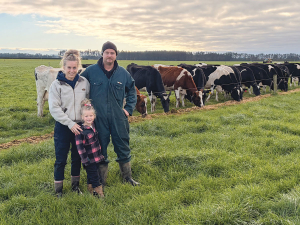
For Canterbury dairy farmers Sian Meijer and Rick Wobben, wearable technology has become one of their most valuable on-farm tools - helping manage 1850 cows across an expansive, high-performing dairy operation while improving efficiency, mating outcomes and day-to-day decision making.
Fonterra has unveiled its annual results for the 2026 financial year, posting $27 billion in revenue and close to $20 billion returned to New Zealand farmer owners and unit holders.
The first major update to the Dairy Cattle Code of Welfare in more than a decade has been released, marking what DairyNZ describes as an important step in ensuring animal welfare standards continue to evolve alongside scientific evidence and on-farm realities.
Ravensdown shareholders have elected Jane Montgomery and Kate Acland to the Ravensdown Board for three-year terms, following a closely contested director election.
Federated Farmers says new legislation replacing the Resource Management Act will cut red tape, unlock investment and help grow New Zealand's export-led economy, after the Planning Bill and Natural Environment Bill passed their third reading in Parliament yesterday.