A move to boost farmer uptake of low methane emitting sheep is underway.
The $1.2 million project is being undertaken by AgriZeroNZ - a company half-owned by major agribusiness companies with the other half owned by the Crown through the Ministry for Primary Industries. It was set up to deliver a step-change in investment aimed at accelerating the development and deployment of emissions reduction tools for farmers.
This latest initiative is an extension of the 'Cool Sheep' programme and will focus on seeing whether low methane emitting sheep convert feed more efficiently - a factor they hope will entice farmers to breed from them. This latest project is funded by AgriZeroNZ, B+LNZ, and the Ag Emissions Centre, working alongside scientists from the Bioeconomy Science Institute.
Focus on Productivity and Emissions
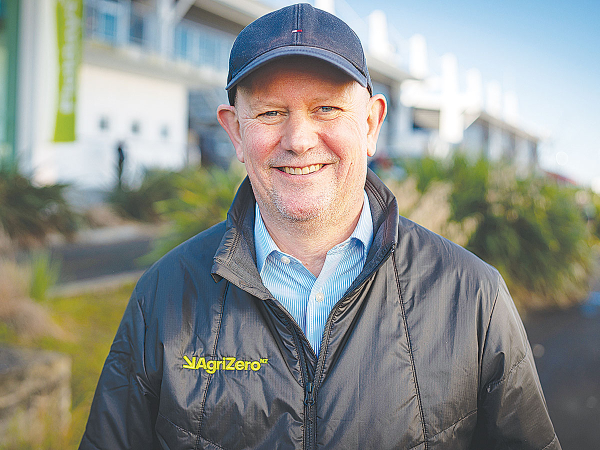
AgriZeroNZ chief executive Wayne McNee says there's been ongoing work to identify low methane emitting traits in sheep, but he says the issue is how to scale this up and persuade more farmers to introduce these sheep into their flocks.
He says farmers have a lot of options now when it comes to selecting traits in their sheeps. A good example is the trait that reduces the incidence of facial eczema. But they probably can't take up every option and it comes down to what are the best and most profitable traits for them.
"Breeding for low methane is a benefit to farmers and some have already taken this up. But unless there is a greater incentive than just lower methane emitting animals, it may not be attractive in its own right. Hence if we can produce a sheep that is a more efficient converter of feed as well as producing lower methane emissions this would be an incentive," says McNee.
Farmers Looking for Commercial Benefits
He says farmers are business-focused and they want a reason for having certain traits in their sheep flocks.
"That is why we are investing in the project to see if we can add another dimension to the methane trait," he says.
Scientists Measure Significant Methane Reduction
Dr Suzanne Rowe, senior scientist at the Bioeconomy Science Institute and leader of the low-methane breeding research programme, says breeding for low methane has proven to be a highly effective mitigation tool.
She says since establishing flocks of high and low-methane-emitting sheep, they've measured an average difference of around 18% in methane emissions between the two groups.
"This trial will give us clear evidence of how high and low-methane sheep differ in the way they use feed, which will help us understand whether selecting for low methane also boosts efficienct," she says.
Part of a Wider Emissions Toolkit
McNee says this latest research programme is one of a portfolio of tools that will be available to farmers.
He says there is a need to give farmers a range of options to choose from and give them an incentive to do so.
He says the results of this latest project will be out this year.