India FTA Unites NZ First, Greens
National’s much-touted free trade deal with India featured in the Rural Issues Debate at Mystery Creek, Hamilton on Wednesday night.
 increase font size
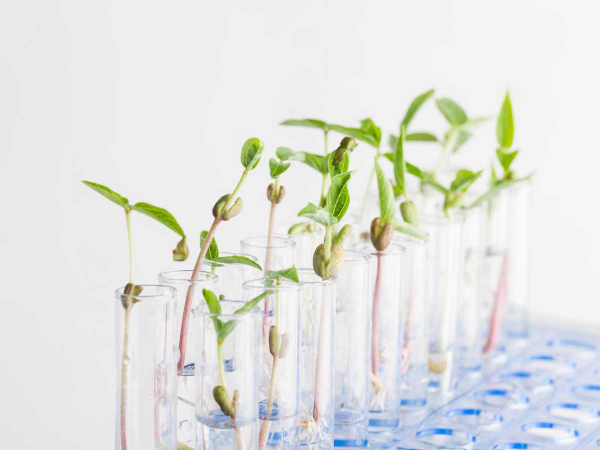 The legislation will allow scientists to develop and test, in real-world settings, plants which have been edited with minor genetic changes similar to those found in nature.
Legislation to end a 30-year ban on gene technology outside the lab will be in place by the end of 2025, the Government has announced.
The legislation will allow scientists to develop and test, in real-world settings, plants which have been edited with minor genetic changes similar to those found in nature.
It should also remove high administrative burdens for experiments undertaken in containment, improving efficiency and cost-effectiveness of research.
Science, Innovation and Technology Minister Judith Collins says legislation ending the ban and implementing a dedicated regulator to oversee applications to use gene technology will be introduced to Parliament by the end of the year.
“This is a major milestone in modernising gene technology laws to enable us to improve health outcomes, adapt to climate change, deliver massive economic gains and improve the lives of New Zealanders,” Collins says.
“New Zealand has lagged behind countries, including Australia, England, Canada and many European nations in allowing the use of this technology for the benefit of their people, and their economies.
“New Zealand’s biotech sector, of which gene technology is a part, generated $2.7 billion in revenue in 2020.
“The changes we’re announcing will allow researchers and companies to further develop and commercialise their innovative products. Importantly it will help New Zealanders to better access treatments such as CAR T-cell therapy, which has been clinically proven to effectively treat some cancers. It can also help our farmers and growers mitigate emissions and increase productivity, all of which benefits our economy,” Collins says.
She notes that restrictive rules and time-consuming processes have made research outside the lab almost impossible, resulting in New Zealand falling behind.
These changes will bring New Zealand up to global best practice and ensure we can capitalise on the benefits, she adds.
Plant & Food Research chief scientist, Professor Richard Newcomb says New Zealand generates a lot of wealth by sustainably growing healthy food, shared with consumers around the world.
He says these new regulations will allow scientists to develop new plant varieties so the agrifood sector can adapt at the speed required to meet fast-moving challenges, such as climate change, and remain competitive on the global market,
“Regulations around gene technologies, particularly with the advent of high precision technologies such as CRISPR-Cas9, are changing around the world.
“Researchers and food producers overseas are using these new technologies to develop foods that will directly compete with those from NZ, and may have more of the characteristics that consumers want. By changing our regulations, our sectors can compete on a level playing field; with a wider range of technologies on the table, they will be better placed to be able to make choices that are good for NZ as well as the world.”
National’s much-touted free trade deal with India featured in the Rural Issues Debate at Mystery Creek, Hamilton on Wednesday night.

It was billed as a chance for all the political parties to woo the rural vote, but question marks hang over just how effective this was.
Red meat farmers are welcoming Labour’s plan to review the Emissions Trading Scheme and not to campaign on pricing agricultural emissions.
For the first time in a quarter of a century, Federated Farmers has something positive to say about the Labour Party’s climate change policy leading into a general election.
Election years are always a concerning time for farmers, according to DairyNZ chair Tracy Brown.



National’s pledge to introduce 19 new national standards shows the party is serious about getting Wellington out of farming, Federated Farmers says.
The National Party’s policies to make it easier to grow fresh vegetables, secure reliable water and energy and simplify farm planning are practical changes that will give growers the confidence to invest, according to Horticulture New Zealand (HortNZ).
Fonterra Co-operative Group chief financial officer Andrew Murray has resigned to take up a role outside the dairy giant.
A major move is about to get underway to improve the quality and viability of dairy beef and cattle in NZ.
Veterinarians say changes to the code of welfare for dairy cattle provides a positive foundation for improved cattle welfare across the country.
Today, 15 October, is the International Day of Rural Women, which recognises rural women’s contribution to farming, communities and the environment.