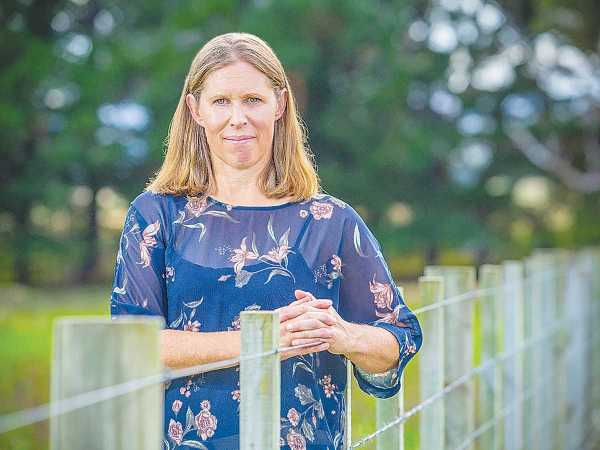
ANZ bank agricultural economist Susan Kilsby says these factors are impacting more on intensive dairy operations rather than sheep and beef farms.
She says for some farmers’ interest rates have gone up pretty dramatically depending on their overall financial position. However, Kilsby adds that in the past few years when times have been good, farmers have paid down debt and these individuals are probably in a better position than otherwise would be the case.
“Farm gate milk prices are still reasonable but that margin is being squeezed pretty quickly in some cases,” she told Rural News.
Kilsby is noticing that farmers are looking closely at their farm businesses and making tweaks to improve their profitability. She says a lot are pretty exhausted because of the extra work they have had to do during Covid because of labour shortages.
She adds that others are making some changes to their systems by doing such things as milking once a day or three times every two days.
“Definitely some change but nothing dramatic. Some are trying to become a little bit more self-sufficient and therefore not grazing stock out as much as they used to,” Kilsby says. “A few more farms in the Canterbury region are looking at a little more cropping on farm or leasing out paddocks to commercial growers.”
She believes part of this change is in response to labour shortages but also in response to reducing nutrient emission levels.
Meanwhile, DairyNZ chairman Jim van der Poel says uncertainty in the dairy industry is causing farmers to think twice before investing. He says while the banks are offering money to invest in the sector, farmers are taking quite a cautious approach.
He says this is because of a number of things such as the shortage of labour, government legislation and the milk price coming down.
“As a result, there is a real reluctance among farmers to borrow that extra money,” he told Rural News.
Van der Poel says that is a reflection of things at the moment with confidence quite low and people are worried about what the future may hold. He says costs have gone up, the last two GDT’s haven’t been positive and there is still a labour shortage. He says in the last three years farmers have had to work harder than they would have liked.
“It would appear that they are taking stock, sitting back for a while and seeing how things play out, including what actions the Chris Hipkins’ government might take in the coming months,” he says.