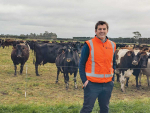
New Dairy Holdings CEO Backs Self-Contained Model
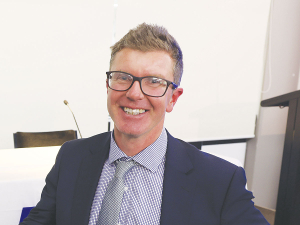
Running a tight and self-contained ship is the key to the success of the country's largest dairy farmer, says Blair Robinson, the new man at the helm of Dairy Holdings.
 increase font size
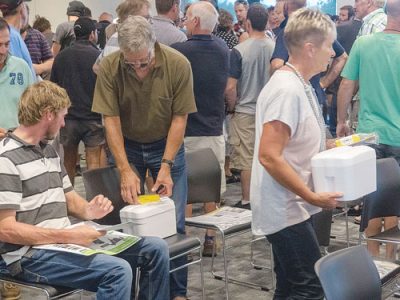 Dairy farmers collect their individualised milk sampling packs at the start of the first nationwide Mycoplasma bovis testing programme. This time farmers do not have to take samples themselves.
The discovery of Mycoplasma bovis on a sheep and beef property near Motueka was entirely predictable, said Agriculture Minister Damien O’Connor.
The farm is in his electorate of West Coast Tasman.
O’Connor says the M. bovis situation is what they expected – more cases being identified.
“While we are still finding new cases they are all connected by one strain, and as long as that’s the case we can still eradicate the disease,” he says.
MPI says the infected farm was identified by tracing animals from known infected farms. It won’t name the infected farm but says neighbours will be notified.
M. bovis response incident controller Catherine Duthie says the new infected property was expected given the intensive tracing work by MPI.
“We know this disease is spread by contact between animals and movement of stock, as is the case here.
“An obvious question will be ‘why has it taken this long to find this property?’
“The answer to that lies in the nature of this particular bacteria. It is a tricky thing to find and often hides within an animal, lying dormant and not revealing itself for weeks or months. This is why we test multiple times using multiple kinds of tests,” she says.
Duthie says the discovery of more infected properties is not because the disease is now spreading beyond infected farms. She says all known-infected farms, or farms they suspect may be positive, are in quarantine lockdown and risk goods including animals are not allowed off them.
Meanwhile O’Connor says the setting up of a large technical advisory group to assist MPI deal with M. bovis is to ensure they the best possible advice.
“We are all the time seeking the most up-to-date knowledge from international experts and are assessing the situation.”
O’Connor says the first of the bulk milk tests to find other cases of M. bovis have now begun. Six test samples will be taken from every farm and the final results will be known by November.
Running a tight and self-contained ship is the key to the success of the country's largest dairy farmer, says Blair Robinson, the new man at the helm of Dairy Holdings.
OPINION: It's no surprise that "world-class biosecurity" continues to dominate as the top priority for agribusiness leaders, holding the number one spot for the 16th consecutive year in KPMG's latest agribusiness report.
A miserable budget that didn’t deliver much for anyone.
National's decision to ‘dribble’ information about the NZ/India to Labour contributed to the delay in it deciding to supported the FTA.
When it comes to international trade, politicians from all sides of the aisle are united, says Labour's trade spokesman Damien O'Connor.


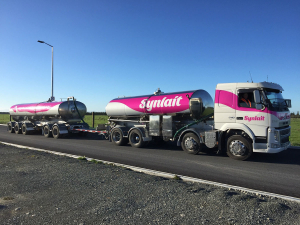
Synlait has swung to second-half profit as operations stabilise, but the dairy processor still posted a $75.4m annual loss.
LIC shareholders have elected a new North Island representative to the co-operative's Board, along with five representatives to its Shareholder Reference Group (SRG), following the company's Annual Meeting held in Invercargill.
Farmers across parts of Southland and South Otago are continuing to deal with difficult conditions after a prolonged run of wet weather, with pressure building around feed supply, stock management, pasture damage, farm infrastructure and everyday workloads.
Federated Farmers says it welcomes Labour's commitment to reviewing the Sharemilking Agreements Act, calling on other major parties to do the same.
For Canterbury dairy farmers Sian Meijer and Rick Wobben, wearable technology has become one of their most valuable on-farm tools - helping manage 1850 cows across an expansive, high-performing dairy operation while improving efficiency, mating outcomes and day-to-day decision making.
Fonterra has unveiled its annual results for the 2026 financial year, posting $27 billion in revenue and close to $20 billion returned to New Zealand farmer owners and unit holders.




