Federated Farmers Welcomes ACT’s New Farming Policies
Federated Farmers has welcomed new rural policies released by ACT, saying they align closely with its own election priorities.
 increase font size
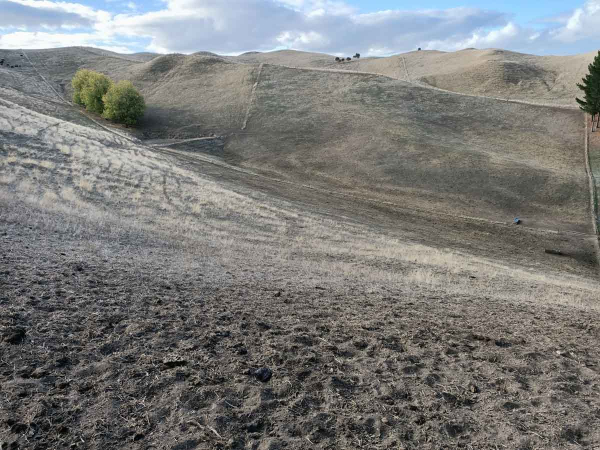 Marlborough Federated Farmers has raised concerns for the mental wellbeing of drought-impacted farmers in the top of the South Island.
Marlborough Federated Farmers has got some real concern about the mental wellbeing of farmers and their families in the region because of the drought and there’s a lot of pressure starting to build.
These comments come as the Government classified the top of the South Island as medium-scale adverse drought event, which has been welcomed by local farmers.
Earlier this month, Agriculture Minister Todd McClay classified the drought conditions in the Marlborough, Tasman and Nelson districts as a medium-scale adverse event. He says this formally acknowledges the challenging conditions facing farmers and growers in the district.
McClay says these districts are in the grip of an intense dry spell and knows this has made day-to-day conditions on the ground extremely tough for farmers and growers.
“I know farmers and growers in other parts of the country are also experiencing dry conditions and we’re keeping a close eye on the situation in those regions.”
Meanwhile, Rural Communities Minister Mark Patterson has been in the region to see firsthand the problems facing farmers and growers.
“This decision to declare a drought will unlock further support for farmers and growers, including tax support,” Patterson explains. “This is on top of funding of up to $20,000 made available to the Top of the South Rural Support Trust last month to provide extra support.”
Local Federated Farmers provincial president Evan White says it’s a huge relief for local farmers that the Government has recognised the severity of the drought. He says even just having recognition of how extreme things have been will go some way to boosting morale – particularly in areas where they’ve been hit the hardest, like south of Blenheim.
“Creeks that have never dried up before have stopped flowing, everything has browned off, and 50-yearold native plantings are starting to die. Stock water is under real pressure as wells dry up. Summer crops are failing, and farmers are having to chew into livestock feed set aside for winter,” he says.
White adds that even if there was rain now, it’s debatable how much good it will do this late in the season. He says it’s been a challenging season already with low stock prices, especially for lamb. Inflation and rising interest rates are also hitting the sector hard.
Federated Farmers has welcomed new rural policies released by ACT, saying they align closely with its own election priorities.
Federated Farmers is backing Feilding High School’s call to keep Agriculture and Horticultural Science as a standalone subject in Year 11.
As part of its Election 2026 coverage, Rural News asked political parties how they would help pull the arable sector out of the doldrums. Here's what they said:
National’s pledge to introduce 19 new national standards shows the party is serious about getting Wellington out of farming, Federated Farmers says.
Food and fibre exports have returned a billion- dollar bonus to the country.


Federated Farmers has welcomed new rural policies released by ACT, saying they align closely with its own election priorities.

Rural Contractors NZ says proposed changes to land transport rules for agricultural vehicles are a welcome response by the Government to out of date regulations which have seen members hit with huge fines.
Alliance is calling for final applications for its 2027 Graduate Programme, with applications closing on Sunday 25 October.
Decades piloting planes has ensured vet and farmer David Hayes is focused on safety. So, after a serious accident while welding on farm, he is sharing his experience so others can learn from it.
Canterbury milk processor, Synlait Milk has confirmed Leon Fung as its chief executive officer.
OPINION: Making it easier to collect rainwater and use it to grow crops and livestock is a no brainer.